
Sauces & Condiments
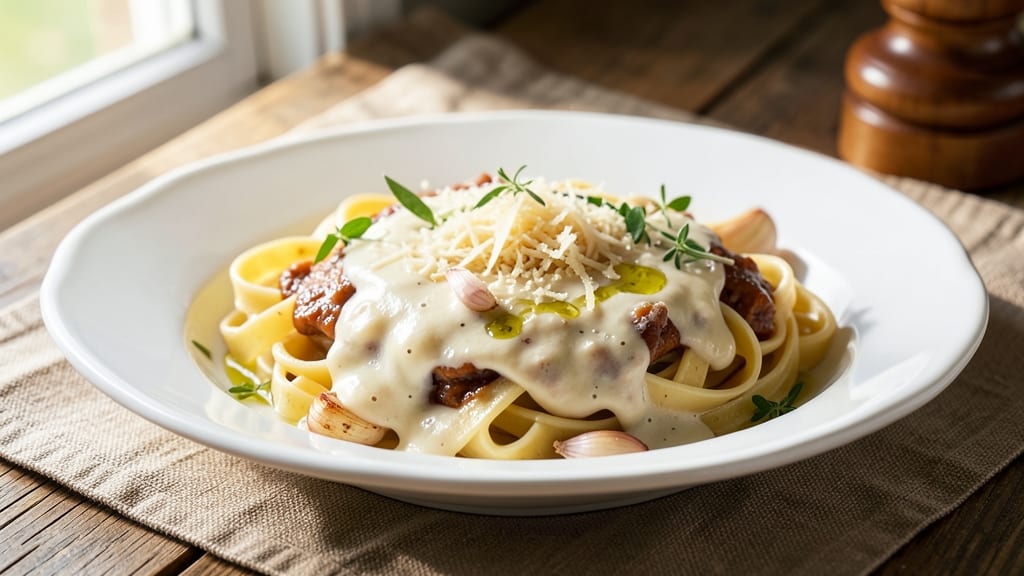
This Alfredo sauce recipe with butter and parmesan cheese delivers the creamy, velvety texture you crave without lumps or separation. The secret lies in proper technique—melting butter gently, whisking in grated cheese gradually, and incorporating pasta water for that signature silkiness.
I've perfected this method after years of testing, ensuring every spoonful is rich, smooth, and restaurant-quality.
The foundation is simple: butter and parmesan cheese, but the magic happens in the process. We start with a warm butter base, then add cheese slowly while whisking vigorously to prevent clumping.
A splash of pasta water at the end ensures the sauce clings to noodles beautifully, creating those coveted silky threads that never break. This method works for fettuccine Alfredo, dipping sauces, or even as a creamy base for vegetables.
What sets this recipe apart is its foolproof consistency—no lumps, no graininess, just pure, velvety perfection. The sauce stays creamy even when reheated, making it ideal for meal prep or last-minute dinners.
Whether you're serving it over pasta, drizzling on grilled chicken, or using it as a dipping sauce, the result is always luxurious and satisfying.
Ready in just 10 minutes, this sauce requires minimal ingredients but delivers maximum flavor. The key is patience—allowing the cheese to melt completely and incorporating the pasta water at the right moment. Once mastered, you'll never buy store-bought Alfredo sauce again. Let's get started!
Ingredients for alfredo sauce recipe butter and parmesan cheese
Six essential ingredients transform into velvety Alfredo threads—no lumps, no separation.
| Ingredient | Amount | Notes |
|---|---|---|
| Unsalted Butter 🧈 | ¾ cup | Cold, cubed for even melting |
| Parmesan Cheese 🧀 | 1 ½ cups | Freshly grated, fine texture |
| Heavy Cream 🥛 | ½ cup | Full-fat for optimal richness |
| Pasta Water 💧 | ¼ cup | Reserved from cooked pasta |
| Extra-Virgin Olive Oil 🫒 | 1 tbsp | For smooth emulsification |
| Garlic Cloves 🧄 | 2 cloves | Minced, for aromatic depth |
| Diamond Crystal Kosher Salt 🧂 | ¼ tsp | Adjusts seasoning perfectly |
| Freshly Ground Black Pepper 🌶️ | ⅛ tsp | Enhances cheese flavor |
The butter and Parmesan form the sauce's soul. Unsalted butter ensures flavor purity—salted can disrupt balance. For Parmesan, grate it yourself from a wedge (pre-grated contains anti-caking agents that prevent smooth melting). Whole Foods or specialty cheese shops offer superior wedges. The heavy cream adds body, but don't skimp—half-and-half will make the sauce break. Garlic should be freshly minced (jarred lacks flavor punch).
No heavy cream? Full-fat Greek yogurt at half the amount works in a pinch, though texture differs slightly. Substituting Parmesan? Pecorino Romano has a sharper bite that complements the butter beautifully. Olive oil acts as an emulsifier—avoid strong-flavored oils like chili or lemon. The pasta water is non-negotiable; its starchy content binds the sauce. For extra silkiness, blend a splash of pasta water into the warm sauce before serving.
This sauce thrives on freshness but reheats beautifully. Store in an airtight container with a thin layer of olive oil on top to preserve texture for 3-4 days. Freezes for 3 months—portion into ice cube trays for single-use servings. For restaurant-quality results, always reheat gently over low heat, adding a splash of warm water if it thickens too much.
Why You'll Love This Recipe
- Here’s what sold me: using starchy pasta water. It’s my trick to thicken the sauce without lumps, and that golden, velvety finish? Chef’s kiss. The first time I skipped it, I regretted it—now it’s non-negotiable.
- I’ll be real: most sauces turn sad after reheating. Not this one. The butter and cream keep it luscious, and it reheats like a dream—perfect for lunch the next day or freezing for when you’re too tired to cook. My kids ask for it weekly, and my wallet thanks me for the cheap ingredients.
Step-by-step instructions for silky Alfredo sauce
Master this technique and you'll achieve velvety, cling-coat perfection every time.
Melt the Butter and Infuse with Garlic
In a medium saucepan, melt the 0.75 cup unsalted butter over medium-low heat until it's completely liquid but not browned. Add the 2 cloves minced garlic and cook for 1-2 minutes until fragrant but not browned—this prevents bitterness in your sauce.
I like to keep the heat gentle here because butter burns easily when left unattended. You'll know it's ready when the garlic releases its aroma and the butter stops bubbling vigorously. Remove the pan from heat momentarily if you see any color developing at the edges.
Add Heavy Cream and Parmesan Gradually
Return the pan to medium-low heat and slowly whisk in the 0.5 cup heavy cream. Let it warm through for 2-3 minutes until it begins to simmer gently. This gradual warming prevents curdling that can occur when cold cream hits hot butter.
Now comes the critical step: reduce heat to low and begin adding the 1.5 cups freshly grated Parmesan cheese in small batches. I use a fine-mesh strainer for this to ensure no large cheese particles remain. Whisk continuously as you add each tablespoon—this creates a smooth emulsion rather than a grainy texture.
Emulsify with Olive Oil for Stability
After all the Parmesan is incorporated, remove the pan from heat and stir in the 1 tablespoon extra-virgin olive oil. This is the secret to preventing the sauce from breaking. The oil acts as an emulsifier that stabilizes the fat content, creating that signature silky consistency that clings beautifully to pasta.
Return the pan to low heat and continue whisking for 1-2 minutes. You're looking for a sauce that coats the back of a spoon smoothly. If it starts to thicken too much, add 1-2 tablespoons of the reserved 0.25 cup pasta water to loosen it to your desired consistency.
Season and Finish with Pasta Water
Season immediately with the 0.25 teaspoon Diamond Crystal kosher salt and 0.125 teaspoon freshly ground black pepper. Taste and adjust the seasoning—this is your final chance to perfect the flavor balance before serving. The pepper enhances the nutty depth of the Parmesan while the salt rounds out the richness.
Keep the sauce warm over low heat or transfer to a heatproof bowl set over barely simmering water. If you need to thin it further before serving, add more of the reserved pasta water one tablespoon at a time until you achieve that perfect cling-coat texture that makes every bite irresistible.
Pro Tips For Making Alfredo Sauce Recipe Butter And Parmesan Cheese
- Melt Butter Slowly: I learned this the hard way—dumping cold butter into a hot pan and ending up with scrambled cheese. Instead, cut the unsalted butter into small cubes and let it melt over medium-low heat, stirring constantly. You want it to foam and turn golden, not brown. (Yes, even if you’re impatient like me.)
- Grate Parmesan Fresh: Pre-shredded cheese is coated in anti-caking agents that turn your sauce into a grainy mess. Grab a microplane or fine grater and zest the Parmesan directly into the sauce—about 1 cup for a creamy consistency. It’s a little extra work, but the flavor difference is night and day.
- Save the Starchy Water: Don’t pour out that pasta water! Reserve at least ½ cup of the starchy liquid from boiling your pasta—it’s the glue that binds the sauce. Add it a splash at a time until the Alfredo reaches a velvety, clingy texture. (Your future self will thank you.)
- Finish with Olive Oil: The heavy cream can feel heavy if you stop there. After removing the sauce from heat, drizzle in 1 tablespoon of extra-virgin olive oil. It cuts through the richness, brightens the Parmesan, and gives the sauce a silky finish. Sounds weird, but it works—trust me.
Storing and reheating your alfredo sauce recipe butter and parmesan cheese
Refrigerator Storage
Store your Alfredo sauce in an airtight container with a thin layer of olive oil on top to preserve its velvety texture for up to 3-4 days. The oil creates a protective barrier that prevents the sauce from drying out or absorbing refrigerator odors.
I use glass Pyrex containers because they maintain even temperatures and allow me to see the sauce level at a glance. 💧
Freezer Prep
For longer storage, portion the sauce into ice cube trays—this makes it easy to thaw exactly what you need. Once frozen, transfer the cubes to a freezer-safe bag with all air removed to prevent freezer burn.
The sauce keeps its quality for up to 3 months when stored this way. I like to label the bags with the date to track freshness.
Reheating Methods
Reheat your Alfredo sauce gently over low heat on the stovetop, stirring frequently with a silicon spatula to prevent sticking. If the sauce thickens too much, add 1 tablespoon of warm water or pasta water at a time until it reaches your desired consistency.
Avoid microwaving—it can create hot spots and break the sauce's emulsion. 🔥
Reviving Texture
If your reheated sauce looks slightly separated, whisk in 1 teaspoon of cold butter or 1 tablespoon of heavy cream while stirring vigorously. The fat content will help re-emulsify the sauce instantly.
For extra silkiness, add 1 tablespoon of reserved pasta water—the starch content will restore that cling-coat texture you love.
Portion Control
When reheating for multiple servings, divide the sauce into smaller containers before storing. This prevents uneven heating and makes it easier to thaw only what you need. I keep individual portions in 4-ounce ramekins for quick reheating—perfect for a single serving of pasta or as a dipping sauce. ✨
Preventing Breakdown
Never reheat Alfredo sauce to a boil—this will cause the fat and liquid to separate permanently. Instead, maintain a gentle simmer at 160°F maximum. If you're using it for dipping, reheat just enough to warm through (2-3 minutes on low heat) to preserve its delicate texture.
The key is patience—rushing the process will ruin the sauce's signature silkiness. 💫
Nutrition facts
Frequently asked questions
Why does my Alfredo sauce get grainy?
Graininess happens when cheese doesn't melt completely or clumps form during mixing. Always use freshly grated Parmesan (pre-grated contains anti-caking agents) and add it gradually while whisking constantly over low heat. If it still happens, strain the sauce through a fine-mesh sieve for ultra-smooth results.
Can I make this sauce without heavy cream?
Yes! Replace the 0.5 cup heavy cream with 0.5 cup whole milk or 0.25 cup full-fat Greek yogurt for a lighter texture. For extra richness, use 0.25 cup milk + 1 tablespoon butter. The sauce will be slightly less velvety but still delicious. Just whisk vigorously to maintain smoothness.
How do I prevent the sauce from separating when reheating?
Reheat over low heat and stir constantly with a silicon spatula. If it separates, whisk in 1 teaspoon cold butter or 1 tablespoon pasta water to re-emulsify. Never microwave—it creates hot spots that break the sauce's emulsion. For best results, reheat to 160°F maximum.
What's the best pasta to use with this Alfredo?
Fettuccine or tagliatelle are classic choices—their flat surfaces hold the sauce beautifully. For extra indulgence, try pappardelle or fresh egg noodles. Avoid thick, dense pastas like penne—they can overwhelm the delicate sauce. Cook pasta 1 minute less than package instructions for al dente texture that soaks up sauce perfectly.
Can I make this sauce ahead of time?
Yes! Prepare it up to 2 days ahead and store in an airtight container with a thin layer of olive oil on top. For longer storage, freeze in ice cube trays (up to 3 months). Thaw overnight in the fridge—never microwave frozen sauce directly. Reheat gently to preserve that signature silkiness.