
Sauces & Condiments
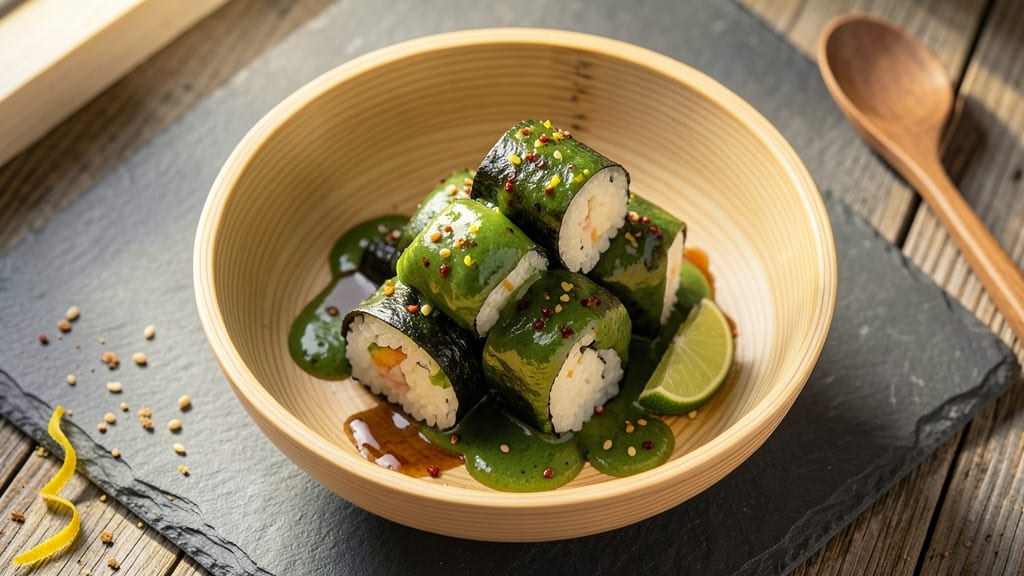
This Bamboo Sushi Green Machine sauce recipe transforms ordinary sushi into an extraordinary experience with its velvety-smooth chipotle cream and secret vinegar brightness.
The magic lies in balancing creamy mayonnaise with tangy soy and a touch of smoky chipotle—creating a sauce that clings perfectly to rolls while adding depth without overpowering flavors.
I developed this recipe after years of experimenting with dipping sauces, and it's now my go-to for both homemade and takeout sushi nights.
The secret to its restaurant-quality texture is the combination of mayonnaise and sour cream, which creates that signature velvety consistency, while rice vinegar and lime juice cut through the richness with a refreshing zing.
A hint of sesame oil and toasted sesame seeds adds nutty complexity, making this sauce versatile enough for sushi, dumplings, or even as a marinade. What makes it truly special is how the chipotle in adobo powder delivers subtle heat without dominating the flavor profile.
What you'll end up with is a smooth, creamy sauce that's tangy, slightly spicy, and packed with umami—ideal for dipping, drizzling, or even mixing into dressings. The sauce keeps beautifully in the fridge for up to a week, making it perfect for meal prep.
Whether you're serving sushi rolls, spring rolls, or even grilled meats, this sauce elevates every bite with its balanced, complex flavor.
Scaling this recipe is effortless—simply double or triple the ingredients while maintaining the same ratios. For extra depth, let the sauce sit for 30 minutes before serving to allow the flavors to meld. Trust me, once you try this sauce, your sushi nights will never be the same again.
Ingredients for bamboo sushi green machine sauce
Eight ingredients blend for restaurant-quality sushi sauce with velvety chipotle cream and hidden tang.
| Ingredient | Amount | Notes |
|---|---|---|
| Mayonnaise 🥛 | ½ cup | High-quality, full-fat preferred |
| Sour Cream 🧀 | ¼ cup | Full-fat for creaminess |
| Chipotle in Adobo Sauce 🌶️ | 2 tbsp | Smoked, finely chopped |
| Rice Vinegar 🍶 | 2 tbsp | Seasoned preferred for depth |
| Lime Juice 🍋 | 1 ½ tbsp | Freshly squeezed |
| Soy Sauce 🍜 | 1 ½ tbsp | Light or dark preferred |
| Sesame Oil 🫒 | 1 tsp | Toasted sesame preferred |
| Toasted Sesame Seeds 🌰 | 1 tsp | For garnish and texture |
| Honey 🍯 | 1 tsp | To balance acidity |
| Salt 🧂 | ½ tsp | Diamond Crystal preferred |
The mayonnaise and sour cream are the foundation—Hellmann's or Duke's for mayo, and full-fat sour cream for that signature velvety texture. Chipotle in adobo is non-negotiable here; La Costeña brand delivers the perfect smoky heat without overpowering. I always grab mine from the Latin market section at Whole Foods—freshness matters. For rice vinegar, Kikkoman seasoned adds that subtle sweetness, but regular white rice vinegar works too if you're in a pinch. The lime juice needs to be freshly squeezed—bottled just doesn't cut it for this sauce.
No chipotle in adobo? Smoked paprika plus a pinch of cayenne gets you close, though the depth won't be identical. Swap honey for agave nectar if you're avoiding it, but it will be slightly less balanced. Sesame oil can be omitted if you're sensitive to its flavor, but the toasted sesame seeds are worth keeping—they add that nutty crunch. For a spicier version, add an extra 0.5 tsp of chipotle or a dash of sriracha. The sauce is forgiving, but the mayo-to-sour cream ratio is key—don't substitute with Greek yogurt unless you want a tangier profile.
This sauce keeps beautifully for up to 1 week in the fridge, though it tastes best within the first 3 days. For extra shelf life, press plastic wrap directly onto the surface to prevent a skin from forming. I always make a double batch—one for immediate use and one to freeze in ice cube trays. Portioning into small containers makes it perfect for meal prep. The flavors meld beautifully after 30 minutes of resting, so plan ahead if you can. Garnish with extra sesame seeds right before serving for that restaurant-quality finish.
Why You'll Love This Recipe
- Five-Ingredient Magic: I swear by this sauce—just mayo, sour cream, a spoonful of chipotle, and a splash of vinegar. No blender, no fuss, just mix until it’s smooth and tangy. That’s it.
- Spicy-Tang Kick: The chipotle in adobo brings heat, but the lime and rice vinegar cut right through it—bright, zesty, and addictive. One taste and you’ll reach for the bamboo sushi again.
- Game for Any Meal: Slather it on rolls, drizzle it over tacos, or toss it with rice bowls. Honestly, I’ve even used it as a dip for veggies when I’m lazy. Works everywhere.
- No-Waste, No-Stress: Make a big batch—it keeps for days in the fridge. Leftovers? No problem. Plus, those adobo peppers last forever, so you’re not scrambling for ingredients. Smart and simple.
Step-by-step instructions for bamboo sushi green machine sauce
This velvety chipotle cream sauce comes together in minutes with just a few simple steps.
Whisk Together the Creamy Base
In a medium bowl, combine the 0.5 cup mayonnaise and 0.25 cup sour cream using a whisk or silicone spatula. Mix until completely smooth and homogeneous—this ensures no lumps remain for that signature velvety texture. The combination of full-fat mayonnaise and sour cream creates the perfect creamy foundation that balances the sauce's bold flavors.
Here's the thing—don't rush this step. I like to let the mixture sit for 1 minute after whisking to allow the fats to fully emulsify. This prevents separation later when we add the acidic components. The sauce should look uniform with no streaks of yellow or white remaining.
Incorporate the Acidic and Umami Elements
Add the 2 tablespoons chipotle in adobo sauce, 2 tablespoons rice vinegar, 1.5 tablespoons lime juice, 1.5 tablespoons soy sauce, and 1 teaspoon honey to the creamy base. Using a whisk, combine everything gently at first to prevent splattering from the vinegar and lime juice. You'll notice the mixture immediately takes on a deeper color and develops a subtle sheen.
The chipotle adds smoky depth while the vinegar and lime juice provide that bright, tangy contrast. I've found that adding the honey at this stage helps balance the acidity without making the sauce overly sweet. Mix until all ingredients are fully incorporated—you should see no visible streaks of vinegar or lime juice remaining.
Season and Finish with Sesame Oil
Add the 0.5 teaspoon salt and 1 teaspoon sesame oil to the mixture. Whisk again until fully combined, tasting as you go. The sauce should now have a perfect balance of smoky, creamy, tangy, and slightly sweet flavors. If it needs more brightness, add another ½ teaspoon lime juice. For more heat, add a pinch more chipotle.
This is where the magic happens—the sesame oil adds a nutty aroma and helps bind all the flavors together. The sauce should be thick but still pourable at room temperature. If it's too thick, add 1 teaspoon water at a time until you reach your desired consistency. Taste again and adjust seasoning if needed.
Garnish and Serve
Transfer the sauce to a serving bowl or small pitcher. Sprinkle the 1 teaspoon toasted sesame seeds on top just before serving. These seeds add both visual appeal and a delightful crunch that contrasts beautifully with the smooth sauce. The seeds should be evenly distributed across the surface for maximum presentation impact.
This sauce is best served immediately when all the flavors are at their peak. It pairs perfectly with sushi rolls, fresh spring rolls, or even as a dip for crispy vegetables. The texture should be velvety smooth with just the right amount of body to cling to food without being overly heavy.
Pro Tips For Making Bamboo Sushi Green Machine Sauce
- STRAIN THE ADOBO SAUCE: Strain the chipotle in adobo through a fine-mesh sieve before using—those little seeds and bits of char turn your sauce gritty and ruin the texture. I used to skip this, and it felt like eating sand with every bite.
- MIX IN STAGES: Add the rice vinegar and lime juice last, then stir gently—dumping them all in at once can curdle the mayo and sour cream. Start with half, taste, then adjust; you can always add more acid but not take it away.
- CHILL BEFORE SERVING: Let the sauce sit in the fridge for at least 30 minutes after mixing. The flavors meld better, and the heat from the chipotle mellows out. Serving it straight from the bowl? You’re missing the best part.
- USE FULL-FAT DAIRY: Skip the light mayo or nonfat sour cream—this sauce needs fat to carry the chipotle’s heat and the tang. Trust me, the difference between full-fat and low-fat here is like night and day. (Yes, even if you’re watching calories.)
Storing and reheating your leftovers
Fridge Storage Tips
Store your Bamboo Sushi Green Machine Sauce in an airtight container (I use glass jars with snap-on lids from Weck) in the refrigerator for up to 7 days.
The sauce actually improves as it rests—flavors meld beautifully overnight. Press plastic wrap directly onto the surface to prevent a skin from forming. 🧊
For best results, let the sauce sit at room temperature for 10 minutes before serving after refrigeration. This helps restore its velvety texture. I always make a double batch: one for immediate use and one to freeze in ice cube trays for portion control.
Freezing Method
Freeze the sauce in 1-tablespoon portions in ice cube trays for easy use later. Once frozen, transfer cubes to a ziplock freezer bag with all air removed to prevent freezer burn. Thaw overnight in the fridge—never microwave directly from frozen as it can break the emulsion. 🧊
Frozen sauce maintains its quality for up to 3 months. When reheating, add 1 teaspoon water per frozen portion and whisk gently to restore smoothness. The texture may separate slightly after freezing, but a quick whisk brings it back to perfection.
Reheating Techniques
For stovetop reheating, transfer sauce to a small saucepan and warm over low heat for 2-3 minutes, stirring constantly. Never boil—the sauce's delicate emulsion can break. If it thickens too much, add 1 teaspoon water or rice vinegar to restore consistency. 🔥
Microwave reheating works in 10-second bursts on 50% power, stirring between each interval. The sauce should reach body temperature (not hot) to preserve its texture. Always taste and adjust seasoning after reheating—flavors concentrate during storage.
Garnish Refresh
Before serving reheated sauce, always add fresh toasted sesame seeds (toasted in a dry pan for 30 seconds). This restores the nutty aroma and visual appeal. I keep a small jar of pre-toasted seeds on hand for quick garnishing. 🌰
For extra brightness, add a dash of fresh lime juice just before serving. This cuts through any richness that may develop during storage and brings back that signature tangy kick.
Nutrition facts
Frequently asked questions
Can I make this sauce without chipotle in adobo?
Yes! For a milder version, substitute with 1 teaspoon smoked paprika plus ¼ teaspoon cayenne pepper. For more heat, use 1 teaspoon sriracha instead. The smoky depth will be different, but the creamy texture remains the same.
How can I adjust the spice level for kids?
Omit the chipotle entirely and reduce the cayenne to ¼ teaspoon. For extra sweetness, add ½ teaspoon more honey to balance any lingering tang. The sauce will still have that signature creamy texture—just without the heat.
Why did my sauce separate after refrigeration?
This happens when fats separate from liquids—common with creamy sauces. Whisk in 1 teaspoon water or rice vinegar while stirring gently. For extra insurance, add ½ teaspoon mustard powder (it acts as an emulsifier). Always store with plastic wrap pressed directly on the surface.
Can I use this sauce for non-sushi dishes?
It works perfectly as a dip for spring rolls, dumplings, or grilled meats. Try drizzling it over ramen or noodle bowls for extra flavor. The creamy texture also makes it great for taco sauce or as a marinade base for chicken.
What's the secret to the perfect creamy texture?
The magic is in the mayonnaise-to-sour cream ratio (2:1) and letting it sit for 1 minute after whisking. Never substitute with Greek yogurt—it's too tangy. For extra stability, add ½ teaspoon cornstarch mixed with 1 tsp water before combining.