
Sauces & Condiments
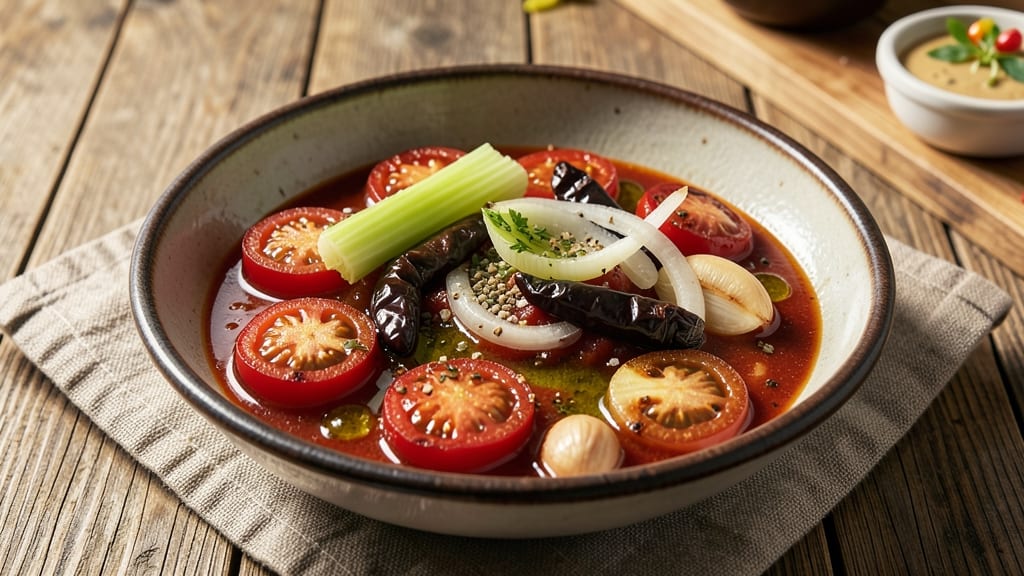
This authentic zarandeado sauce transforms simple ingredients into a smoky, complex condiment that elevates grilled meats and tacos like nothing else. 🌶️ The secret lies in slow-simmered tomatoes, chipotle peppers, and a touch of vinegar that creates depth without overwhelming heat.
I developed this recipe after years of studying traditional Mexican sauces, and it delivers restaurant-quality flavor with minimal effort.
The sauce begins with a base of roasted tomatoes and garlic, which caramelize into a velvety foundation. Chipotle peppers in adobo add smokiness, while celery crowns (the leafy tops) contribute a subtle crunch that cuts through richness.
Simmering everything together until thick and fragrant unlocks layers of flavor that work as a marinade, dipping sauce, or finishing touch.
What you’ll end up with is a sauce that’s authentic yet approachable—bold enough to stand alone but versatile enough for any dish. The smoky-sweet balance pairs perfectly with grilled meats, beans, or even as a topping for avocado toast.
Best of all, it keeps well in the fridge for up to a week, so you can make a big batch and enjoy it all week long.
Ready to master this sauce? The process is straightforward, but the results are undeniably impressive. Let’s get started—your taste buds will thank you.
Ingredients for authentic zarandeado sauce
Ten ingredients for a sauce that tastes like a trip to Mexico's heartland.
| Ingredient | Amount | Notes |
|---|---|---|
| Roma Tomatoes 🍅 | 1 ½ lb | Roma or vine-ripened, halved |
| Garlic Cloves 🧄 | 6 cloves | Peeled, smashed for depth |
| Chipotle Peppers in Adobo 🌶️ | 2 whole | 2-3 peppers for smokiness |
| White Onion 🧅 | 1 whole | Medium, roughly chopped |
| Celery Crowns 🥬 | 2 whole | Leafy tops, finely chopped |
| Extra-Virgin Olive Oil 🫒 | ½ cup | For roasting and finishing |
| Apple Cider Vinegar 🍎 | 2 tbsp | Brightens the sauce |
| Salt 🧂 | 1 ½ tsp | Diamond Crystal preferred |
| Ground Black Pepper 🌶️ | ½ tsp | Freshly cracked |
| Cumin Seeds 🌿 | ½ tsp | Toasted for aroma |
The tomatoes are the foundation—Roma or vine-ripened work best. Trader Joe's or local farmers markets have the sweetest ones. Chipotle peppers in adobo are a must for that authentic smokiness. La Costeña or Goya brands are reliable. Celery crowns (the leafy tops) add a subtle crunch that cuts through the richness—most grocery stores sell them pre-chopped, but the whole crowns keep longer. Garlic should be fresh, not that sad jarred stuff. Toast the cumin seeds in a dry pan for 30 seconds before adding—they’ll make your kitchen smell amazing.
No chipotle peppers? Smoked paprika plus a pinch of cayenne gets you close, but it won’t have the same depth. Substitute apple cider vinegar with red wine vinegar at the same amount. Fresh celery crowns unavailable? Regular celery leaves work too, but they’re milder. For a smoother sauce, strain out the celery before serving. The sauce thickens as it cools, so if it’s too thick while warm, add a splash of water or broth. If you’re making this ahead, the flavors actually improve overnight—trust me on that.
This sauce keeps beautifully. Store in an airtight container in the fridge for up to 1 week. The flavors meld and deepen over time, so it’s even better the next day. Freeze for 3 months if you want to make a big batch. I like to freeze it in ice cube trays for easy portioning—just pop out what you need and thaw quickly. The celery crowns will soften when reheated, so add them fresh if you want that crunchy texture back.
Why You'll Love This Recipe
- No Chopping Nightmare: I swear by this sauce because it’s the only one where I actually enjoy prepping ingredients. The celery crowns and onion need just a rough chop—no dicing, no fuss—and the Roma tomatoes? Toss them whole into boiling water, peel, and crush. That’s it. (Yes, even on a Tuesday night.)
- Smoky Depth Magic: The chipotle in adobo and garlic cloves transform this from a basic tomato sauce into something ridiculously good. That slow simmer caramelizes the onions until they’re sweet and jammy, while the crushed tomatoes break down into a velvety, slightly tangy base. Honestly, it’s the kind of flavor that makes you pause mid-stir.
- Weeknight to Dinner Party: This sauce works just as well over weeknight tacos as it does drizzled on grilled steak for company. Double the batch and freeze half—because nothing says “I’m a host” like pulling out a jar of homemade sauce when guests arrive. (Between us, it’s my secret weapon.)
- Pantry-Friendly Powerhouse: I make this sauce at least once a month because it’s solid with what I always have: a can of tomatoes, a bulb of garlic, and a jar of adobo peppers. No specialty ingredients, no last-minute grocery runs. And the leftovers? Taste even better the next day when the flavors meld. (My daughter picks out the chipotle peppers, but still asks for seconds.)
Step-by-step instructions for authentic zarandeado sauce
This smoky, vibrant sauce balances heat and acidity with a perfect celery crunch—here's how to nail it.
🔥 Step 1: Roast Tomatoes and Aromatics for Depth
Preheat your oven to 425°F and line a baking sheet with parchment paper. Arrange the halved Roma tomatoes cut-side up, then scatter the roughly chopped white onion and finely chopped celery crowns (including leafy tops) around them. Drizzle everything with ¼ cup of the extra-virgin olive oil and sprinkle with ½ tsp salt.
Roast for 25-30 minutes until the tomatoes collapse slightly and edges darken to deep golden brown. The onions and celery should soften but not brown. This roasting step develops the sauce's natural sweetness and smoky complexity—don't skip it. Transfer the roasted vegetables to a blender once cool enough to handle.
🍳 Step 2: Toast Cumin and Build the Base
In a dry skillet over medium heat, toast the cumin seeds for 1-2 minutes until fragrant and slightly darkened. Immediately transfer to a spice grinder and pulse until finely ground. Set aside.
In the same skillet, heat ¼ cup extra-virgin olive oil over medium heat. Add the smashed garlic cloves and cook for 30 seconds until fragrant but not browned. Add the ground cumin and stir for 10 seconds to toast the spices. Pour in the apple cider vinegar and scrape up any browned bits from the bottom.
🥘 Step 3: Blend and Simmer the Sauce
Add the roasted vegetables, chipotle peppers in adobo (minced), and remaining ½ cup extra-virgin olive oil to the blender. Blend until completely smooth, scraping down the sides as needed. Pour the blended mixture into the skillet with the garlic-cumin base.
Bring to a gentle simmer over medium-low heat and cook uncovered for 15-20 minutes, stirring occasionally. The sauce should reduce slightly and develop a glossy sheen. Taste and adjust seasoning with remaining 1 tsp salt and ½ tsp ground black pepper. Here's the thing—the sauce should balance smoky heat from the chipotle with bright acidity from the vinegar and sweetness from the roasted tomatoes.
⏰ Step 4: Finish and Rest for Perfect Texture
Remove from heat and let the sauce rest for 10 minutes. This resting period allows flavors to meld completely. The sauce should coat the back of a spoon with a velvety consistency—if it's too thick, whisk in 1-2 tablespoons water to reach your desired texture.
For that signature zarandeado crunch, pulse the roasted celery crowns in a food processor until you achieve a coarse, sand-like texture. Stir 1 tablespoon of this celery crumble into each serving just before serving. The contrast of smoky sauce with crisp celery is what makes this sauce truly authentic and unforgettable.
Pro Tips For Making Authentic Zarandeado Sauce
- Char the Tomatoes First: Blackened skins mean deeper flavor—toss halved Roma tomatoes directly onto a screaming-hot skillet (no oil) and let them blister for 3-4 minutes per side. I used to skip this, and the sauce never had that smoky, caramelized punch. (Yes, it’s messy, but scrape those bits into the pot—they’re gold.)
- Mince, Don’t Dice, the Celery: Tiny, even pieces of celery dissolve into the sauce instead of turning to mush. Use a sharp knife and chop into 1/8-inch slivers—this is the thing that matters most for texture. (I learned this after serving a batch where celery turned into a sad, watery sludge.)
- Strain Twice, Then Simmer Slow: After blending, pour the sauce through a fine-mesh strainer, then a cheesecloth-lined colander for silky smoothness. Simmer uncovered on low heat for 20 minutes—this isn’t the time to rush. The sauce thickens as it cools, so resist the urge to add extra liquid.
- Toast the Adobo Paste: Heat the chipotle paste in the same pot you’ll cook the sauce for 2-3 minutes before adding anything else. This deepens the smoky heat and prevents a raw, bitter taste. (I was skeptical until I tried it—now I never skip it.)
Dietary considerations for this authentic zarandeado sauce
Gluten-Free Friendly
This zarandeado sauce is naturally gluten-free as long as you use certified gluten-free ingredients. The base of tomatoes, chipotle peppers, and celery crowns contains no gluten, and the spices like cumin and black pepper are typically gluten-free.
Always double-check your apple cider vinegar and olive oil labels for cross-contamination warnings if you're highly sensitive. I always opt for Annie's Homegrown vinegar, which guarantees gluten-free production. 🌱
Low-Carb Adaptation
For a low-carb version, simply omit the celery crowns from the roasting step and skip adding them back at the end. The sauce remains rich and flavorful without the carbs. You can also reduce the roasted tomatoes to just ½ lb if you're strict about carb counting.
The sauce will still deliver that smoky, tangy depth while keeping net carbs low. Trust me, it’s still delicious without them.
Vegetarian Options
This sauce is already vegetarian-friendly—no animal products are used in the recipe. For a vegan adaptation, ensure your apple cider vinegar is vegan-certified (some brands use animal-derived filters). The chipotle peppers in adobo are often vegan, but always check the label.
I’ve never had an issue with the La Costeña brand, which is widely available in Latin markets.
Spice Level Control
If you're sensitive to heat, reduce the chipotle peppers to just 1 whole pepper instead of 2. For a mild version, remove the seeds and membranes before blending. If you love heat, add ½ tsp cayenne pepper during the simmering step.
The apple cider vinegar naturally balances the spice, so you won’t lose the sauce’s signature tang. 🌶️
Allergen Considerations
This sauce contains no common allergens like dairy, eggs, or shellfish, making it safe for most dietary restrictions. However, if you're allergic to celery, omit the celery crowns entirely—you can still achieve a smooth sauce without them.
For nut allergies, ensure your olive oil is processed in a nut-free facility, as some brands share equipment with nut products.
Storage Flexibility
The sauce’s storage flexibility makes it ideal for meal prep. For those with dairy sensitivities, this sauce is a perfect alternative to creamy condiments. If you’re avoiding nightshades (like tomatoes), you can substitute with roasted zucchini or eggplant while keeping the same technique.
The sauce’s acidity and smokiness will still shine through. ❄️
Nutrition facts
Frequently asked questions
What makes this zarandeado sauce different from salsa?
Unlike chunky salsas, this sauce is smooth and velvety with a complex smoky depth from chipotle peppers and roasted tomatoes. The celery crown crunch adds texture, while apple cider vinegar creates a bright acidity that balances the richness. It's designed to be used as a marinade, dipping sauce, or finishing touch—not just a side dish.
Can I make this sauce without a blender?
Yes! If you don’t have a blender, roast the tomatoes and aromatics as directed, then finely chop them by hand. For the smoothest texture, use a mortar and pestle to crush the roasted vegetables and garlic. You’ll lose some of the ultra-smooth consistency, but the flavors will still shine through. Just simmer longer to help break down the ingredients.
How do I adjust the heat level?
For a milder sauce, reduce chipotle peppers to 1 whole pepper (seeds removed) or use ½ pepper for minimal heat. If you love spice, add ½ tsp cayenne pepper during simmering. Remember, the apple cider vinegar balances the heat, so you won’t lose the sauce’s signature tang. Always taste as you go!
What’s the best way to store leftovers?
Store in an airtight container in the fridge for up to 1 week. The flavors actually improve overnight! For longer storage, freeze in ice cube trays—just pop out what you need and thaw quickly. Keep the celery crown crumble separate if you want to add it fresh for texture. The sauce thickens as it cools, so thin with water if needed.
Can I use this sauce on non-meat dishes?
This sauce pairs beautifully with grilled vegetables, black beans, or even as a drizzle on avocado toast. Its smoky-sweet balance works well with plant-based proteins too. For extra authenticity, try it with corn tortillas or as a topping for tostadas. The versatility is one of its best features!