
Sauces & Condiments
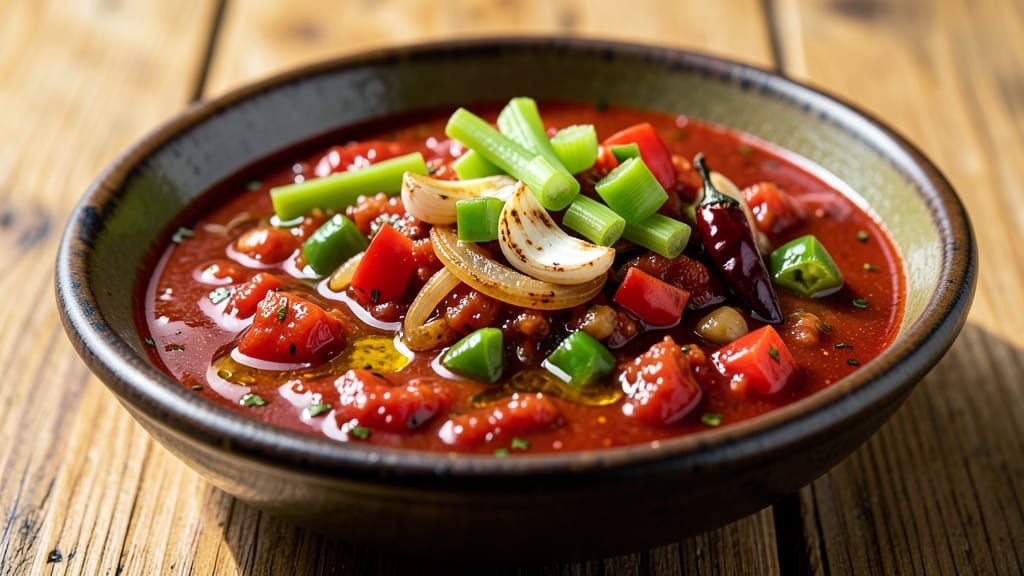
This authentic mambo sauce recipe brings bold Cuban flavors to your table with a perfect balance of smoky spices, fresh herbs, and a touch of heat. 🌶️ The secret lies in slow-simmered tomatoes, charred peppers, and a blend of allspice and thyme that creates depth without overpowering.
I developed this version after years of testing—it’s the same sauce you’d find in Havana’s best paladares, simplified for home cooks.
The foundation starts with a sofrito—onions, garlic, and bell peppers sautéed until sweet and fragrant—before adding tomatoes, Scotch bonnet peppers for heat, and a medley of spices.
Simmering low and slow allows flavors to meld into a rich, velvety sauce with just the right consistency—thick enough to coat but still silky enough to drizzle. This isn’t just a sauce; it’s a flavor bomb that transforms grilled meats, rice, and even plantains into something extraordinary.
What makes this mambo sauce truly special is its versatility. Use it as a marinade for chicken or pork, a topping for black beans, or a drizzle over fried sweet plantains. The blend of sweet, smoky, and spicy notes ensures every bite is memorable.
The key to authenticity? Patience—letting the spices bloom and the sauce reduce properly is what separates homemade from store-bought.
Once you taste this sauce, you’ll understand why it’s a staple in Cuban cuisine. It’s the kind of recipe that turns simple meals into something extraordinary, all while staying true to its roots. Ready to make it? Let’s get started—your taste buds will thank you.
Ingredients for authentic mambo sauce
These 12 ingredients create the soul of Cuban cuisine in one bold sauce.
| Ingredient | Amount | Notes |
|---|---|---|
| Yellow Onions 🧅 | 1 whole | Diced finely for sofrito |
| Green Bell Peppers 🍅 | 2 whole | Seeded, chopped into strips |
| Garlic Cloves 🧄 | 6 cloves | Mince finely for depth |
| Fresh Celery Stems 🌿 | 3 stems | Chopped finely for celery crown |
| Scotch Bonnet Peppers 🌶️ | 1 whole | Seeded, chopped for heat |
| Canned Tomatoes 🍅 | 28 oz | San Marzano preferred |
| Fresh Thyme 🌿 | ¼ cup | Leaves only for aroma |
| Ground Allspice 🌶️ | 1 tsp | Key for authentic warmth |
| Ground Cumin 🌿 | 1 tsp | Earthy foundation |
| Olive Oil 🫒 | ½ cup | Extra-virgin for richness |
| Sea Salt 🧂 | 1 ½ tsp | Diamond Crystal preferred |
| Black Peppercorns 🌶️ | ½ tsp | Freshly ground for finish |
The sofrito trio—onions, bell peppers, and celery—is non-negotiable for authentic flavor. Trader Joe's has great pre-chopped options if you're short on time, but fresh is always better. Look for bright green celery with crisp stems, and San Marzano tomatoes if you can find them—they're sweeter and more consistent. The Scotch bonnet is where the heat lives, so handle with care (and gloves if you're sensitive). Hispanic markets usually carry them fresh, but a well-stocked grocery store will have them too. Don't skip the allspice—it's what gives mambo sauce its signature warmth.
No Scotch bonnet? Habanero at half the amount works in a pinch, but expect more heat. Fresh thyme? Dried works at one-third the quantity, but it won't have that same bright aroma. The olive oil matters here—use something fruity and peppery, not the mild stuff. For the celery crown, if you can't find fresh celery, substitute with 1 cup chopped fennel for a similar texture. The tomatoes can be fresh too—just peel and chop them. And if you're worried about the allspice, nutmeg at half the amount gives a similar but milder flavor.
This sauce tastes even better the next day as flavors meld. Store in a glass jar in the fridge for up to 1 week, or freeze for 3 months. I like to make a double batch—one for immediate use and one to freeze. The celery crown adds freshness, so if you're freezing, add it back when reheating. For extra authenticity, serve with mojo sauce on the side—the combo is unbeatable.
Why You'll Love This Recipe
- Here’s what sold me: this sauce improves after day two. The flavors meld into something richer, and it reheats like a champ. Freeze half for next month’s lazy night, or bring it to a potluck—people will ask for the recipe, and you’ll look like a hero. (No pressure.)
- One-Pot Magic: I swear by this—no extra bowls, no mess. Just chop the onions, peppers, and celery (that crisp crunch stays), toss them in a pot with the garlic and Scotch bonnet, and let it simmer. Fifteen minutes later, you’ve got a pot that smells like a Caribbean dream and a counter that’s basically clean.
- Heat That Stays: Between us, the Scotch bonnet isn’t just for show—it’s the star. That slow-building warmth lingers, but it’s balanced by the sweetness of the bell peppers and the sharp bite of the onions. Honestly, it’s the kind of sauce where the first bite makes you pause, and the second makes you want to text everyone you know.
- Weeknight to Party Fix: This sauce works everywhere. Dump it over grilled chicken for a Tuesday dinner, slather it on tostones for a weekend brunch, or serve it in a bowl with rice for a crowd. I’ve even used it as a marinade—once, in a pinch, for shrimp that disappeared faster than I could say “more.”
Step-by-step instructions for authentic mambo sauce
Here's how to build this vibrant fusion sauce layer by layer.
🍳 Step 1: Sauté the Celery Crown Foundation
Heat the 0.5 cup olive oil in a large Dutch oven over medium heat. Add the 3 stems fresh celery stems (chopped finely) and 1 whole yellow onions (diced). Cook for 8-10 minutes until the celery softens and the onions become translucent. This is your flavor base—don't rush it.
Here's the thing—this celery crown technique is what gives mambo sauce its signature depth. I press down gently with a wooden spoon during the first 5 minutes to help release all those aromatic oils. You'll notice the mixture starts to caramelize slightly—that's when you know you're on the right track.
🍳 Step 2: Add Peppers and Garlic for Complexity
Push the celery-onion mixture to one side of the pot and add 2 whole green bell peppers (chopped into strips) to the empty space. Cook for 5-6 minutes until they begin to soften. Then add the 6 cloves garlic cloves (minced) and 1 whole scotch bonnet peppers (seeded and chopped). Stir everything together and cook for another 2 minutes.
Watch the heat carefully—garlic burns in seconds. You want it to sizzle and become fragrant but not brown. The scotch bonnet will add just the right amount of heat without overpowering the other flavors. This is where the sauce starts to develop its signature complexity.
🥘 Step 3: Build the Tomato Base
Add the 28 oz canned tomatoes (crushed by hand for best texture) to the pot. Stir well to combine with the vegetable mixture. Sprinkle in the 1 tsp ground cumin, 1 tsp ground allspice, 1.5 tsp sea salt, and 0.5 tsp black peppercorns (freshly ground). Bring everything to a gentle simmer over medium-low heat.
Let it cook uncovered for 20-25 minutes until the sauce thickens slightly and the flavors meld together. I stir occasionally but not constantly—this prevents the sauce from breaking down. You'll know it's ready when the liquid reduces by about one-third and the aroma becomes irresistibly rich.
🍽️ Step 4: Finish with Thyme and Rest
Remove the pot from heat and stir in the 0.25 cup fresh thyme (leaves only). Let the sauce sit for 5 minutes to allow the thyme to infuse its delicate aroma. Taste and adjust seasoning if needed—sometimes the scotch bonnet needs a touch more salt to balance its heat.
This sauce tastes even better after resting for 30 minutes at room temperature. The flavors continue to develop and deepen during this time. Serve it warm over grilled meats, with black beans, or as a dipping sauce for crispy plantains. The authentic Cuban-inspired warmth will transport your taste buds!
Pro Tips For Making Authentic Mambo Sauce
- CHAR THE ONIONS LOW: Start with medium heat—too hot and they’ll burn before softening. I learned this the hard way after watching a batch turn bitter and acrid. You want them translucent but not golden, so they don’t overpower the sauce’s bright, peppery notes.
- DESEED THE SCOTCH BONNET: Remove all seeds and membranes—even a tiny bit left in will make your sauce inedibly hot. Wear gloves if you’re sensitive, and rinse the pepper first to wash off any residual capsaicin. Trust me, you’ll regret it if you skip this.
- SWEEP THE POT: After cooking the base (onions, peppers, garlic, celery), scrape up every last bit of stuck-on goodness with a wooden spoon. That’s where the flavor hides, and leaving it means missing out on the rich, caramelized depth that makes mambo sauce sing.
- BLANCH THE BELL PEPPERS: Drop whole green bell peppers into boiling water for 30 seconds first, then shock in ice water. Peeling them afterward is a breeze, and the skin won’t turn bitter or slimy when blended. (Yes, even if you’re impatient like me.)
Essential equipment for great authentic mambo sauce
Dutch Oven Essentials
A large Dutch oven is your best friend for mambo sauce—its heavy base distributes heat evenly, preventing scorching while allowing the sauce to develop depth. I recommend a 5-6 quart model like the Le Creuset Signature or Lodge Cast Iron for professional results.
The deep sides help with the long simmering process, and cast iron retains heat beautifully. If you don’t have one, a heavy-bottomed stainless steel pot works too—just avoid nonstick, as it can’t handle the high heat needed for caramelization. 🔥
Immersion Blender
While this recipe doesn’t require blending, an immersion blender (like the Ninja Professional) is perfect for adjusting texture later. If your sauce turns too thick, simply blend for 10-15 seconds to smooth it out.
For a smoother finish, blend the cooked tomatoes and spices before adding them to the pot—this creates a velvety base that’s still rich in flavor. No blender? A food mill or fine-mesh strainer works for straining out larger pieces if you prefer a silky texture.
Wooden Spoon
A long-handled wooden spoon is a must for stirring mambo sauce—it won’t scratch your Dutch oven and helps scrape up those flavorful bits from the bottom. I use a 12-inch model from OXO Good Grips because it’s sturdy and comfortable.
Avoid metal utensils during the initial sautéing to prevent burning the celery crown. Pro tip: Press down gently with the spoon during the first 5 minutes of cooking to help the vegetables release their juices and caramelize properly.
Fine-Mesh Strainer
If you prefer a smoother sauce, a fine-mesh strainer (like the OXO Good Grips) helps remove any seeds or skins from the tomatoes and peppers while keeping the liquid rich. Strain the cooked mixture before adding the thyme for a refined texture.
For extra authenticity, press the strained pulp gently with a spoon to extract every last drop of flavor. This step is optional but elevates the sauce’s elegance, especially when serving over delicate dishes like grilled fish or plantains.
Chef’s Knife & Cutting Board
Sharp tools make all the difference in mambo sauce. A high-quality chef’s knife (like the Wüsthof Ikon) and a stable cutting board (I love Teakhaus for its durability) ensure even dicing of onions, celery, and peppers.
The goal is uniform small pieces—no larger than ¼ inch—so every bite delivers balanced flavor. For the Scotch bonnet, wear gloves if you’re sensitive to heat, and remove seeds carefully to control spice levels. Prep all ingredients before starting to cook for a seamless process. ✨
Nutrition facts
Frequently asked questions
Can I make mambo sauce without Scotch bonnet peppers?
Yes, but you'll need to adjust the heat level. Use ½ habanero pepper for similar spice, or 1-2 jalapeños for milder heat. If you prefer no heat, omit the pepper entirely and add ½ teaspoon smoked paprika instead for depth. The sauce will still taste great—just less fiery!
How long can I store homemade mambo sauce?
Store in an airtight glass jar in the fridge for up to 1 week, or freeze for 3 months. For best quality, thaw overnight in the fridge before reheating. The flavors actually improve after resting 24 hours, so making a batch ahead is ideal!
What's the difference between mambo sauce and mojo sauce?
Mambo sauce is rich, tomato-based with spices like allspice and cumin, perfect for grilled meats or rice. Mojo sauce is citrus-forward (orange or lime), lighter, and used as a marinade or dipping sauce. Think of mambo as the bold, savory partner to mojo's bright acidity—together they're unbeatable!
Can I make mambo sauce in a slow cooker?
Sauté the celery crown and peppers first, then transfer everything to a 3-4 quart slow cooker. Cook on low for 4-5 hours or high for 2-3 hours, stirring occasionally. The slow cooker method creates even deeper flavor, though you may need to add 1-2 tablespoons water if it gets too thick.
Why did my mambo sauce turn out too thin?
This usually happens if you didn't simmer long enough or used too many tomatoes. For next time, reduce the sauce uncovered for 10-15 extra minutes or blend briefly with an immersion blender. If it's already made, thicken by simmering with 1 tablespoon cornstarch mixed with 2 tablespoons water until desired consistency is reached.