
Sauces & Condiments
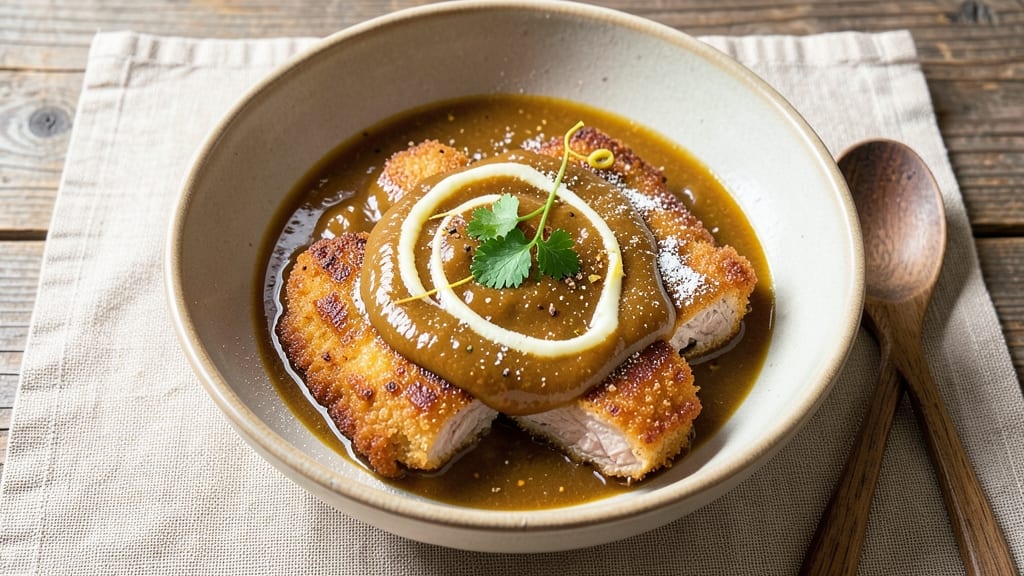
This authentic katsu curry sauce recipe delivers the same bold, velvety sauce you crave from Japanese restaurants—just with a homemade twist. 💛 The secret lies in a rich roux base, aromatic curry powder, and a balance of sweet and savory flavors that make every bite sing.
I've perfected this sauce over years of testing, ensuring it's thick enough to coat tonkatsu perfectly without being gluey.
What sets this sauce apart is the combination of traditional Japanese ingredients like dashi, sake, and mirin with classic Western elements like Worcestershire sauce. The roux forms the foundation, creating that signature creamy texture, while the curry powder adds depth and warmth.
Simmering it just right ensures a smooth, glossy finish that clings beautifully to crispy tonkatsu.
By the time you're done, you'll have a sauce that's rich, slightly sweet, and perfectly balanced—ready to elevate any tonkatsu or rice dish. The best part? It tastes even better the next day as the flavors meld together.
This sauce is your ticket to restaurant-quality meals at home, with none of the guesswork.
Make a double batch and store it in the fridge for up to a week, or freeze for months. Here's how to create this velvety, flavor-packed sauce that'll have everyone asking for seconds.
Ingredients for authentic katsu curry sauce
Nine simple ingredients transform into velvety, restaurant-quality katsu curry sauce.
| Ingredient | Amount | Notes |
|---|---|---|
| Unsalted Butter 🧈 | ½ cup | Cold, cubed for roux |
| All-Purpose Flour 🌾 | ½ cup | For smooth roux base |
| Japanese Curry Powder 🌶️ | ¼ cup | Mild or medium heat |
| Dashi Stock 🍜 | 1 cup | Homemade or instant |
| Dry Sake 🍶 | ¼ cup | For depth of flavor |
| Mirin 🍶 | ¼ cup | Sweet cooking rice wine |
| Worcestershire Sauce 🍯 | 1 tbsp | For umami kick |
| Tomato Paste 🍅 | 1 tbsp | Smooth, not chunky |
| Granulated Sugar 🍚 | 1 tbsp | Balances flavors |
| Salt 🧂 | ½ tsp | Adjust to taste |
The curry powder makes or breaks this sauce. Japanese curry powder is non-negotiable—it's got that signature blend of spices you can't find in regular curry mixes. Marukan or S&B Golden Curry are my go-tos, but any Japanese brand will do. For the roux, don't rush it—cook the butter and flour until it's a deep golden brown (about 5-7 minutes) for that rich, nutty flavor. The dashi stock? Instant dashi granules work in a pinch, but homemade with kombu and bonito flakes is worth it if you're feeling fancy.
No Japanese curry powder? Substitute with a mix of 3 tbsp curry powder, 1 tsp turmeric, 1 tsp coriander, and ½ tsp ginger—it won't be identical, but it'll get you close. Short on mirin? Dry sake plus 1 tsp sugar does the trick. The tomato paste can be skipped if you're avoiding it, but it adds that subtle sweetness that balances the richness. For a smoother sauce, strain it through a fine-mesh sieve before serving—trust me, it's worth the extra minute.
This sauce tastes even better the next day as the flavors meld together. Store it in an airtight container in the fridge for up to 1 week, or freeze for 3 months. I always double the batch—one for tonkatsu night, one to freeze for lazy days. When reheating, stir in a splash of water or dashi if it thickens too much. Perfect for tonkatsu, rice bowls, or even grilled chicken.
Why You'll Love This Recipe
- Five-Ingredient Magic: I swear by this—just butter, flour, curry powder, dashi, and sake. That’s it. No fancy prep, no hidden pantry raids. The roux builds flavor while I chop veggies, and the sake cuts through the richness like a secret handshake.
- Umami Bomb: The dashi stock and sake aren’t just there to bulk up the sauce—they’re the backbone. That deep, savory punch from the dashi? It turns a simple roux into something ridiculously good. Honestly, I’ve tried store-bought curry roux, and this beats it every time.
- Leftovers That Beg: Make a double batch and thank me later. The sauce thickens beautifully when reheated, and it pairs with anything—roast chicken, tofu, even mashed potatoes. My freezer’s always stocked with this stuff because it’s my go-to for lazy nights.
- Budget Comfort Food: Japanese curry powder is cheap, and a little goes a long way. The butter and flour are pantry staples, and sake? You don’t need the fancy stuff—just whatever’s chilling in your fridge. Filling, warm, and costs next to nothing to make. That’s my kind of meal.
Step-by-step instructions for authentic katsu curry sauce
Here's how to build restaurant-quality curry sauce from scratch—layer by layer.
🍳 Step 1: Make the Roux Foundation
Melt the ½ cup unsalted butter in a heavy-bottomed saucepan over medium heat until it foams. Add the ½ cup all-purpose flour all at once and whisk vigorously for 2-3 minutes until the mixture turns a pale golden color. This roux is your flavor anchor—don't rush it or it'll taste raw.
Watch for the color transformation: it should go from pale to golden brown, about the color of toasted breadcrumbs. If it darkens too quickly, reduce the heat slightly. Keep whisking constantly to prevent lumps. This step builds the sauce's body and carries all the flavors we'll add next.
🍳 Step 2: Bloom the Curry Powder
Immediately add the ¼ cup Japanese curry powder to the roux and cook for 1-2 minutes on medium-low heat, stirring constantly. You'll see the powder dissolve and the mixture darken slightly—this releases the curry's aromatic oils. Don't let it brown or it'll turn bitter.
Here's the thing—curry powder burns easily, so keep your heat gentle. You'll smell that signature curry aroma developing. If it starts to smell burnt, remove from heat immediately. The goal is to bloom the spices without cooking them—we'll develop the full flavor later with the liquids.
🥘 Step 3: Deglaze with Sake and Mirin
Pour in the ¼ cup dry sake and ¼ cup mirin simultaneously, whisking vigorously to scrape up any browned bits from the pan. Let the mixture simmer gently for 2-3 minutes until the alcohol cooks off and you see a slight reduction. This step adds depth and balances the richness of the roux.
You'll notice the sauce thicken slightly as the alcohol evaporates. This is normal—it's concentrating the flavors. If it gets too thick too quickly, add 1 tablespoon of the dashi stock to loosen it. The sake and mirin combination creates that authentic umami-sweet balance you find in Japanese curry.
🍳 Step 4: Build the Sauce Base
Add the 1 cup dashi stock, 1 tablespoon Worcestershire sauce, 1 tablespoon tomato paste, 1 tablespoon granulated sugar, and ½ teaspoon salt all at once. Stir well to combine, then increase heat to medium-high and bring to a gentle boil. Reduce heat to medium-low and let it simmer uncovered for 15-20 minutes, stirring occasionally.
During this time, the sauce will thicken noticeably as the starch from the roux gels. You're looking for a consistency that coats the back of a spoon but still flows smoothly. Taste as you go—this is where you can adjust seasoning. If it needs more sweetness, add a pinch more sugar. For more depth, a splash of mirin works well.
⏰ Step 5: Finish and Adjust
Once the sauce reaches your desired consistency (about 30-40 seconds of simmering after thickening), remove it from heat. Let it cool slightly for 5 minutes—this helps the flavors meld. Taste again and adjust seasoning if needed, adding more salt, sugar, or even a pinch of curry powder if you want more intensity.
For the perfect finish, strain the sauce through a fine-mesh sieve to remove any lumps. The sauce should be smooth, glossy, and balanced between sweet, savory, and spicy notes. This is your base—now it's ready to pair with crispy katsu cutlets and serve over steamed rice. The real magic happens when you pour it hot over the fried chicken!
Pro Tips For Making Authentic Katsu Curry Sauce
- Bloom the Flour Fast: Toss the flour into the pan with the butter before it stops foaming—this prevents lumps and gives you that silky roux texture. I used to wait too long, and the sauce would turn grainy no matter how much I stirred. High heat for 30 seconds, then lower it immediately.
- Toast the Curry Powder: Bloom the Japanese curry powder in the butter for 30 seconds before adding flour—this deepens the nutty aroma and prevents a raw, bitter taste. Skip this, and your sauce will smell like curry powder, not actual curry.
- Reduce the Sake First: Simmer the dry sake alone for 2 minutes to burn off the alcohol—it’s a quick step that makes the sauce taste richer and less sharp. Pouring it straight in just leaves a boozy aftertaste, and nobody wants that in their katsu curry.
- Whisk the Dashi Cold: Stir the dashi stock into the roux off the heat—hot stock can break the emulsion and turn your sauce greasy. Let the roux cool for 30 seconds first, then whisk in the stock while splashing it against the sides to cool it down faster.
Dietary considerations for authentic katsu curry sauce
Gluten-Free Adaptation
Skip the flour entirely and replace it with ½ cup gluten-free all-purpose flour blend (like Bob's Red Mill 1:1) for the roux. Whisk it into the melted butter until smooth, then proceed with the recipe as written.
The texture will be slightly lighter, but still rich and flavorful. For extra binding power, add 1 tablespoon cornstarch to the sauce during the final simmer. 🌾
Dairy-Free Version
Use ½ cup dairy-free butter substitute (like Miyoko's or Earth Balance) for the roux base. The flavor will be slightly different but still delicious. For a richer texture, add 1 tablespoon coconut cream to the finished sauce. This version works beautifully with vegan tonkatsu cutlets too!
Lower-Sodium Option
Reduce the salt to ¼ teaspoon and omit the Worcestershire sauce entirely. Instead, add ½ teaspoon soy sauce (or tamari for gluten-free) for umami depth. The sauce will still be flavorful without being overly salty. This version pairs perfectly with low-sodium dashi stock for a balanced flavor profile. 🧂
Vegetarian-Friendly
Keep the recipe exactly as written—it's already vegetarian! The sauce's rich, umami-packed flavors work beautifully with plant-based katsu cutlets or even as a dipping sauce for vegetables. For extra depth, add 1 teaspoon mushroom powder to the curry powder before blooming it in the roux. 🌱
Sugar-Free Adjustment
Replace the granulated sugar with 1 tablespoon erythritol or monk fruit sweetener to maintain sweetness without added sugar. For a more complex flavor, add ½ teaspoon vanilla extract to the simmering sauce. The sauce will still have that signature sweet-savory balance, just without the sugar content. 🍚
Spice Control
For a milder sauce, reduce the Japanese curry powder to 2 tablespoons and add ½ teaspoon ground ginger for warmth without heat. If you prefer extra spice, increase the curry powder to ⅓ cup and add a pinch of cayenne pepper.
The sauce's depth will adjust accordingly while keeping that authentic curry character. 🌶️
Nutrition facts
Frequently asked questions
Why does authentic katsu curry sauce need a roux?
The roux (butter and flour) creates the sauce's signature creamy texture and rich flavor foundation. Cooking it to a golden brown color develops nutty notes that carry all the spices and liquids. This step is what gives restaurant-style katsu curry its velvety coating that clings perfectly to tonkatsu.
Can I substitute regular curry powder for Japanese curry powder?
Not recommended—Japanese curry powder has a distinct blend of spices that creates the authentic flavor profile. For a substitute, mix 3 tablespoons regular curry powder with 1 teaspoon turmeric, 1 teaspoon coriander, and ½ teaspoon ginger. The result won't be identical but will capture some of the depth.
How do I fix a sauce that's too thick or too thin?
For a thick sauce that's too gluey, thin it with 1 tablespoon warm dashi stock at a time while stirring. If it's too thin, simmer uncovered for 2-3 extra minutes to reduce. The ideal consistency coats the back of a spoon but still flows smoothly when poured.
Can I make this sauce ahead of time?
This sauce tastes even better the next day as flavors meld. Store in an airtight container in the fridge for up to 1 week or freeze for 3 months. When reheating, stir in a splash of water or dashi if it thickens too much. Perfect for meal prep!
What's the best way to serve this curry sauce?
Pour hot sauce generously over crispy tonkatsu cutlets and serve with steamed Japanese rice. For extra richness, drizzle a little over rice bowls or use as a dipping sauce for vegetables. The sauce's balanced sweet-savory flavor works beautifully with both meat and plant-based dishes.