
Sauces & Condiments
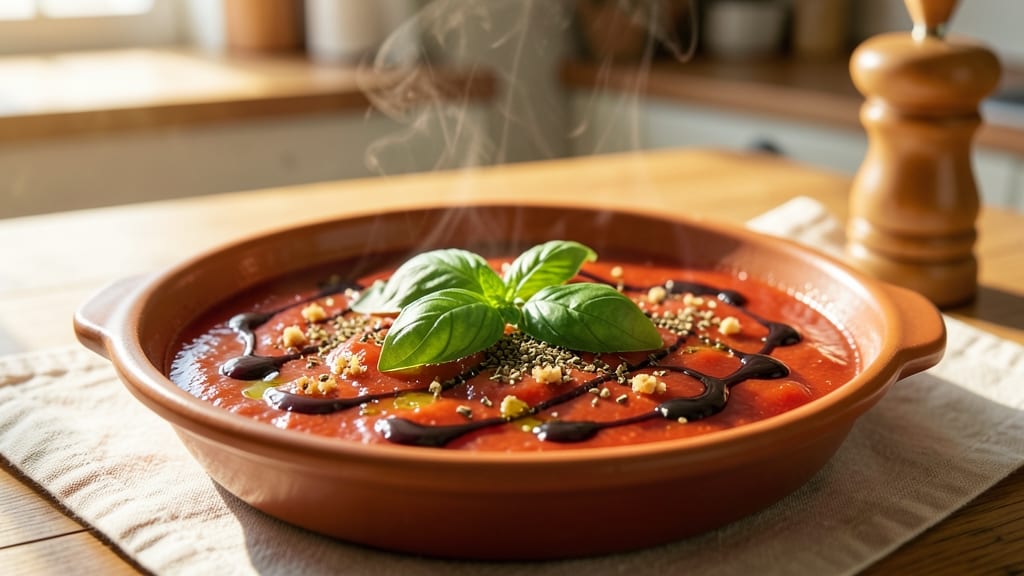
This authentic Italian pasta sauce recipe from scratch delivers the rich, vibrant flavor of Nonna's kitchen without a single canned shortcut. The secret lies in slow-simmered San Marzano tomatoes, fresh basil, and a touch of Parmigiano-Reggiano that transforms simple ingredients into restaurant-quality sauce. I've perfected this technique over years of Italian cooking, and it's the foundation for any pasta dish—simple yet deeply flavorful.
The process begins with sautéing garlic in extra-virgin olive oil until golden, then building layers of flavor by adding crushed tomatoes, a splash of red wine, and a bouquet garni of basil, oregano, and thyme.
Simmering for at least 45 minutes allows the sauce to develop depth, with the starch from the tomatoes thickening it naturally. This isn't just sauce—it's a symphony of Italian flavors that clings perfectly to pasta.
What sets this sauce apart is its balance of acidity, sweetness, and umami, achieved through precise cooking techniques. The tomatoes break down into a velvety consistency while retaining their natural sweetness, and the basil adds that signature freshness that canned sauces can't replicate.
The result? A sauce so authentic, it'll fool even the most discerning Italian nonna.
Use it immediately over al dente pasta or store it in the fridge for up to a week—though I doubt you'll have leftovers. For extra richness, finish with a swirl of olive oil and freshly grated Parmigiano-Reggiano. Let's get cooking!
Ingredients for authentic italian pasta sauce recipe from scratch
San Marzano tomatoes, fresh basil, and slow-simmered layers create this restaurant-quality Italian sauce from scratch.
| Ingredient | Amount | Notes |
|---|---|---|
| San Marzano Tomatoes 🍅 | 28 oz | Crushed by hand or blender |
| Extra-Virgin Olive Oil 🫒 | ½ cup | High-quality, fruity variety |
| Garlic Cloves 🧄 | 4 cloves | Minced for even distribution |
| Red Wine 🍷 | ¼ cup | Dry, bold variety like Chianti |
| Fresh Basil Leaves 🌿 | ½ cup | Packed, stems removed |
| Dried Oregano 🍃 | 1 tsp | Italian or Mediterranean blend |
| Dried Thyme 🌿 | ½ tsp | Fresh preferred if available |
| Parmigiano-Reggiano Cheese 🧀 | ¼ cup | Freshly grated, block preferred |
| Sea Salt 🧂 | 1 tsp | Diamond Crystal preferred |
| Black Pepper 🌶️ | ½ tsp | Freshly cracked |
San Marzano tomatoes are the heart of this sauce—their natural sweetness and low acidity create the perfect base. Whole peeled tomatoes from Eataly or specialty Italian markets yield the best results, but high-quality canned San Marzano works in a pinch. The garlic should be minced finely to avoid bitterness, and red wine with at least 12% alcohol adds depth without overpowering. For the basil, farmers market varieties have more vibrant flavor than grocery store plastic containers. The Parmigiano-Reggiano must be freshly grated—pre-shredded contains anti-caking agents that ruin texture.
No red wine? Substitute with beef broth or additional tomato juice, though the flavor will be subtly different. Fresh basil unavailable? Dried basil at half the amount works, but it lacks the bright aroma. For extra richness, add a splash of balsamic vinegar at the end. The olive oil should be extra-virgin with fruity notes—cheap oil will make the sauce taste flat. If you're using dried herbs, toast them lightly in the olive oil before adding tomatoes to release their essential oils. The sea salt matters—Diamond Crystal dissolves more easily than Morton's.
This sauce develops flavor over time—simmer uncovered for 45-60 minutes to concentrate the flavors. Store in an airtight container in the fridge for up to 7 days, or freeze for 3 months. For best texture, add a splash of water or pasta water when reheating. The sauce thickens as it cools, so don't over-reduce during cooking. To serve, finish with a drizzle of olive oil and extra Parmigiano-Reggiano—this is where the magic happens
Why You'll Love This Recipe
- No-Fuss Simplicity: I swear by this method—just crush garlic, simmer tomatoes, and let the wine do its magic. No blenders, no peeling cans, just a pot and 20 minutes of hands-off time while you chop basil or pour yourself a glass.
- Wine-Infused Depth: That splash of red wine? It’s not just flavor—it’s the secret to a sauce that tastes lived-in, not store-bought. The San Marzano tomatoes sweeten as they cook, and the olive oil ties it all together with a velvety finish that’s impossible to resist.
- Weeknight to Dinner Party: Make a double batch on Sunday, and you’ve got lunch, dinner, and a last-minute guest showstopper covered. Slather it on fresh pasta, toss with grilled chicken, or even drizzle over toasted bread—it’s the ultimate crowd-pleaser without the fuss.
- Budget-Friendly Luxury: San Marzano tomatoes and good olive oil might sound fancy, but they stretch further than jarred sauces. A single batch feeds four, reheats beautifully, and costs less than takeout—plus, the basil you grow (or buy fresh) makes it feel gourmet without the markup.
Step-by-step instructions for authentic Italian pasta sauce
Here's the method that delivers restaurant-quality tomato sauce with deep flavor and bright acidity.
Prepare the Tomato Base
Begin by crushing the 28 oz San Marzano tomatoes using your hands or a blender until you achieve a chunky consistency—this preserves the natural sweetness and texture. Transfer the crushed tomatoes to a large, heavy-bottomed saucepan and place it over medium heat. Let it simmer uncovered for 10-15 minutes until the tomatoes begin to break down and release their juices, reducing slightly in volume.
This initial reduction concentrates the natural sugars in the tomatoes, forming the foundation of your sauce. You'll notice the color deepen from vibrant red to a rich, ruby hue—a visual cue that the flavors are intensifying. Keep the heat steady; too high will cause the sauce to splatter, and too low will prolong the cooking time unnecessarily.
Sauté Aromatics in Olive Oil
While the tomatoes simmer, heat the 0.5 cup Extra-Virgin Olive Oil in the same saucepan over medium-low heat. Add the 4 cloves minced garlic cloves and sauté for 1-2 minutes until they turn a pale golden color and become fragrant. Be vigilant—garlic burns quickly, and once it darkens, it imparts a bitter taste that overpowers the delicate tomato flavor.
Next, stir in the 1 tsp Dried Oregano and 0.5 tsp Dried Thyme, allowing the spices to bloom for 30 seconds. This step ensures the flavors meld together, creating a cohesive aromatic base. The olive oil should shimmer gently, indicating it's ready for the next addition without risking burning the delicate herbs.
Deglaze with Red Wine
Pour in the 0.25 cup Red Wine and immediately scrape the bottom of the pan with a wooden spoon, collecting all the browned bits—they're packed with flavor. Allow the wine to simmer for 3-4 minutes until it reduces by half and most of the alcohol has evaporated. You'll notice the sauce thicken slightly and the aroma become more complex, with notes of the wine integrating into the tomato base.
This deglazing step is critical for building depth. The wine not only adds acidity but also dissolves the concentrated flavors from the caramelized bits on the pan. If the sauce reduces too quickly, lower the heat slightly to maintain a gentle simmer—you want the wine to work its magic without boiling off.
Simmer and Season
Return the tomatoes to the pan and stir in the 1 tsp Sea Salt and 0.5 tsp Black Pepper. Let the sauce simmer uncovered over low heat for 30-40 minutes, stirring occasionally. The sauce should reduce to a thick, syrupy consistency, coating the back of a spoon. You'll see the color darken further, and the texture will become velvety rather than watery.
During this time, the acidity in the tomatoes will mellow, and the flavors will meld into a harmonious balance. If the sauce becomes too thick, add 1-2 tablespoons of water to loosen it slightly. The goal is a sauce that clings to pasta without being gluey—this ensures it coats each strand perfectly when tossed.
Finish with Fresh Basil and Cheese
In the final 5 minutes of cooking, stir in the 0.5 cup Fresh Basil Leaves and 0.25 cup Parmigiano-Reggiano Cheese. The basil should wilt slightly, releasing its bright, aromatic oils into the sauce. The cheese will melt smoothly, adding a rich, umami depth. Taste and adjust the seasoning if needed—this is your chance to fine-tune the balance of salt, acidity, and sweetness.
Remove the sauce from heat and let it rest for 10 minutes before serving. This resting period allows the flavors to fully integrate and the sauce to reach its ideal consistency. The result is a sauce that's vibrant, balanced, and authentically Italian—one that transforms simple pasta into a dish worthy of a trattoria.
Pro Tips For Making Authentic Italian Pasta Sauce Recipe From Scratch
- CRUSH THE TOMATOES FIRST: Dump whole San Marzano tomatoes straight into the pot? Nope. Peel, crush them by hand (or pulse in a food mill) into rough chunks—no blender. This keeps texture alive and prevents that sad, watery sauce. I learned this the hard way after making a batch that looked like soup.
- SWEAT THE GARLIC LOW: High heat turns garlic bitter fast. Cook those cloves in olive oil over medium-low, stirring constantly, until they’re golden but not colored—about 3-4 minutes. If you’re impatient (like me), you’ll taste it. Trust the process.
- DEGLAZE WITH WINE, THEN WAIT: Pour in the red wine, let it bubble for 30 seconds, then add the tomatoes. Don’t rush to stir—let the alcohol cook off first, or you’ll end up with a sharp, boozy sauce. This is the thing that matters most for balance.
- SALT THE WATER AFTER BOILING: Yes, even with San Marzano tomatoes (which are low-acid). Boil your pasta water first, then add salt—about 1 tablespoon per liter. This guarantees the water’s properly seasoned by the time the pasta hits. I skip this when I’m lazy, and the sauce always tastes flat.
Essential equipment for authentic italian pasta sauce recipe from scratch
Heavy-Bottomed Saucepan
Your saucepan is the workhorse of this recipe—opt for a 3-4 quart stainless steel or enameled cast iron like All-Clad or Le Creuset. These materials distribute heat evenly and prevent scorching, which is critical when simmering tomatoes for 45+ minutes.
A heavy pan also maintains steady temperatures, ensuring your sauce develops depth without burning. I've ruined many batches in lighter pans that cause hot spots—trust me, it's worth the investment. 🔥
Wooden Spoon
A long-handled wooden spoon (like Oxo Good Grips) is essential for stirring without scratching your pan. Wood distributes heat better than metal and won't react with acidic ingredients. Use it to scrape up those flavorful browned bits during the wine deglazing step—this is where the magic happens.
I keep mine in my saucepan drawer at all times for this exact reason. ✨
Fine-Mesh Strainer
For removing basil stems or any potential debris, a fine-mesh strainer (like OXO Good Grips) ensures a silky-smooth sauce. I prefer one with a removable bottom so I can rinse it easily.
If you're using fresh herbs, straining them prevents bitterness from stems that can overpower the delicate tomato base. This is especially important when working with large batches. 🌿
Cheese Grater
Freshly grated Parmigiano-Reggiano makes all the difference—never use pre-shredded cheese. A fine-hole grater (like Microplane) gives you the perfect texture without adding anti-caking agents. I like to grate directly into the saucepan during the final minutes of cooking so the cheese melts smoothly into the sauce.
This also saves cleanup—no extra bowls to wash! 🧀
Measuring Cups & Spoons
Precision matters with Italian cooking—use stainless steel measuring cups (like We Are the Mighty) for the olive oil and wine, and precision measuring spoons for the herbs and spices. The difference between ½ tsp and 1 tsp of thyme can completely change the flavor profile.
I keep my set on a magnetic strip near my stove for quick access. 📏
Optional: Immersion Blender
If you prefer a smoother sauce without seeds, an immersion blender (like Ninja) lets you blend directly in the pot. Pulse for 10-15 seconds at the end for a velvety texture while keeping the sauce's natural body.
This is especially useful if you're using whole tomatoes that release more seeds. Just don't over-blend—we're not making tomato soup here! 💫
Nutrition facts
Frequently asked questions
Why do you recommend San Marzano tomatoes specifically?
San Marzano tomatoes are the gold standard for Italian pasta sauce because of their sweet, low-acid profile and thick flesh. Their natural sweetness balances the acidity perfectly, while their dense texture breaks down beautifully during simmering. Regular grocery store tomatoes often have higher acidity, which can make your sauce taste sharp rather than balanced.
Can I substitute red wine with something else?
Yes! If you don't have red wine, use ½ cup beef broth or tomato paste mixed with ¼ cup water for depth. For a non-alcoholic version, try 1 tablespoon balsamic vinegar>—it adds complexity without the wine's boozy notes. Just remember: wine contributes acidity and umami that other substitutes can't fully replicate.
How do I know when the sauce is done?
The sauce is ready when it coats the back of a spoon smoothly and has reduced to about half its original volume. It should be thick enough to cling to pasta but still have a silky texture. If it's too thick, add 1-2 tablespoons of water or pasta water> while reheating—never thin it before resting.
What's the best way to store leftovers?
Store in an airtight glass container in the fridge for up to 7 days. For longer storage, freeze in portions for 3 months>. When reheating, add a splash of water or pasta water to restore the original consistency. Never freeze with basil—it turns mushy. Instead, add fresh basil when reheating.
Can I make this sauce in a slow cooker?
Follow the same steps but transfer everything to a 3-4 quart slow cooker on low heat for 4-6 hours>. The gentle heat enhances the flavors even more. For best results, stir occasionally and add water as needed to prevent burning. The slow cooker method is perfect for hands-off prep.