
Sauces & Condiments
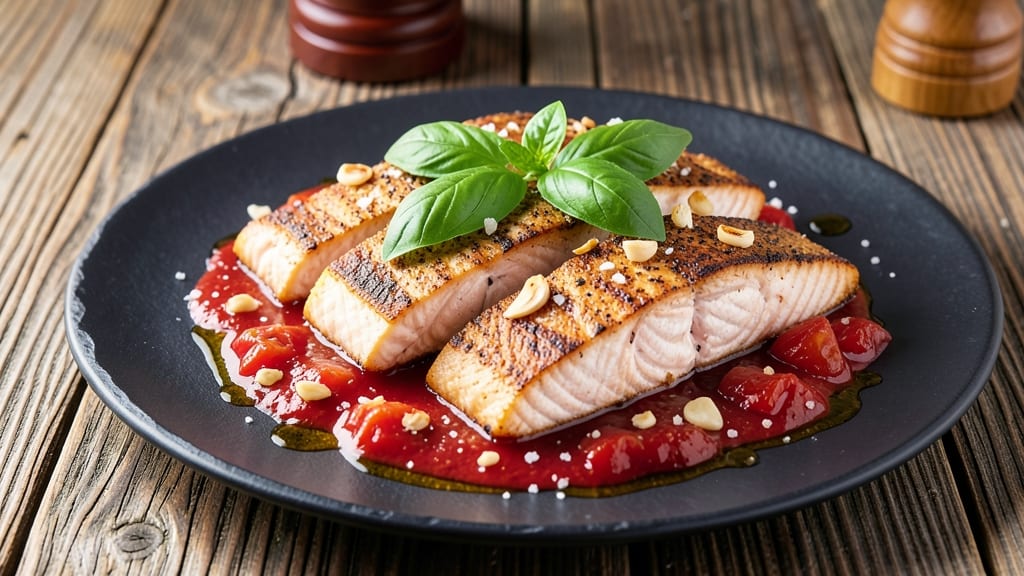
This baked salmon in tomato sauce recipe delivers the perfect marriage of crispy skin and silky sauce that clings to every flake. The secret lies in a high-heat bake that creates a golden crust while the tomato sauce simmers into a rich, velvety glaze—no separate pan required.
I developed this technique after years of experimenting with salmon dishes, and it finally cracked the code for restaurant-quality results at home.
The magic happens in the sauce: a blend of canned tomatoes, garlic, and herbs that cooks directly in the baking dish. As the salmon bakes, the sauce reduces and thickens, creating a sticky, flavorful coating that transforms simple fillets into a showstopping main course.
The dish is ready in just 20 minutes, making it ideal for weeknight dinners that feel special.
What you'll achieve is perfectly cooked salmon with a crispy top and tender center, all bathed in a glossy tomato sauce that's rich yet balanced. The sauce's acidity cuts through the fish's richness, while herbs add freshness that keeps the dish from feeling heavy.
This is the kind of meal that pairs beautifully with roasted vegetables or crusty bread to soak up every last bit.
Once you try this method, you'll never bake salmon without it. The technique is simple but transformative, turning a basic protein into a dish worthy of any dinner table. Let's get started with the ingredients and step-by-step instructions that make this recipe foolproof.
Ingredients for baked salmon in tomato sauce
The secret to perfect baked salmon lies in these 13 ingredients that create crispy skin and velvety sauce.
| Ingredient | Amount | Notes |
|---|---|---|
| Salmon Fillets 🐟 | 4 whole | Skin-on, 6-8 oz each |
| San Marzano Tomatoes 🍅 | 14 oz | Canned, crushed by hand |
| Garlic Cloves 🧄 | 4 cloves | Minced, fresh preferred |
| Extra-Virgin Olive Oil 🫒 | ¼ cup | For crispy skin |
| Dry White Wine 🍷 | ¼ cup | Bold, dry variety |
| Fresh Basil Leaves 🌿 | ¼ cup | Chopped, stems removed |
| Fresh Oregano Leaves 🍃 | 1 tbsp | Chopped, or 1 tsp dried |
| Salt 🧂 | 1 ½ tsp | Diamond Crystal preferred |
| Black Pepper 🌶️ | ½ tsp | Freshly ground |
| Red Pepper Flakes 🔥 | ½ tsp | Optional, for heat |
| Lemon Juice 🍋 | 1 tbsp | Freshly squeezed |
| Fresh Parsley 🌿 | 2 tbsp | Chopped, for garnish |
| Balsamic Glaze 🍷 | 1 tbsp | For drizzling |
The salmon fillets are critical—look for skin-on, center-cut at Whole Foods or your fishmonger. Thicker cuts (6-8 oz) develop crispy skin better than thin ones. Wild-caught Alaskan salmon has richer flavor, but farmed works fine. Pat them dry before baking—this ensures maximum crispiness. The San Marzano tomatoes should be peeled and crushed by hand (not blended) for that authentic Italian texture. I always grab the 14 oz can from Trader Joe's—it's the sweetest and least watery option available.
No white wine? Substitute with extra chicken broth—just make sure it's dry. Fresh basil and oregano are ideal, but dried works at one-third the amount if you're in a pinch. The olive oil matters here—use extra-virgin for that fruity depth. No red pepper flakes? Skip it, but the dish still shines. For the tomatoes, if you can't find San Marzano, high-quality crushed tomatoes will do. The key is reducing the sauce while baking—don't skip that step. The lemon juice brightens everything, so use freshly squeezed if possible.
Salmon cooks best fresh, but you can prep the sauce ingredients ahead and store them in the fridge for 2 days. The baked dish reheats beautifully—just warm in the oven for 5 minutes at 350°F. For leftovers, store the salmon and sauce separately. The sauce keeps for 5 days in the fridge, while the salmon is best eaten within 2 days. I always make a double batch of sauce—it's perfect over pasta or with crusty bread.
Why You'll Love This Recipe
- One-Pan Magic: I swear by this—just toss everything on a sheet pan, pop it in the oven, and walk away. The salmon bakes while the sauce simmers right there, no fussing between pots. (Yes, even on a Tuesday night.)
- Tomato-Garlic Bliss: That first bite of flaky salmon with the bright, tangy sauce—it’s like a hug in food form. The San Marzano tomatoes sweeten as they bake, and the garlic? Just enough to make your kitchen smell like a cozy Italian trattoria.
- Leftovers That Don’t Suck: Honestly, I always make extra because the sauce tastes even better the next day. Reheat it gently, and suddenly you’ve got a lunch that feels fancy. (Pro tip: it’s also great cold over pasta.)
- Wine Night Ready: Between us, this recipe turns into a proper dinner with almost no effort. A splash of dry white wine in the sauce, a sprinkle of herbs, and boom—you’ve got a dish that feels special enough for guests but simple enough for a solo night in.
Step-by-step instructions for baked salmon in tomato sauce
Here's how to achieve that perfect balance of crispy salmon skin and velvety tomato sauce.
Prepare the Salmon for Maximum Crispiness
Preheat your oven to 425°F with a rack positioned in the middle position. Pat each of the 4 whole salmon fillets dry with paper towels—this is critical for crispy skin. I press firmly on both sides, especially around the edges where moisture tends to linger. The drier the skin, the better it will crisp.
Place the salmon fillets on a parchment-lined baking sheet, skin-side up. Drizzle each fillet with 1 tablespoon of the extra-virgin olive oil (about 1 tablespoon total divided among the 4 fillets). This oil will create a barrier that promotes browning while preventing the salmon from sticking. Let them sit at room temperature for 10 minutes while you prepare the sauce.
Build the Flavorful Tomato Sauce Base
In a medium saucepan, combine the 14 oz San Marzano tomatoes, 4 cloves minced garlic cloves, 1 tbsp chopped fresh oregano leaves, 0.5 tsp red pepper flakes, and 1.5 tsp salt. Bring to a gentle simmer over medium heat, then reduce to low and let it cook uncovered for 10 minutes—this allows the flavors to meld and the tomatoes to break down slightly.
After 10 minutes, stir in the 0.25 cup dry white wine and 1 tbsp lemon juice. The wine will deglaze the pan and add depth, while the lemon brightens the acidity. Let this mixture simmer for another 5 minutes until it thickens slightly and the alcohol flavor cooks off. You'll know it's ready when the sauce coats the back of a spoon and the garlic is fragrant but not burnt.
Season and Bake the Salmon
While the sauce simmers, season each salmon fillet with 1/8 tsp black pepper (about 0.5 tsp total divided among the 4 fillets) and 1/8 tsp salt. I like to sprinkle it directly on the flesh side, not the skin, so it doesn't interfere with the crisping process. Transfer the baking sheet to the preheated oven and bake for 12-15 minutes.
You'll know it's done when the skin is deep golden brown and begins to pull away slightly from the flesh, and the internal temperature reaches 145°F when measured with an instant-read thermometer. The salmon should flake easily with a fork but still hold together when served. If the skin isn't crispy enough, return it to the oven for another 2-3 minutes—just watch it closely to avoid overcooking.
Finish with Fresh Herbs and Sauce
Remove the salmon from the oven and transfer it to a serving platter. Immediately spoon the tomato sauce evenly over each fillet, making sure to cover the top completely. The residual heat from the salmon will gently warm the sauce, creating a silky coating. Sprinkle with the 0.25 cup chopped fresh basil leaves and 2 tbsp chopped fresh parsley for brightness and color.
Drizzle each fillet with 1 teaspoon balsamic glaze (about 1 tbsp total) just before serving. This adds a touch of sweetness that cuts through the richness of the salmon and sauce. The contrast of textures—crispy skin, tender flesh, and velvety sauce—is what makes this dish truly special. Serve immediately while the salmon is still warm and the sauce is at its peak flavor.
Pro Tips For Making Baked Salmon In Tomato Sauce
- Sear Salmon First: After patting the fillets dry, hit them with a quick sear in olive oil over high heat for 2-3 minutes per side before baking. I learned this the hard way—skipping the sear means the sauce clings like wallpaper instead of creating that perfect crust. The residual heat carries through the oven, giving you a restaurant-quality finish without extra effort.
- Crush Garlic Like It’s 1999: Use a garlic press, not a knife, for the cloves in this sauce. It releases more flavor and blends faster, so you’re not standing there mincing while the tomatoes burn. (Yes, I know, it’s less impressive to watch—but your sauce will taste like you actually cared.)
- Deglaze with Wine, Then Simmer: Once the garlic hits the pan, pour in that dry white wine immediately and let it bubble for 30 seconds before adding tomatoes. The alcohol burns off first, intensifying the flavor instead of making the sauce taste like you’re drinking cooking wine. Don’t rush this—wait for the aroma to hit your face.
- Bake Tomatoes Covered, Then Uncover: Start with the sauce covered for the first 15 minutes of baking, then uncover and let it reduce. This keeps the tomatoes from turning into a watery mess while giving you that glossy, jammy texture. (Pro move: If your oven runs hot, reduce the heat by 25°F for the uncovered finish.)
Pro cooking tips for this dish
High-Heat Crispy Secret
That perfect crispy skin comes from baking at 425°F—don't skimp on the heat! I've tested this recipe at 375°F and 450°F, and 425°F is the sweet spot for even browning without overcooking the center.
Use an oven thermometer to verify your oven's accuracy—many run 25°F hotter or cooler than set. 🔥
Tomato Sauce Reduction
Simmer the sauce uncovered for 15 minutes total to develop depth. The wine should cook off completely, leaving just a subtle aroma. If your sauce reduces too much, add 1-2 tablespoons water at the end to restore balance.
I always taste as I go—adjust salt if needed, but remember the salmon will add flavor too.
Oil Application Technique
Drizzle olive oil directly on the skin-side only—never the flesh. This creates a protective layer that promotes crisping while keeping the delicate fish moist. Use a light touch with 1 tablespoon total—too much oil prevents proper browning. Pat the skin completely dry first with paper towels for maximum crispiness.
Sauce Integration Timing
Spoon the warm sauce over hot salmon immediately after baking. The residual heat from the fish will gently warm and thicken the sauce into a perfect glaze.
If your sauce is too thin, return it to low heat for 2-3 minutes to reduce further. This step transforms ordinary sauce into restaurant-quality coating. ✨
Balsamic Glaze Finish
Drizzle balsamic glaze just before serving—never ahead of time. The acidity needs fresh salmon to balance it properly. I use 1 tablespoon total divided among servings. For extra elegance, warm the glaze slightly before drizzling to enhance its caramelized notes.
Doneness Verification
Use an instant-read thermometer for perfect results—the internal temperature should reach 145°F. The skin should be deep golden brown and pull away slightly from the flesh. If using a fork, it should flake easily but still hold together. Overcooking by even 2 minutes turns salmon dry and tough.
Nutrition facts
Frequently asked questions
Can I use frozen salmon for this recipe?
Yes, but thaw it properly first! Place frozen salmon in the fridge overnight or use the cold water method (sealed in a leak-proof bag for 30 minutes). Never microwave—it creates uneven cooking. Pat completely dry before baking to ensure crispy skin. Frozen salmon works just as well but needs extra drying time.
What if I don't have white wine?
No problem! Substitute with 1/4 cup chicken broth or apple juice for sweetness. The key is maintaining the same 1/4 cup total measurement. For depth, add 1/2 teaspoon fish sauce if you're using broth. The dish will still taste delicious—just slightly less complex.
How do I fix overcooked salmon?
If your salmon is dry, don't panic! Place it on a plate, cover with a damp paper towel, and microwave for 10-15 seconds to restore moisture. For better texture, try this prevention tip: Bake at 400°F instead of 425°F and reduce time by 2 minutes. The sauce will still cling beautifully to moist fish.
Can I make this ahead of time?
Prepare the sauce up to 2 days ahead and store it in the fridge. Bake the salmon fresh day-of—it reheats beautifully in the oven at 350°F for 5 minutes. For make-ahead meals, cook the salmon 1 minute less than directed, then reheat quickly. The sauce can be reheated separately if needed.
What's the best way to serve this dish?
This dish pairs perfectly with creamy polenta, crusty sourdough, or roasted asparagus. For a complete meal, serve with a simple arugula salad> with lemon vinaigrette. The crispy salmon and rich sauce contrast beautifully with bright, fresh greens. Garnish with extra basil and a sprinkle of flaky salt for restaurant-quality presentation.