
Sauces & Condiments
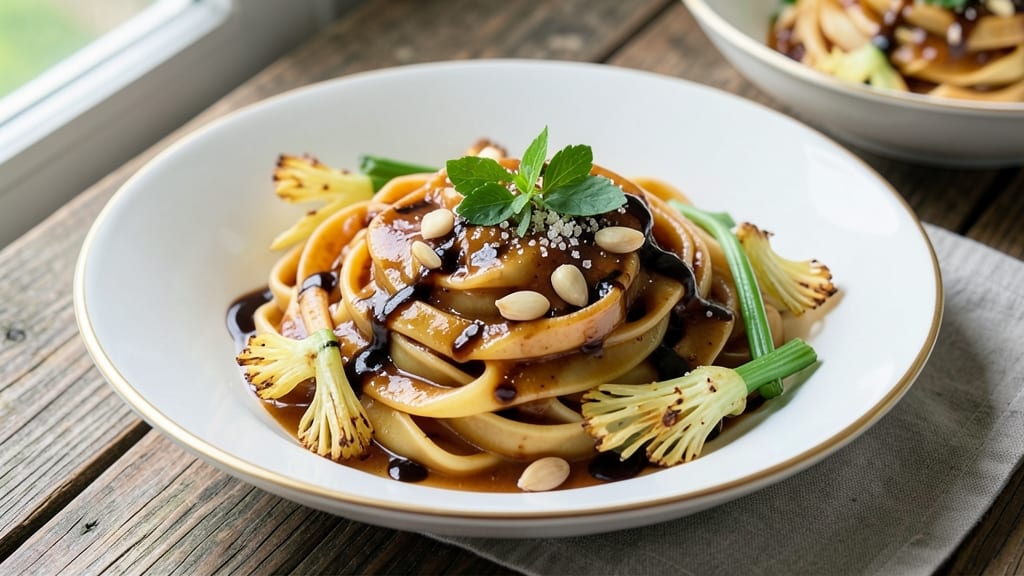
This balsamic vinegar pasta sauce transforms simple ingredients into a glossy, tangy-sweet masterpiece that elevates any pasta dish. The secret lies in slow simmering—reducing balsamic vinegar with butter and cream until it thickens into a velvety, caramelized sauce with a deep, complex flavor. I developed this recipe after years of refining the balance between sweetness and acidity, ensuring every spoonful delivers that perfect harmony.
The sauce starts with a simple base of butter, heavy cream, and balsamic vinegar, but it’s the reduction process that creates magic. As the mixture simmers, the vinegar mellows into a rich, glossy glaze while the cream adds a luxurious creaminess.
A pinch of salt and a splash of lemon juice at the end brighten the flavors, cutting through the richness just enough to keep it balanced. This sauce is foolproof—no complicated techniques, just patience and attention to detail.
What makes this sauce truly special is its versatility. Drizzle it over al dente pasta for an instant upgrade, or use it as a glaze for grilled chicken or roasted vegetables.
The glossy finish and deep balsamic flavor make it a showstopper, while the creamy texture ensures it clings perfectly to every bite. Once you taste the difference between this homemade version and store-bought, you’ll never go back.
For extra depth, consider adding caramelized onions or garlic during the reduction, or finish with fresh herbs like basil or parsley. The sauce keeps well in the refrigerator for up to 5 days, making it perfect for meal prep. Let’s get started—your taste buds will thank you.
Ingredients for balsamic vinegar pasta sauce
Nine simple ingredients transform into a velvety, caramelized sauce that clings perfectly to pasta.
| Ingredient | Amount | Notes |
|---|---|---|
| Unsalted Butter 🧈 | ½ cup | Cold, cubed for even melting |
| Heavy Cream 🥛 | 1 cup | Full-fat for richest texture |
| Balsamic Vinegar 🍷 | ½ cup | Aged, not white vinegar |
| Celery Crown 🧅 | 1 whole | Fresh, leaves trimmed, chopped |
| Garlic Cloves 🧄 | 3 cloves | Minced, for aromatic depth |
| Granulated Sugar 🍚 | 1 tbsp | Balances acidity, optional |
| Diamond Crystal Kosher Salt 🧂 | ½ tsp | Fine grain preferred |
| Fresh Lemon Juice 🍋 | 1 tbsp | Brightens at the end |
| Fresh Basil Leaves 🌿 | ¼ cup | Chopped, for fresh finish |
| Extra-Virgin Olive Oil 🫒 | 1 tbsp | For glossy finish |
The balsamic vinegar is the star—aged, not white vinegar, or you'll miss that deep, complex flavor. Trader Joe's and Whole Foods carry excellent options, but any bottle labeled 'aged' will work. Fresh celery crowns add a subtle, aromatic bite that balances the richness—look for crisp, vibrant stalks at the grocery store. The butter should be cold when you start, so it melts gradually and creates those beautiful ribbons. Heavy cream is non-negotiable here; light cream or half-and-half will make the sauce too thin. For the garlic, I always use three cloves—just enough to add flavor without overpowering the balsamic's sweetness.
No aged balsamic? Substitute with 2 tbsp of balsamic glaze plus 1 tbsp regular balsamic vinegar—it's sweeter but works in a pinch. Running short on celery? Swap for 2 tbsp finely chopped shallots or a pinch of celery seed. The sugar is optional, but if you're using a very tart vinegar, add the full tablespoon to balance. Fresh basil is ideal, but dried basil at half the amount works if you're in a bind. The olive oil at the end is what gives the sauce that signature glossy finish—don't skip it. And if you're worried about the sauce being too rich, the lemon juice at the end cuts through it perfectly.
This sauce tastes even better the next day as the flavors meld. Store it in an airtight container in the fridge for up to 5 days. If you make extra, freeze it in 1/4-cup portions—thaw overnight in the fridge before reheating. The sauce reheats beautifully, so it's perfect for meal prep. I like to drizzle it over pasta, but it also works as a glaze for grilled chicken or roasted vegetables. Just warm it gently and add a splash of water or cream if it thickens too much.
Why You'll Love This Recipe
- Foolproof Mise en Place: I swear by this—just chop the celery crown and garlic once, then let them sit in the butter while I handle the pasta. No last-minute scrambling, no forgotten ingredients.
- Rich Without Effort: That heavy cream and butter combo makes it velvety, while the balsamic vinegar cuts through with a tangy punch. Honestly, it’s the kind of sauce that makes you close your eyes mid-bite.
- Weeknight to Dinner Party: Same recipe, different vibes. Toss it with fettuccine for a quick weeknight meal, or drizzle it over grilled chicken for a fancier spread. My in-laws think I slaved over it—our secret.
- Leftovers That Don’t Suck: The sauce thickens beautifully when reheated, and it actually improves the next day. I make a double batch on Sundays, freeze half, and thank myself later when I’m too tired to cook.
Step-by-step instructions for balsamic vinegar pasta sauce
Here's how to create a rich, glossy reduction with that signature celery crown bite everyone loves.
Sauté Celery and Garlic in Butter
Heat a medium saucepan over medium heat and add the 0.5 cup unsalted butter. Once the butter has melted and begins to foam, add the chopped celery crown and 3 cloves minced garlic. Cook for 5-6 minutes until the celery softens and turns a beautiful golden color.
This step builds the aromatic foundation of your sauce. If the butter starts to brown too quickly, reduce the heat slightly. You want the celery to caramelize just enough to develop that sweet, nutty flavor without burning. Stir occasionally to ensure even cooking and prevent sticking.
Add Sugar and Vinegar for Depth
Sprinkle in the 1 tablespoon granulated sugar and stir to combine. After 1 minute, pour in the 0.5 cup balsamic vinegar and bring the mixture to a gentle simmer. Let it reduce by half, which should take about 3-4 minutes, until the sauce thickens and becomes syrupy.
The sugar helps balance the acidity of the balsamic vinegar while adding a subtle caramel note. As the vinegar reduces, you'll notice the aroma intensify—this is when the sauce starts to transform. Don't rush this step; patience here ensures a well-rounded flavor profile. You're aiming for a glossy, reduced sauce that coats the back of a spoon.
Incorporate Cream and Salt
Lower the heat to low-medium and slowly pour in the 1 cup heavy cream, whisking constantly to prevent curdling. Stir in the 0.5 teaspoon kosher salt and let the sauce simmer gently for 2-3 minutes until it thickens slightly but remains silky.
The cream adds richness and helps create that luxurious texture we all crave. If the sauce starts to look too thick, you can add a splash of water or pasta water later to adjust consistency. Taste and adjust seasoning if needed—you might need a touch more salt to balance the acidity from the balsamic.
Finish with Lemon and Basil
Remove the sauce from heat and stir in the 1 tablespoon fresh lemon juice and 1 tablespoon extra-virgin olive oil. Add the 0.25 cup chopped fresh basil leaves and let them steep for 1 minute before straining through a fine-mesh sieve if you prefer a smoother texture, or leave them in for a more rustic finish.
The lemon juice brightens the sauce and cuts through the richness, while the olive oil adds a final glossy sheen. The basil infuses the sauce with its fresh, herbal notes. For the best results, serve this sauce immediately over your choice of pasta, tossing it well to coat each strand perfectly. The sauce will continue to thicken slightly as it sits, so don't worry if it looks a bit loose right after cooking.
Pro Tips For Making Balsamic Vinegar Pasta Sauce
- Sweat the Celery First: Toss the chopped celery crown in the pot with the butter before adding garlic—it’ll soften and release flavor without burning. I used to add garlic first and ended up with bitter, overcooked bits that ruined the whole sauce. Let the celery cook for 3-4 minutes until it’s just wilting, then add garlic for that perfect balance.
- Melt Butter Slowly: Don’t rush the butter—let it melt gently over medium-low heat, swirling the pan to coat the celery evenly. After burning two batches of sauce (yes, really), I learned that high heat turns butter into grease before it can flavor the veggies. Patience here means richer, nuttier depth later.
- Reduce the Balsamic Longer: Pour in the balsamic vinegar after the cream has thickened, then simmer uncovered for 5-7 minutes—it’ll darken into a glossy, caramelized syrup. Skipping this step leaves the sauce thin and sharp; letting it reduce transforms it into something velvety and complex. (Yes, it’ll smell like a vinegar bomb at first—that’s normal.)
- Salt the Cream Early: Stir a pinch of salt (about ¼ teaspoon) into the heavy cream before adding it to the pot—it rounds out the acidity of the balsamic and balances the butter’s richness. I used to add salt at the end, and the sauce always tasted flat. Trust me, this tiny step makes a real difference.
Perfect pairings for this dish
Pasta Pairings
This glossy sauce clings beautifully to al dente pasta like fettuccine or linguine, but I also love it with penne or rigatoni for extra surface area to soak up the flavor. For a lighter option, try angel hair pasta—the delicate strands catch the sauce without becoming too heavy.
If you're feeling adventurous, toss it with squash noodles or shirataki noodles for a low-carb twist. 🍝
Protein Pairings
Use this sauce as a glaze for grilled chicken breast or pan-seared salmon—just brush it on in the last 5 minutes of cooking. It also elevates seared scallops or shrimp skewers, adding a sweet-tangy contrast to the seafood's natural sweetness.
For vegetarians, drizzle it over roasted eggplant or grilled portobello mushrooms for a restaurant-worthy dish. 🍗
Cheese Additions
For extra richness, stir in ½ cup grated Parmesan or Pecorino Romano at the end while the sauce is still warm. If you love blue cheese, crumble 1 oz of Gorgonzola into the sauce and let it melt slightly for a bold, creamy depth.
A sprinkle of freshly grated Asiago adds a nutty finish that pairs perfectly with the balsamic's sweetness. 🧀
Bread and Appetizers
Dip garlic bread or fresh baguette slices into the warm sauce for an irresistible appetizer. Toss it with arugula salad and cherry tomatoes for a quick, flavorful side.
The sauce also works as a dipping sauce for fried calamari or mozzarella sticks, adding a glossy, tangy contrast to crispy textures. 🥖
Vegetable Boosters
Sauté sliced mushrooms or caramelized onions into the sauce during the reduction step for extra depth. Stir in wilted spinach or sautéed kale at the end for a pop of color and nutrients.
Roasted zucchini or asparagus also absorb the sauce beautifully, turning a simple veggie side into a gourmet dish. 🥦
Sweet Contrasts
Balance the sauce's richness with fresh berries like raspberries or blackberries for a sweet-savory dessert sauce. Drizzle it over vanilla ice cream or panna cotta for an unexpected but delicious contrast. Even dark chocolate shavings on top add a sophisticated touch that complements the balsamic's depth. 🍫
Nutrition facts
Frequently asked questions
Can I make this balsamic reduction without cream?
Yes! For a lighter version, replace the 1 cup heavy cream with ½ cup whole milk or ½ cup vegetable broth to keep it dairy-free. The sauce will still develop that glossy texture, though it may be slightly thinner. For extra richness, whisk in 1 tablespoon cornstarch with 2 tablespoons water at the end to thicken it naturally.
Why does my balsamic sauce turn grainy or separate?
This usually happens if the sauce is heated too quickly or if the cream curdles. To prevent it, whisk constantly when adding cream and keep the heat at low-medium. If it happens, strain the sauce through a fine-mesh sieve to remove any lumps, then reheat gently with a splash of warm water or broth to restore smoothness.
How can I adjust the sweetness or tanginess?
The balance depends on your balsamic vinegar's tartness. For more sweetness, add ½ teaspoon extra sugar or 1 teaspoon honey during the reduction. For extra tang, increase the balsamic to ⅓ cup and reduce longer. Taste as you go—this sauce is all about personal preference! The lemon juice at the end also brightens the flavor.
Can I make this sauce ahead of time?
This sauce tastes even better the next day as flavors meld. Store it in an airtight container in the fridge for up to 5 days. To reheat, warm gently on the stove with a splash of water or pasta water until smooth. For freezing, portion into ¼-cup servings and thaw overnight in the fridge before reheating.
What's the best pasta shape for this glossy sauce?
Look for pasta with ridges or grooves like fettuccine, penne, or rigatoni—they trap the sauce beautifully. For a lighter option, angel hair or linguine work too. If using smooth pasta like spaghetti, toss it with a splash of pasta water to help the sauce cling.