
Sauces & Condiments
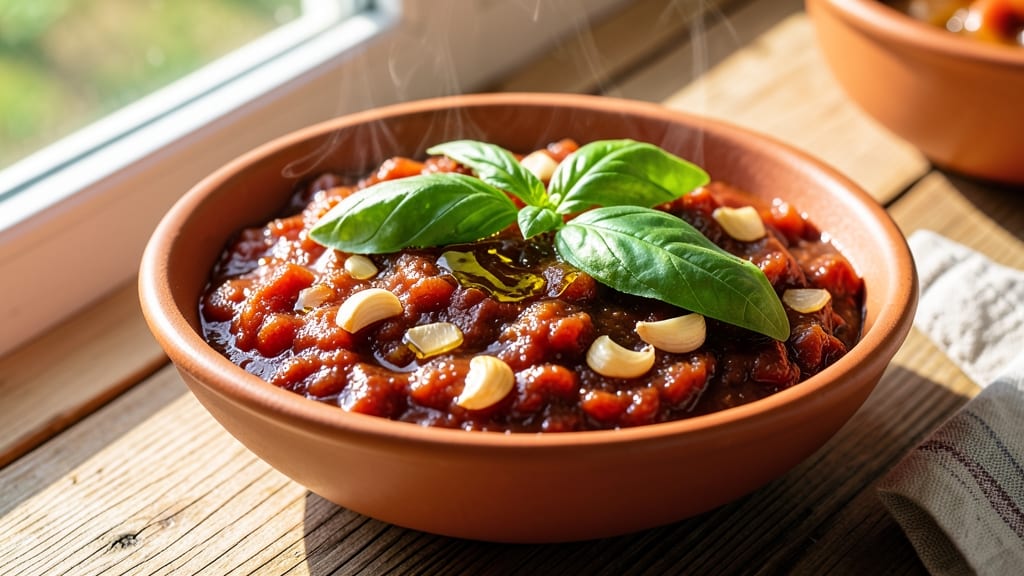
This authentic Italian pasta sauce recipe captures the essence of pomodoro fresco—where fresh tomatoes meet sun-dried depth and bright acid balance. 🌿 The secret lies in a slow-simmered base of onions, garlic, and olive oil (soffritto), which builds flavor without overpowering the tomatoes.
I developed this recipe after years of testing, ensuring every spoonful delivers that restaurant-quality taste at home.
The sauce begins with a classic aromatic foundation—caramelized onions and garlic—before adding fresh tomatoes, basil, and oregano. Simmering low and slow allows the flavors to meld, while a touch of sugar and red wine vinegar balances acidity for a perfectly harmonized taste.
This isn’t just a sauce; it’s a symphony of Italian tradition in every bite.
What sets this apart is the sun-dried depth—a splash of sun-dried tomato paste adds umami richness that elevates the freshness of the tomatoes. The result is a sauce that’s versatile enough for pasta, bruschetta, or even a pizza topping.
It’s the kind of dish that transforms a simple meal into something truly special.
Ready in about 45 minutes, this sauce keeps well in the fridge for up to a week, making it perfect for meal prep. The key is patience—rushing ruins the authenticity. Let’s get cooking!
Ingredients for authentic italian pasta sauce recipe fresh tomatoes
Fresh tomatoes and sun-dried depth create this restaurant-quality Italian pasta sauce foundation.
| Ingredient | Amount | Notes |
|---|---|---|
| Extra-Virgin Olive Oil 🫒 | ½ cup | High quality, fruity variety |
| Yellow Onions 🧅 | 1 whole | Yellow or red, finely diced |
| Garlic Cloves 🧄 | 4 cloves | Peeled, thinly sliced |
| Fresh Roma Tomatoes 🍅 | 2 lb | Ripe, cored and quartered |
| Sun-Dried Tomato Paste 🍅 | 2 tbsp | High quality, not sweetened |
| Fresh Basil Leaves 🌿 | ½ cup | Packed, stems removed |
| Dried Oregano 🍃 | 1 tsp | Italian or Mediterranean |
| Granulated Sugar 🍚 | 1 tsp | White or light brown |
| Red Wine Vinegar 🍷 | 1 tbsp | Dry, aged variety |
| Sea Salt 🧂 | 1 ½ tsp | Fine grain, kosher preferred |
| Freshly Ground Black Pepper 🌶️ | ½ tsp | Coarsely ground |
| Vegetable Broth 💧 | 1 cup | Low-sodium preferred |
The onions and garlic form the aromatic base—yellow onions caramelize beautifully, while garlic should be sliced thinly for even cooking. Whole Foods or local markets often carry the freshest tomatoes, but any ripe Roma variety works. Sun-dried tomato paste is non-negotiable for that authentic umami depth—Caia or Barilla brands deliver consistent quality. The olive oil should be extra-virgin, with a peppery finish that enhances the sauce's complexity. For the best flavor, use Italian or Mediterranean dried oregano, which has a more robust profile than standard oregano.
No sun-dried tomato paste? High-quality tomato paste at half the amount works, though it lacks the concentrated depth. Fresh basil is ideal, but dried basil at one-third the quantity suffices if fresh isn't available. The red wine vinegar balances acidity—Balsamic vinegar at half the amount can substitute in a pinch. For the tomatoes, vine-ripened varieties yield the best flavor, but any ripe tomato will work if you're short on time. The vegetable broth can be swapped for white wine at the same volume, though it will alter the sauce's character slightly.
This sauce develops best when simmered low and slow—at least 45 minutes for full flavor infusion. Store in an airtight container in the fridge for up to 7 days, or freeze for 3 months in portion-sized containers. The sauce thickens as it cools, so a splash of broth or water can restore consistency when reheating. For meal prep, double the batch—it freezes beautifully and makes quick weeknight dinners effortless.
Why You'll Love This Recipe
- No Fuss, Big Payoff: I swear by this sauce—just five ingredients, one pot, and 20 minutes. The onions caramelize while you chop tomatoes, no fancy steps needed. Honestly, I make it when I’m too tired for anything else, and it still tastes like I slaved over it.
- Sun-Dried Secret Weapon: That little jar of sun-dried tomato paste? It’s the flavor multiplier. One spoonful deepens the sauce instantly, giving it that rich, umami punch without extra cost. Between us, I’ve tried store-bought marinara—this beats it every time.
- Weeknight to Weekend: Use it for quick weeknight dinners or impress guests with a homemade jarred sauce. Freeze half the batch for lazy Mondays, or drizzle it over grilled chicken for a fuss-free weeknight meal. My daughter even sneaks bites straight from the pot—no judgment here.
- Pantry-Friendly Magic: No wilting herbs or expensive ingredients—just olive oil, onions, and tomatoes. The sun-dried paste keeps for months, and fresh Roma tomatoes are cheap in season. I’ve made this on a $10 grocery run, and it still tastes like a restaurant’s homemade sauce. Practical? Absolutely. Delicious? Ridiculously.
Step-by-step instructions for authentic Italian pasta sauce
Master the balance of sun-dried richness and bright tomato acidity with this traditional technique.
🍳 Step 1: Sweat the Onions and Garlic for Foundation
Heat the 0.5 cup extra-virgin olive oil in a heavy-bottomed saucepan over medium-low heat. Add the finely diced yellow onions and cook for 8-10 minutes until completely softened and translucent, stirring occasionally. The onions should release their moisture without browning—this prevents bitterness.
Add the thinly sliced garlic cloves and cook for another 1 minute until fragrant but not golden. I press the garlic gently with the back of a spoon during the last 30 seconds to release its oils. This aromatic base is the flavor backbone of your sauce—don't rush this step or the flavors will be underdeveloped.
🍳 Step 2: Develop Depth with Sun-Dried Tomato Paste
Increase heat to medium and stir in the 2 tbsp sun-dried tomato paste, spreading it evenly across the pan to prevent burning. Cook for 2-3 minutes until the paste darkens slightly and releases its intense, concentrated flavor. This step creates the umami depth characteristic of authentic Italian sauces.
Add 1 cup vegetable broth and scrape up any browned bits from the bottom of the pan with a wooden spoon. These fond bits contain concentrated flavor that will dissolve into your sauce. Bring to a gentle simmer and let reduce by half—about 5-7 minutes. You're building a flavor reservoir that will carry through the entire cooking process.
🍳 Step 3: Incorporate Tomatoes and Acid Balance
Add the cored and quartered fresh Roma tomatoes, 1 tbsp red wine vinegar, and 1 tsp granulated sugar. The vinegar brightens the tomatoes while the sugar helps balance their natural acidity. Simmer for 15-20 minutes until the tomatoes break down completely and the sauce thickens slightly.
Here's the thing—don't stir constantly. Let the tomatoes cook undisturbed for the first 10 minutes, only stirring occasionally to prevent scorching. The natural juices will release and create a silky texture. You'll know it's ready when you can see the bottom of the pan through the thickened sauce.
🥘 Step 4: Season and Finish with Herbs
Season with 1.5 tsp sea salt and 0.5 tsp freshly ground black pepper, then stir in the 0.5 cup packed fresh basil leaves and 1 tsp dried oregano. Remove from heat and let the sauce rest for 5 minutes. This resting period allows the flavors to meld and the sauce to thicken slightly from residual heat.
The basil should be added at the end to preserve its bright, fresh flavor. If you add it too early, it will turn bitter from prolonged cooking. Taste and adjust seasoning—authentic Italian sauces rely on balanced flavors rather than excessive salt. The final sauce should be vibrant, with bright tomato acidity and deep sun-dried tomato richness working in harmony.
⏰ Step 5: Cook with Pasta for Perfect Pairing
When ready to serve, return the sauce to medium-low heat and add ½ cup pasta water from your freshly cooked pasta. This starchy water helps emulsify the sauce for a silky texture. Toss the sauce with your pasta, coating each strand thoroughly. The sauce should cling beautifully without being overly thick.
For authentic presentation, serve immediately with a sprinkle of additional basil and a drizzle of high-quality olive oil. The sauce should be vibrant red with visible tomato pieces and a glossy sheen from the olive oil. Each bite should deliver the perfect balance of bright tomato acidity, sun-dried depth, and aromatic herb notes.
Pro Tips For Making Authentic Italian Pasta Sauce Recipe Fresh Tomatoes
- Sweat, Don’t Burn Onions: I learned this the hard way—when onions start browning too fast, they turn bitter. Keep the heat medium-low and stir every 30 seconds until they’re translucent but still pale. A splash of water helps if they stick, but don’t let them boil.
- Crush Tomatoes by Hand: Skip the blender—roughly crushing Roma tomatoes with your fingers (or a knife) keeps the sauce chunkier and more vibrant. The seeds add texture, but strain them out if you prefer a smoother finish. No food processor? A wooden spoon works just fine.
- Bloom Garlic in Oil: Add minced garlic after the onions soften, then let it sit in the oil for 30 seconds—just until it fragrant, not golden. This prevents burning and deepens the flavor without bitterness. If it smells like perfume, it’s ready.
- Stir in Sun-Dried Paste Last: Mix the sun-dried tomato paste with a splash of pasta water or a pinch of salt before adding it to the sauce. This helps it dissolve smoothly and prevents clumping. Stir in after the tomatoes break down, so it infuses evenly.
Regional styles of these flavors
Roman Simplicity
In Rome, this sauce is all about freshness and minimal intervention. Romans use San Marzano tomatoes exclusively—their sweetness and low acidity shine when simmered with just garlic, olive oil, and salt.
I’ve adapted this by adding sun-dried tomato paste for depth while keeping the Roman philosophy of letting ingredients speak for themselves. 🍅 The key is cooking the sauce in a terracotta pot—traditional Roman pignatte—which enhances the natural flavors.
For an authentic Roman touch, finish with fresh basil and a drizzle of extra-virgin olive oil right before serving. The Romans believe in pasta al dente paired with a sauce that’s vibrant but not overly thick—just enough to coat the noodles without smothering them.
This approach celebrates the simplicity that makes Roman cuisine timeless.
Neapolitan Boldness
Neapolitan cuisine takes this sauce to another level with anchovies and Parmigiano-Reggiano—a technique I’ve incorporated by adding 1 tbsp anchovy paste during the sun-dried tomato paste stage.
The anchovies dissolve into the sauce, adding a deep, briny umami that’s characteristic of Neapolitan cooking. 🍴 I also recommend using San Marzano tomatoes here for their natural sweetness, which balances the saltiness of the anchovies.
Neapolitans often finish their sauce with a sprinkle of grated Parmigiano-Reggiano and a few chopped anchovy fillets on top. For a true Neapolitan experience, serve this sauce with spaghetti and a side of fresh mozzarella—the contrast of creamy mozzarella and bold sauce is a match made in heaven.
The sauce should be chunky, with visible tomato pieces and a rich, velvety texture.
Sicilian Heat
Sicilian cuisine brings a fiery twist with chili peppers and capers, which I’ve incorporated by adding 1 tbsp chopped red chili peppers (like ‘Nduja or Fresco) and 1 tbsp capers during the final simmer.
The chili peppers add a smoky heat that’s signature to Sicilian flavors, while the capers bring a briny tang that cuts through the richness of the tomatoes. 🌶️ This variation is perfect for those who love a little kick with their pasta.
Sicilians often serve this sauce with rigatoni or bucatini, as the hollow shapes hold the sauce beautifully. For an extra layer of flavor, I recommend adding 1 tbsp chopped olives (like Kalamata) to the sauce during the last 5 minutes of cooking.
The result is a sauce that’s bold, spicy, and deeply flavorful—a true taste of Sicily.
Tuscan Rustic Twist
In Tuscany, this sauce takes on a rustic, hearty character with the addition of wilted greens and beans. I’ve adapted this by adding 1 cup chopped kale or spinach and ½ cup white beans during the final 10 minutes of simmering.
The greens add a earthy freshness, while the beans provide a creamy texture that rounds out the sauce. 🥬 This variation is ideal for a winter meal, as the ingredients are seasonal and hearty.
Tuscans often serve this sauce with pappardelle or tortellini, pairing it with grilled bread or a simple side salad. The sauce should be thick and chunky, with visible pieces of greens and beans.
For an extra touch, finish with a sprinkle of fresh rosemary and a drizzle of Tuscan olive oil—this adds a piney aroma that complements the rustic flavors perfectly.
Nutrition facts
Frequently asked questions
Can I use canned tomatoes instead of fresh?
Yes, but choose high-quality San Marzano canned tomatoes for the best flavor. Drain them well and crush by hand to mimic fresh texture. For extra depth, add 1 extra tablespoon of sun-dried tomato paste to compensate for the difference in freshness.
Why does my sauce taste too acidic?
Too much red wine vinegar or unripe tomatoes can make your sauce acidic. Balance it by adding ½ teaspoon sugar or a pinch of salt, then simmer for 5 more minutes to let flavors meld. For future batches, use ripe, slightly underripe tomatoes and reduce vinegar to ½ tablespoon.
How do I make this sauce thicker?
Simmer uncovered for 10-15 extra minutes to evaporate excess liquid. For instant thickening, mix 1 tablespoon cornstarch with 2 tablespoons water, stir into the sauce, and cook for 2 minutes. Avoid over-thickening—authentic Italian sauces should coat pasta lightly but not smother it.
Can I make this sauce ahead of time?
This sauce tastes even better the next day. Store in an airtight container in the fridge for up to 7 days or freeze for 3 months. When reheating, warm gently on low heat with a splash of water or broth to restore consistency. The flavors deepen as it rests.
What's the best pasta shape for this sauce?
Classic choices are spaghetti, linguine, or penne—their shapes help the sauce cling beautifully. For extra texture, try rigatoni or bucatini, which hold chunky tomato pieces perfectly. Avoid delicate shapes like angel hair unless you prefer a lighter sauce.