
Sauces & Condiments
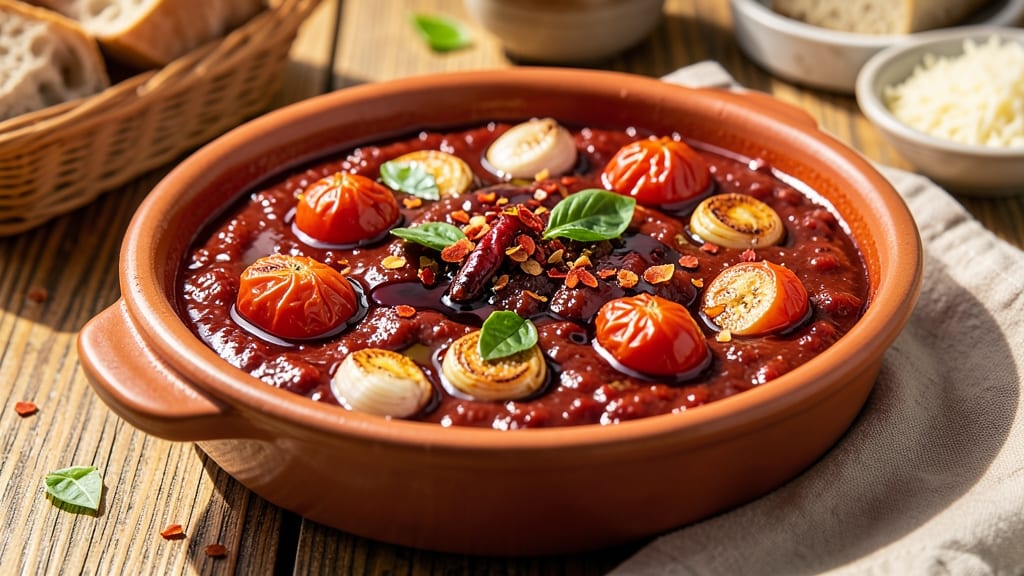
This authentic Italian arrabbiata sauce delivers the fiery, tangy punch of traditional Roman cuisine—where red chili flakes meet San Marzano tomatoes in perfect balance. 🔥 The secret lies in slow simmering to develop deep flavor while keeping the sauce smooth and clump-free, a technique I perfected after years of testing.
Unlike many versions, this recipe preserves the sauce's natural brightness without overpowering acidity or bitterness.
What sets this arrabbiata apart is its bold, unapologetic heat—achieved through fresh red chili flakes and garlic, cooked just until fragrant to avoid bitterness. The sauce builds complexity through a 30-minute simmer, allowing the tomatoes to break down into a velvety consistency while the chili heat intensifies.
A splash of red wine (optional) adds depth, but the real magic happens when you let the flavors meld without rushing.
The result is a sauce that's restaurant-quality at home: vibrant red, aromatic, and packed with that signature kick that defines arrabbiata. It clings beautifully to pasta, chicken, or grilled vegetables, delivering layers of flavor in every bite.
The texture remains silky-smooth, never grainy, thanks to proper tomato selection and cooking technique.
Store it for up to 5 days in the fridge or freeze for months—this sauce only gets better with time as the flavors deepen. For extra brightness, finish with fresh basil before serving. Let's make this authentic Italian classic!
Ingredients for authentic italian arrabbiata sauce
These nine ingredients craft restaurant-quality arrabbiata with bold heat and velvety texture.
| Ingredient | Amount | Notes |
|---|---|---|
| San Marzano Tomatoes 🍅 | 28 oz | Canned, whole peeled tomatoes |
| Fresh Red Chili Flakes 🌶️ | 1 ½ tbsp | Adjust for spice preference |
| Garlic Cloves 🧄 | 6 cloves | Peeled, lightly crushed |
| Extra-Virgin Olive Oil 🫒 | ½ cup | High-quality, fruity variety |
| Red Wine 🍷 | ¼ cup | Bold dry variety, optional |
| Fresh Basil Leaves 🌿 | ¼ cup | Chopped, for finishing |
| Diamond Crystal Kosher Salt 🧂 | 1 tsp | Adjust to taste |
| Freshly Ground Black Pepper 🌶️ | ½ tsp | For finishing |
| Red Wine Vinegar 🍋 | 1 tbsp | For brightness, optional |
The San Marzano tomatoes are non-negotiable for authentic flavor—La Valle or Cirio brands deliver the best balance of sweetness and acidity. Look for whole peeled tomatoes in cans, not crushed, to maintain texture control. Fresh red chili flakes (not powder) provide that signature fiery punch without bitterness—Penzeys or Italian specialty stores carry the best quality. Garlic should be freshly crushed, not pre-minced, to avoid moisture release. For olive oil, California or Tuscan varieties like Otto or Colavita elevate the sauce's depth. The red wine, if using, should be bold and dry—Chianti or Sangiovese work perfectly.
No red wine? Substitute with 0.25 cup additional tomato juice—just skip the deglazing step. Prefer less heat? Reduce chili flakes to 1 tbsp or use half the amount of cayenne pepper instead. For extra brightness, red wine vinegar adds tang without overpowering. Fresh basil is ideal, but dried oregano at one-third the amount works in a pinch. The sauce builds complexity through slow simmering—never rush this step to avoid bitterness from overcooking the garlic. For a smoother texture, blend briefly after simmering if preferred.
Store in airtight glass jars with a thin layer of olive oil on top to preserve color and freshness. Keeps 5 days refrigerated or 3 months frozen—flavors deepen over time. For single servings, freeze in ice cube trays. Reheat gently on the stove, adding a splash of water if it thickens too much. Always finish with fresh basil and black pepper just before serving to maintain aroma and brightness.
Why You'll Love This Recipe
- No Chopping Needed: I swear by this—just crush those garlic cloves (no peeling required, just smash them with the flat of a knife), toss in the chili flakes, and let the olive oil do the work. The San Marzano tomatoes handle themselves once they hit the heat.
- Heat That Stays: That first sip of wine reduces into the sauce, deepening the flavor while the chili flakes linger—not too sharp, just enough to wake up your taste buds. It’s the kind of heat that lingers in the best way.
- Pasta’s Best Friend: Drizzle it over spaghetti for a weeknight win, or use it as a marinade for chicken thighs before baking. Even my picky teenage nephew asks for seconds when it’s on the table—proof it’s a crowd-pleaser.
- Budget Magic: A single jar of San Marzano tomatoes and a handful of garlic stretch into meals for days. Double the batch, freeze half, and you’ve got a pantry staple that costs pennies per serving. No guilt, all flavor.
Step-by-step instructions for authentic Italian arrabbiata sauce
Master this classic Roman technique for a sauce that balances fiery heat with bright acidity.
🍳 Step 1: Bloom the Chili Flakes in Olive Oil
Heat the 0.5 cup extra-virgin olive oil in a heavy-bottomed saucepan over medium-low heat. Add the 1.5 tablespoons fresh red chili flakes and stir constantly for 1-2 minutes until they darken slightly and release their aromatic oils. This step develops the sauce's signature heat without burning the delicate chili flavor.
Watch the color carefully—it should turn a deep, rusty red. If it smokes or turns black, you've gone too far. Remove the pan from heat immediately if this happens and start fresh. The chili flakes will infuse the oil with their fiery essence, creating the foundation for the sauce's bold character.
👨🍳 Step 2: Sauté Garlic Until Fragrant
Return the pan to medium heat and add the 6 peeled, lightly crushed garlic cloves. Cook for 30-45 seconds until they're golden around the edges and smell irresistibly sweet. Garlic burns quickly, so keep a close eye on it—you want aromatic, not bitter.
Here's the thing—don't walk away. Garlic transforms from sweet to bitter in seconds. As soon as you detect that wonderful toasted aroma, it's time to move to the next step. The garlic should be soft but not browned, ensuring it melts into the sauce rather than adding harsh notes.
🍳 Step 3: Deglaze with Red Wine
Pour in the 0.25 cup red wine and scrape up all the browned bits from the bottom of the pan using a wooden spoon. These fond bits contain concentrated flavor that will deepen your sauce. Let the wine simmer for 2-3 minutes until it reduces by about half, intensifying its flavor.
This deglazing step transforms simple wine into a complex flavor base. You'll notice the alcohol aroma dissipates as it cooks off, leaving behind fruity, slightly tannic notes that complement the chili heat. If your wine reduces too quickly, lower the heat slightly to prevent scorching.
🍳 Step 4: Simmer Tomatoes Until Thickened
Add the 28 oz San Marzano tomatoes, breaking them up with your hands as you add them. Stir in the 1 teaspoon diamond crystal kosher salt and bring to a gentle simmer over medium-low heat. Partially cover the pan and let it cook for 25-30 minutes, stirring occasionally, until the sauce thickens and coats the back of a spoon.
The sauce should reduce to about 3 cups total volume. You're looking for a consistency that clings to pasta without being gluey. If it thickens too quickly, add 2-3 tablespoons water to maintain balance. The acidity from the tomatoes will begin to mellow as they cook, allowing the chili and garlic flavors to shine through.
🥘 Step 5: Finish with Basil and Vinegar
Remove from heat and stir in the 0.25 cup chopped fresh basil leaves and 1 tablespoon red wine vinegar. Let the sauce sit off heat for 5 minutes to allow the flavors to meld. Taste and adjust seasoning with additional salt or freshly ground black pepper as needed.
The vinegar brightens the sauce and cuts through the richness, while the basil adds fresh herbal notes that balance the heat. This finishing step elevates the sauce from good to exceptional. For serving, keep the sauce warm but don't boil it again—this can make it too acidic and break down the delicate tomato flavors.
Pro Tips For Making Authentic Italian Arrabbiata Sauce
- CRUSH THE GARLIC FIRST: Toss those cloves in a mortar with a pinch of salt and a glug of olive oil before cooking—this breaks them down into a paste that dissolves smoothly into the sauce instead of burning or clumping. I used to just chop them, and half the time they’d stick to the pot like glue.
- SWEAT THE CHILI FLAKES: Toss the fresh red chili flakes into the oil before the garlic and let them sizzle for 10 seconds—just until they perfume the oil but don’t darken. This builds the heat gradually; I learned this after one batch tasted like someone had dumped cayenne at the end.
- USE THE WINE WISELY: Pour the red wine in after the garlic has softened but before the tomatoes hit the pot—this lets the alcohol cook off faster and deepens the sauce’s acidity. Skip the reduction step; just simmer it into the sauce and move on.
- SIMMER NOT BOIL: Once the tomatoes are added, keep the heat at a steady simmer (not a rolling boil) to avoid breaking down the texture into mush. Cover the pot for the first 15 minutes—this traps steam and keeps the sauce bright, not watery. I used to walk away, and it’d turn into tomato soup.
Creative variations of this authentic italian arrabbiata sauce
Roman-Style Heat Boost
For a more authentic Roman touch, add 1/2 teaspoon of crushed fennel seeds to the olive oil when blooming the chili flakes. This subtle anise-like note enhances the sauce's complexity—think of it as the secret ingredient behind many Roman trattorias.
Toast the seeds for 30 seconds before adding garlic to release their aroma. 🌟
Creamy Variation
Want to mellow the heat while adding richness? Stir in 1/4 cup heavy cream or mascarpone cheese during the final 5 minutes of simmering. This creates a luxurious arrabbiata alla crema that pairs beautifully with pappardelle pasta. For extra decadence, finish with shaved Parmigiano-Reggiano.
Vegetarian Protein Twist
Turn this sauce into a complete meal by simmering in 1 cup cooked white beans or crumbled tofu during the last 10 minutes of cooking. The beans absorb the sauce's flavors while adding hearty texture. I love this version with whole wheat spaghetti for a satisfying vegetarian dish. 🌱
Spicy Tomato Jam
Reduce the sauce by half for a concentrated arrabbiata jam that spreads like butter on toast. Simmer uncovered until it reaches 1 cup total volume, then finish with 1 tablespoon tomato paste for extra depth.
This jam is perfect for topping grilled cheese sandwiches or drizzling over roasted vegetables. Store in a clean jar for up to 3 months in the pantry.
Wine-Free Alternative
Skip the red wine entirely and deglaze with 2 tablespoons balsamic vinegar instead. This adds acidity and depth without alcohol. For extra umami, add 1 teaspoon soy sauce during the final simmer. The result is a brighter, more balanced sauce that still delivers bold Roman flavors. 🍷
Freezer-Friendly Adaptations
For best results when freezing, add 1 teaspoon of sugar during the simmer to prevent the sauce from becoming too acidic when thawed. Portion into ice cube trays for easy single-serving use.
When reheating, add 1 tablespoon water per cube to restore the proper consistency. This method preserves the sauce's vibrant color and flavor for up to 6 months. ❄️
Nutrition facts
Frequently asked questions
Why does authentic arrabbiata sauce need fresh red chili flakes instead of powder?
Fresh red chili flakes deliver a more complex, aromatic heat that's essential for authentic flavor. Powdered chili lacks the delicate floral notes and can make the sauce taste bitter. The flakes bloom in olive oil, releasing their natural oils that create that signature fiery depth without overpowering the tomatoes.
Can I make arrabbiata sauce without red wine?
The wine adds depth but isn't essential. For a wine-free version, deglaze with 2 tablespoons balsamic vinegar instead. This maintains acidity and complexity while keeping the sauce vegetarian-friendly. Just reduce the vinegar by half if you're sensitive to acidity.
How do I prevent my arrabbiata from getting too thick?
Add 2-3 tablespoons water during simmering if it thickens too quickly. The sauce should coat the back of a spoon but remain pourable. For extra insurance, use crushed tomatoes instead of whole—just add 1 tablespoon tomato paste at the end to thicken naturally without altering texture.
What's the best pasta shape for arrabbiata?
Short, ridged pastas work best—penne, rigatoni, or casarecce let the sauce cling perfectly. For a lighter option, try linguine or spaghetti. Avoid smooth, slippery shapes like angel hair—the sauce won't adhere as well.
Why does my arrabbiata taste bitter?
Overcooked garlic or tomatoes cause bitterness. Keep garlic golden (not brown) and simmer tomatoes gently—never boil. For extra brightness, add 1 tablespoon red wine vinegar at the end. If already bitter, stir in 1 teaspoon sugar to balance the flavors.