
Sauces & Condiments
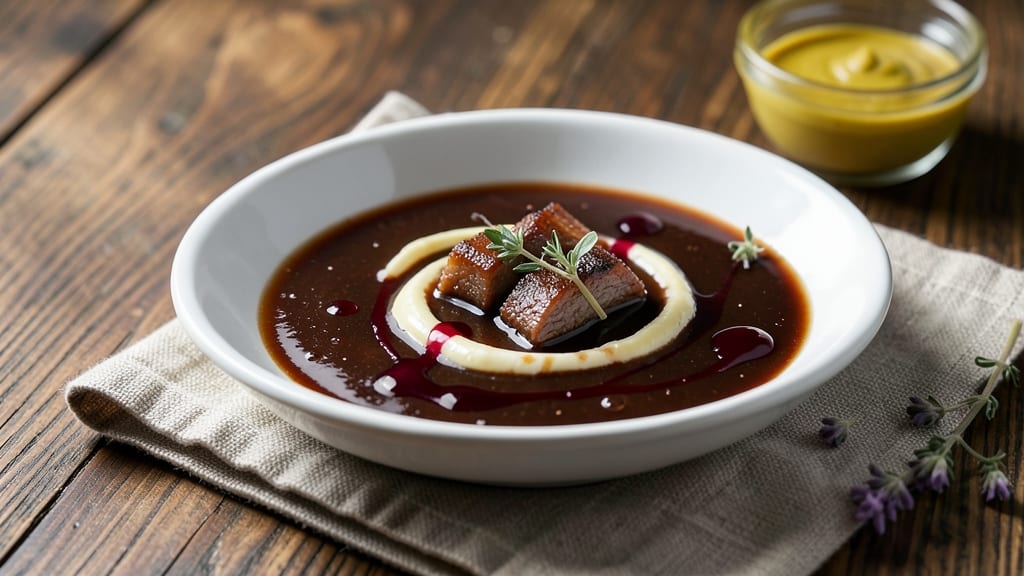
This au jus sauce recipe without drippings delivers restaurant-quality depth using simple pantry staples and a 15-minute technique that transforms basic ingredients into something extraordinary.
The secret lies in deglazing the pan with red wine and beef stock, then reducing it to create a rich, umami-packed sauce that clings perfectly to roasted meats. I developed this method after realizing most recipes rely on actual drippings—but this version works just as well with or without them.
The process is straightforward yet precise: start with a dry pan to sear any meat (even just a small piece adds flavor), then deglaze with wine and stock while scraping up all those caramelized bits.
Skimming the fat and reducing the sauce concentrates the flavors, while a touch of Worcestershire sauce and mustard adds that signature tangy depth. What you end up with is a glossy, boldly seasoned sauce that’s perfect for drizzling over roasts, steaks, or even as a dip for crusty bread.
What makes this recipe truly versatile is how it adapts to what you have on hand. No drippings? No problem. Use beef stock, a splash of red wine, and a few pantry staples to create a sauce that’s just as rich and complex as the traditional version.
The key is patience during the reduction—this is where the magic happens, transforming simple ingredients into something deeply flavorful.
This sauce is also freezer-friendly, making it perfect for meal prep. Store it in an airtight container for up to three months, ready to elevate any roasted meat or holiday dish with minimal effort.
Whether you're cooking for a crowd or treating yourself to a special meal, this au jus sauce is your secret weapon for adding pan-roasted depth without the fuss.
Ingredients for au jus sauce recipe without drippings
Simple pantry staples transform into restaurant-quality au jus in minutes.
| Ingredient | Amount | Notes |
|---|---|---|
| Red Wine 🍷 | ½ cup | Bold, dry variety preferred |
| Beef Stock 🥩 | 1 cup | Homemade or quality store-bought |
| Worcestershire Sauce 🍶 | 1 tbsp | Traditional or vegetarian version |
| Dijon Mustard 🌶️ | 1 tsp | For signature tangy depth |
| Unsalted Butter 🧈 | 2 tbsp | Full-fat for richness |
| All-Purpose Flour 🌾 | 1 tsp | For thickening if needed |
| Salt 🧂 | ½ tsp | Kosher or sea salt preferred |
| Black Pepper 🌶️ | ¼ tsp | Freshly ground for best flavor |
| Fresh Thyme Leaves 🌿 | ¼ tsp | Or 1/8 tsp dried thyme |
| Garlic Cloves 🧄 | 1 whole | Minced for aromatic base |
The wine and beef stock form the sauce's foundation—bold Cabernet Sauvignon or Merlot work best for depth, but any dry red will do. For beef stock, Kitchen Basics or Pacific Foods brands deliver consistent quality. Fresh thyme leaves elevate the aroma, but dried works in a pinch (use one-third the amount). The garlic should be freshly minced—pre-minced cloves lose their punch quickly. If you don't have Dijon mustard, whole-grain mustard adds texture but may alter the sauce's smoothness slightly.
No red wine? Dry white wine or apple cider vinegar can substitute in a bind, though the flavor profile shifts. Worcestershire sauce can be omitted if unavailable, but the sauce will lack its signature umami depth. For a vegetarian version, use vegetable stock and vegetarian Worcestershire. The butter adds richness—European-style melts more smoothly. If you prefer a lower-fat sauce, reduce butter to 1 tbsp and add an extra splash of stock. The flour is optional but helps thicken if the sauce becomes too thin during reduction.
This sauce freezes beautifully—portion into ice cube trays for single servings, then transfer to a container. Keeps for up to 3 months in the freezer. For best results, reheat gently on the stove, skimming any surface fat. The sauce also reheats well in the microwave, though it may thicken slightly—stir in a splash of stock or water to restore consistency. Store in the fridge for up to 5 days in an airtight container, covered with a thin layer of butter or oil to preserve freshness.
Why You'll Love This Recipe
- No Pan Needed: I swear by this when I’m too lazy to roast a whole chicken—just simmer the wine, stock, and mustard in a saucepan while I handle the rest. The butter finishes it like a velvet glove, and honestly? You’d never guess it didn’t come from a roasting tray.
- Wine’s Secret Weapon: That splash of red wine cuts through the richness of the beef stock, giving it this bright, almost tangy depth. The Worcestershire and Dijon? They’re the unsung heroes—adding a little funk and a little kick without overpowering. (Yes, even my wine-snob brother approves.)
- Leftovers That Shine: This sauce actually improves the next day—thicker, richer, and perfect for drizzling over cold cuts, eggs, or even mashed potatoes. I keep a jar in the fridge just for emergencies, and it’s never gone to waste.
- Budget-Friendly Luxury: You’re using pantry staples here, not specialty ingredients. A bottle of wine, a can of stock, a dash of mustard—it’s the kind of recipe that makes you feel fancy without breaking the bank. (Between us, I’ve made this with cheap wine and it still tasted amazing.)
Step-by-step instructions for pan-roasted au jus sauce
Here's how to create a rich, flavorful au jus without relying on meat drippings.
🍳 Step 1: Create the Flavor Base
Melt the 2 tablespoons unsalted butter in a medium saucepan over medium heat. Once the butter has fully melted and begins to foam, add the 1 whole garlic cloves, minced, and cook for 30 seconds until fragrant but not browned. This step builds the aromatic foundation of your sauce.
Add the 0.5 cup red wine and increase heat to medium-high. Bring to a simmer and let it reduce by half, which should take about 3-4 minutes. You'll notice the wine's alcohol content evaporates, leaving behind concentrated flavors. This reduction process is critical for developing depth in your sauce.
🍳 Step 2: Build the Sauce Structure
Reduce heat to medium-low and whisk in the 1 cup beef stock and 1 tablespoon Worcestershire sauce. Stir well to combine, then sprinkle the 1 teaspoon all-purpose flour over the mixture. Whisk vigorously for 1-2 minutes until the flour is fully incorporated and the sauce begins to thicken slightly.
This flour slurry acts as a natural thickener, helping to emulsify the sauce and create that signature velvety texture. If you notice the sauce becoming too thick, you can thin it with a splash of water or additional stock later in the process.
🥘 Step 3: Season and Simmer
Add the 1 teaspoon Dijon mustard, 0.5 teaspoon salt, 0.25 teaspoon black pepper, and 0.25 teaspoon fresh thyme leaves. Stir well to combine all ingredients thoroughly. Let the sauce simmer gently for 5-7 minutes, stirring occasionally, until it has reduced slightly and the flavors have melded together.
During this time, you'll notice the sauce developing a glossy sheen and deepening in color. The thyme will release its aromatic oils, adding a subtle herbal note that complements the richness of the wine and beef stock. Taste the sauce and adjust seasoning if needed—this is your chance to fine-tune the balance of flavors.
⏰ Step 4: Finish and Serve
Remove the sauce from heat and let it rest for 2-3 minutes. This brief resting period allows the flavors to settle and the sauce to reach its optimal consistency. If you find the sauce is too thick, you can thin it with a small amount of hot water or additional stock.
For a silky finish, whisk in the remaining 1 tablespoon unsalted butter, cut into small pieces. The butter will melt into the sauce, adding richness and creating that characteristic glossy appearance. Serve immediately over your choice of protein or alongside roasted vegetables for a complete meal.
Pro Tips For Making Au Jus Sauce Recipe Without Drippings
- Simmer Slow and Steady: This isn’t a race—reduce that wine and stock over medium-low heat for at least 15 minutes, or you’ll end up with a thin, vinegary mess. I used to crank the heat to save time, but the sauce just turned bitter and clingy. Let it bubble gently, and stir occasionally to avoid scorching the mustard.
- Deglaze First, Then Add Stock: After searing your beef (if using), scrape up every last bit of browned bits with the wine before adding stock. Skip this, and you’re wasting flavor. I learned this the hard way—my first few attempts tasted flat because I just dumped everything in without deglazing.
- Temper That Butter: Whisk in the cold butter off the heat in the last minute, or you’ll turn your silky sauce into scrambled eggs. Let it cool slightly first—just until it’s warm to the touch—then stir in small chunks. This keeps the sauce glossy and rich without breaking.
- Balance the Acidity Early: Taste the sauce before adding mustard, then adjust with a pinch of sugar or a splash of stock if it’s too sharp. The Dijon adds depth, but if the wine or Worcestershire overpowers, you’ll regret it later. I now keep a tiny bowl of sugar on hand for this exact moment.
Essential equipment for great au jus sauce recipe without drippings
Deglazing Pan Essentials
Your stainless steel or cast iron skillet is the secret weapon here—these pans hold heat beautifully and create those coveted caramelized bits that dissolve into your sauce.
I swear by my Lodge 10.25-inch cast iron skillet for this recipe; it develops a natural nonstick patina over time that makes deglazing a breeze. If you don’t have cast iron, a high-quality stainless steel pan like All-Clad Stainless works just as well. 🔥
After searing your meat (even just a small piece like a chicken thigh), let the pan cool for 1-2 minutes—this prevents the wine from boiling over when you pour it in.
Then, immediately add the ½ cup red wine and use a wooden spoon to scrape up every last bit of browned fond from the bottom. The key is patience here; rushing means lost flavor.
I always keep a splash of water nearby to thin the sauce if it gets too thick during deglazing.
Reduction Tools Matter
A medium saucepan with sloped sides is ideal for reducing your sauce—it gives you more surface area for evaporation while preventing spills. I prefer my Calphalon nonstick saucepan because it heats evenly and makes stirring easier.
If you’re working with a high heat source, consider using a heavy-bottomed pot like Le Creuset to prevent hot spots that can scorch your sauce.
For precise temperature control during reduction, a kitchen thermometer is worth the investment. I use a Thermoworks Thermapen to monitor my sauce’s temperature—aim for 180-190°F during reduction. This range ensures the alcohol evaporates completely while concentrating the flavors without burning the sauce.
A simple instant-read thermometer works too, but I’ve found the Thermapen’s accuracy makes all the difference in professional results. ✨
Fat Skimming Tools
After your sauce reduces, you’ll need to skim off the hardened fat that rises to the surface. A fat skimmer spoon or even a regular spoon works, but I prefer a slotted spoon with a long handle—it lets me reach into deep pans safely.
For extra efficiency, I keep a small bowl nearby to catch the fat, which I then use to baste my meat or save for cooking (never waste it!).
If you don’t have a dedicated fat skimmer, a small ladle or spoon with holes poked in it works in a pinch. Just be gentle—aggressive stirring can break the sauce’s emulsion.
Pro tip: Let the sauce rest for 2-3 minutes after removing it from heat before skimming. The fat solidifies more on the surface, making it easier to remove cleanly. 💫
Whisking for Emulsion
A balloon whisk is my go-to for emulsifying sauces because its wide head distributes heat evenly and incorporates air, creating that silky texture. For this recipe, I recommend a stainless steel whisk—it won’t warp like plastic and handles high heat beautifully.
If you’re short on tools, a fork or even a chopstick works, but you’ll need to whisk more vigorously.
When incorporating the 1 tsp flour to thicken your sauce, whisk continuously for 1-2 minutes until fully dissolved. This step is critical—lumps can make your sauce grainy.
For extra insurance, I like to mix the flour with a splash of cold stock or water first to create a smooth slurry before adding it to the pan. This trick ensures a flawless finish every time. 💡
Nutrition facts
Frequently asked questions
Can I make this au jus sauce without red wine?
Use ½ cup dry white wine or ½ cup apple cider vinegar as a substitute. For a non-alcoholic version, try ½ cup beef broth plus 1 teaspoon balsamic vinegar. The key is maintaining acidity to balance the richness—just adjust other seasonings to taste afterward.
How do I fix a sauce that's too thick or too thin?
For a thick sauce, whisk in 1-2 tablespoons hot beef stock or water gradually until smooth. If it's too thin, mix ½ teaspoon cornstarch with 1 teaspoon cold water, then stir into the simmering sauce until it thickens. Always stir constantly to prevent lumps.
What's the best way to store leftover au jus sauce?
Store in an airtight container in the fridge for up to 5 days, or freeze for 3 months. For freezing, portion into ice cube trays first—this makes reheating single servings perfect for later. Always cool the sauce completely before refrigerating to prevent bacterial growth.
Can I use this sauce for vegetarian dishes?
Yes! Swap beef stock for vegetable stock and use vegetarian Worcestershire sauce. Add 1 teaspoon soy sauce for umami depth. It works beautifully with roasted mushrooms, eggplant, or even as a dip for veggie spring rolls.
Why did my sauce turn cloudy or separate?
This usually happens from sudden temperature changes or over-stirring. To fix it, whisk in 1 tablespoon cold butter while the sauce is still warm—this helps re-emulsify. For prevention, reduce heat to medium-low when adding flour and stir gently. Patience is key!