
Sauces & Condiments
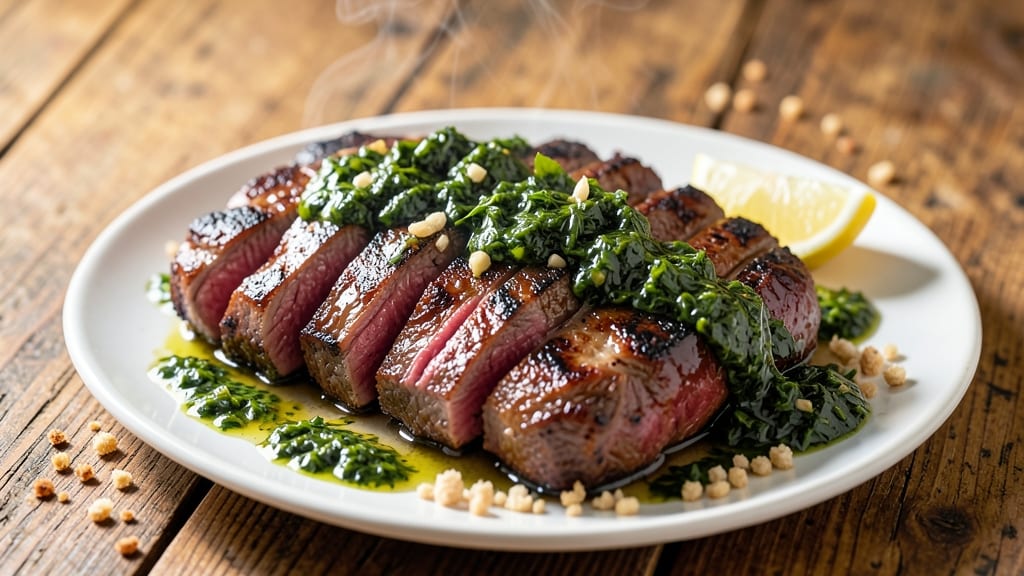
Argentinian steak with chimichurri transforms a simple cut of meat into a restaurant-worthy masterpiece—where bright, herby sauce meets perfectly seared beef in every bite. The secret lies in two components: a bold, herb-packed chimichurri that cuts through rich steak, and the proper technique for cooking it to medium-rare perfection. I’ve perfected this dish over years of backyard asados (Argentinian BBQs), where the chimichurri isn’t just a sauce but the soul of the meal.
What sets this recipe apart is the balance: tender, juicy steak (skirt, flank, or ribeye) seared over high heat for a caramelized crust, then rested to retain its moisture, paired with chimichurri that’s vibrant, tangy, and never overpowering.
The sauce comes together in minutes with fresh parsley, garlic, red wine vinegar, and olive oil—no cooking required. This isn’t just a recipe; it’s an experience that brings the smoky, lively spirit of an Argentinian parrilla to your table.
The result is a dish that’s equal parts elegant and approachable: crisp edges on the steak, a sauce that clings to every slice, and sides like grilled asparagus or chimichurri potatoes to soak up the flavors.
Whether you’re hosting a dinner party or treating yourself to a weeknight feast, this combination delivers restaurant-quality results with minimal fuss. The key is confidence—trust the process, and you’ll end up with a meal that feels like a celebration.
Serve with crusty bread to mop up the chimichurri, and don’t forget a cold Malbec to complement the flavors. This is steak done right—bold, bright, and impossible to resist. Let’s get started.
Ingredients for argentinian steak with chimichurri sauce
Bold flavors and simple ingredients create this iconic Argentinian masterpiece.
| Ingredient | Amount | Notes |
|---|---|---|
| Skirt Steak 🥩 | 1 ½ lb | Thinly sliced against grain |
| Fresh Parsley 🌿 | 1 cup | Stems removed, loosely packed |
| Garlic Cloves 🧄 | 6 cloves | Peeled, roughly chopped |
| Red Wine Vinegar 🍷 | ½ cup | Not balsamic |
| Extra-Virgin Olive Oil 🫒 | ½ cup | High-quality, fruity |
| Kosher Salt 🧂 | 2 tsp | Diamond Crystal preferred |
| Ground Black Pepper 🌶️ | 1 tsp | Freshly cracked |
| Red Pepper Flakes 🔥 | ½ tsp | Optional for heat |
| Flank Steak 🥩 | 1 ½ lb | Alternative to skirt |
| Ribeye Steak 🥩 | 1 ½ lb | For richer flavor |
| Crusty Bread 🍞 | 1 whole | For serving |
| Lemon 🍋 | 1 whole | Juiced, for finishing |
| Fresh Oregano 🌿 | 2 tbsp | Chopped, optional |
| Malbec Wine 🍷 | 1 cup | For serving, optional |
The steak is everything here. Skirt or flank for classic texture, but ribeye if you want richness. Buy from a butcher shop or the meat counter at Whole Foods—look for bright red, marbled cuts. Slice against the grain (have your butcher do it if you're unsure). The parsley? Fresh is non-negotiable—dried won't cut it. I always grab extra because half gets tossed in the chimichurri and half gets sprinkled on the steak at the end. Red wine vinegar matters too—avoid the sweet balsamic kind unless you're going for a different vibe.
No fresh parsley? Cilantro works in a pinch, but it changes the flavor profile. Short on red wine vinegar? Apple cider vinegar plus a pinch of sugar gets you close. The chimichurri keeps best when made fresh, but it'll last 3 days in the fridge if you seal it tightly. Want extra heat? Add red pepper flakes or a dash of cayenne. The steak should rest 10 minutes after cooking—don't skip this, or you'll lose all that juicy goodness. And if you're feeling fancy, serve with crusty baguette for mopping up that herby goodness.
Chimichurri stays vibrant for 5 days in the fridge if you keep it submerged in olive oil. The steak? Cook it day-of for best results—it reheats poorly. I always make double chimichurri because it disappears fast. Store it in a glass jar with a tight lid, and it'll keep for up to 2 weeks. The bread? Toast it fresh before serving—it soaks up the chimichurri like a dream. And save the wine for serving, not cooking—trust me on this one.
Why You'll Love This Recipe
- No-Fuss Prep: I swear by this recipe because it’s all about the minimal. One knife for the parsley, one pan for the steak—no fancy gadgets, no stress. The chimichurri comes together in a food processor (or even a fork) while the steak sears, so you’re basically multitasking like a pro.
- Herb Bomb Flavor: That bright, garlicky chimichurri? It’s the kind of sauce that makes you pause mid-bite. The red wine vinegar cuts through the richness of the skirt steak, while the parsley and olive oil keep it fresh and vibrant—like a little burst of sunshine in every forkful.
- Weeknight or Weekend: Between us, this steak is just as happy on a Tuesday as it is at a backyard BBQ. Slice it thin for tacos, serve it whole for a showstopper, or even toss leftover strips into a grain bowl the next day. It’s the kind of dish that works hard for you.
- Budget-Friendly Feast: Skirt steak is affordable, and a little goes a long way. The chimichurri stretches over multiple meals—drizzle it on eggs, mix it into pasta, or just eat it straight from the jar. Honestly, I’ve never had a leftovers complaint with this one.
Step-by-step instructions for Argentinian steak with chimichurri sauce
Here's how to make this iconic dish—juicy steaks paired with vibrant, herby chimichurri.
Prepare the Chimichurri Sauce
In a food processor, combine the 1 cup fresh parsley, 6 cloves garlic, 2 tablespoons fresh oregano, 2 teaspoons kosher salt, 1 teaspoon ground black pepper, and ½ teaspoon red pepper flakes. Pulse until finely chopped but not puréed—you want texture, not a smooth paste. Transfer the mixture to a bowl and whisk in the ½ cup red wine vinegar and ½ cup extra-virgin olive oil. Let it sit for at least 15 minutes before serving to allow the flavors to meld.
This is the moment that matters: the chimichurri needs time to develop its bright, tangy character. If you're short on time, you can make it up to 24 hours ahead—it actually tastes better after resting. The acidity in the vinegar will soften slightly, balancing the herbs perfectly.
Season and Sear the Steak
Choose your steak: skirt, flank, or ribeye—each brings a different texture. Pat the 1.5 lb steak dry with paper towels, then season both sides generously with kosher salt and black pepper. Let it sit at room temperature for 30 minutes while you preheat a cast-iron skillet over high heat. Add the steak and sear for 3-4 minutes per side for medium-rare, until you see a deep golden-brown crust form. For thicker cuts like ribeye, you may need 5 minutes per side.
Don't rush this step. The Maillard reaction—the chemical process that creates that irresistible crust—needs time. If the steak sticks, don't panic. Just let it cook undisturbed; it'll release when it's ready. For extra flavor, add a splash of the malbec wine to the pan and let it reduce slightly before serving.
Rest and Slice the Steak
Transfer the steak to a cutting board and let it rest for 10 minutes. This is non-negotiable—resting allows the juices to redistribute, ensuring every bite is moist and flavorful. While it rests, slice the steak against the grain into ¼-inch thick pieces. If you're using skirt or flank steak, slicing against the grain will make each bite tender and easy to chew.
Here's the thing—if you skip the rest, you'll end up with dry steak. The residual heat continues cooking the meat even after it leaves the pan, so give it that time. For extra brightness, finish the sliced steak with a squeeze of the lemon juice from the whole lemon.
Assemble and Serve
Arrange the sliced steak on a platter and generously drizzle with the chimichurri sauce. The vibrant green color of the chimichurri will contrast beautifully with the steak's rich, caramelized crust. Serve immediately with the crusty bread on the side for soaking up any extra sauce. If you're feeling fancy, pour a glass of the malbec wine to complement the dish.
This is where the magic happens: the chimichurri's bright acidity cuts through the richness of the steak, creating a perfect balance. Every bite should be a symphony of flavors—juicy, herby, and slightly tangy. And if you have leftovers, the chimichurri actually tastes better the next day, so don't worry about finishing it all at once.
Pro Tips For Making Argentinian Steak With Chimichurri Sauce
- SEAR FAST AND HARD: Skirt steak needs a screaming-hot pan—cast iron or stainless steel—so crank the heat to max and let it scream for 2-3 minutes per side. I used to hover over it like a nervous parent, but the crust forms in seconds if the pan’s actually hot. (Yes, even if you’re impatient like me.)
- CHOP GARLIC LIKE IT’S 1985: No food processor here—smash those garlic cloves with the flat side of your knife first, then mince them fine. Freshly crushed garlic in chimichurri makes a real difference, and skipping this step means your sauce will taste like it came from a jar. (Your nose will thank you.)
- REST THE STEAK BEFORE SLICING: Cutting into skirt steak too soon is a crime—give it a solid 5-10 minutes under foil, tented loosely. I learned this the hard way when my first slice turned out gray and sad. (Your future self will thank you.)
- UPGRADE WITH A LITTLE SALT: While the steak rests, sprinkle a pinch of flaky sea salt over the chimichurri just before serving. It brightens the acidity and balances the parsley’s freshness. Sounds weird, but it works—trust the process.
Best sauces and condiments for this recipe
Classic Chimichurri
The star of this dish, chimichurri, is a vibrant, herb-packed sauce that balances the richness of steak.
My go-to version uses 1 cup fresh parsley, 6 garlic cloves, ½ cup red wine vinegar, and ½ cup extra-virgin olive oil—pulsed in a food processor until finely chopped but still textured.
The key is letting it sit for 15 minutes before serving so the flavors meld beautifully. For extra depth, add 2 tbsp chopped oregano or a pinch of red pepper flakes for heat. 🌿
Spicy Chimichurri
If you love heat, crank up the spice with 1 tbsp chopped jalapeño or ½ tsp cayenne pepper mixed into the sauce. I’ve also seen versions with 1 tsp smoked paprika for a smoky twist—perfect for bold flavors.
Just be mindful that the heat will intensify after resting, so start with less if you're unsure. Trust me, it’s worth it for the fiery kick. 🔥
Creamy Chimichurri
For a richer texture, blend in 2 tbsp sour cream or 1 tbsp Greek yogurt at the end. This version is especially good with ribeye, where the creaminess softens the sauce’s acidity.
Pro tip: Use full-fat sour cream for the best mouthfeel. It’s a game-changer for those who prefer their chimichurri on the velvety side. 🥛
White Wine Chimichurri
Swap the red wine vinegar for ½ cup dry white wine (like Sauvignon Blanc) and reduce it by half on the stovetop before mixing with the herbs. This lighter version pairs beautifully with lighter cuts like flank steak.
The wine adds a subtle floral note that brightens the dish without overpowering it. Perfect for a more refined touch. 🍷
Chimichurri Potatoes
Don’t let the chimichurri go to waste! Toss 1 lb baby potatoes (halved) with 2 tbsp olive oil, 1 tsp salt, and 1 tsp chimichurri before roasting at 400°F for 30 minutes.
The potatoes soak up the herby goodness and become crispy on the outside, tender inside. It’s a crowd-pleaser that turns leftovers into a star side dish. 🥔
Grilled Chimichurri Chicken
Why stop at steak? Chimichurri works magic on grilled chicken thighs too. Marinate 1.5 lbs chicken thighs in ½ cup chimichurri for 2 hours, then grill over medium-high heat for 6-7 minutes per side.
The sauce caramelizes beautifully on the grill, creating a sticky, flavorful crust. Serve with the same chimichurri on the side for dipping. 🍗
Nutrition facts
Frequently asked questions
What's the best cut of steak for Argentinian chimichurri?
For authentic results, use skirt or flank steak—they're leaner, flavorful, and perfect for slicing thin against the grain. Ribeye works too if you prefer richness, but it needs slightly longer searing (5 minutes per side). Avoid tougher cuts like flank if you dislike chewing—skirt is the most traditional choice.
Can I make chimichurri ahead of time?
Yes! Chimichurri tastes even better after 12-24 hours when flavors meld. Store it in a glass jar submerged in olive oil to preserve freshness. It keeps for 5 days in the fridge or 3 months frozen. The acidity mellows slightly over time, balancing the herbs perfectly.
Why does my steak turn out dry?
Skipping the 10-minute rest is the #1 mistake—juices redistribute during this time. Also, overcooking or using a meat thermometer (aim for 130-135°F for medium-rare) helps. Pat the steak dry before seasoning to prevent steam from blocking the crust. For extra moisture, baste with chimichurri during the last 2 minutes of cooking.
What wine pairs best with this dish?
A bold Malbec from Argentina is traditional, but Cabernet Sauvignon or Shiraz also work. Avoid light whites—stick to full-bodied reds that match the steak's richness. Pro tip: Chill your wine slightly (60-65°F) to cut through the chimichurri's acidity.
Can I use dried herbs instead of fresh?
Fresh parsley and oregano are essential for authentic chimichurri—dried herbs lose their bright flavor. If you must substitute, use 1 tbsp dried parsley (not Italian seasoning) and ½ tsp dried oregano, but expect a more muted taste. The texture will also be less vibrant.