
Sauces & Condiments
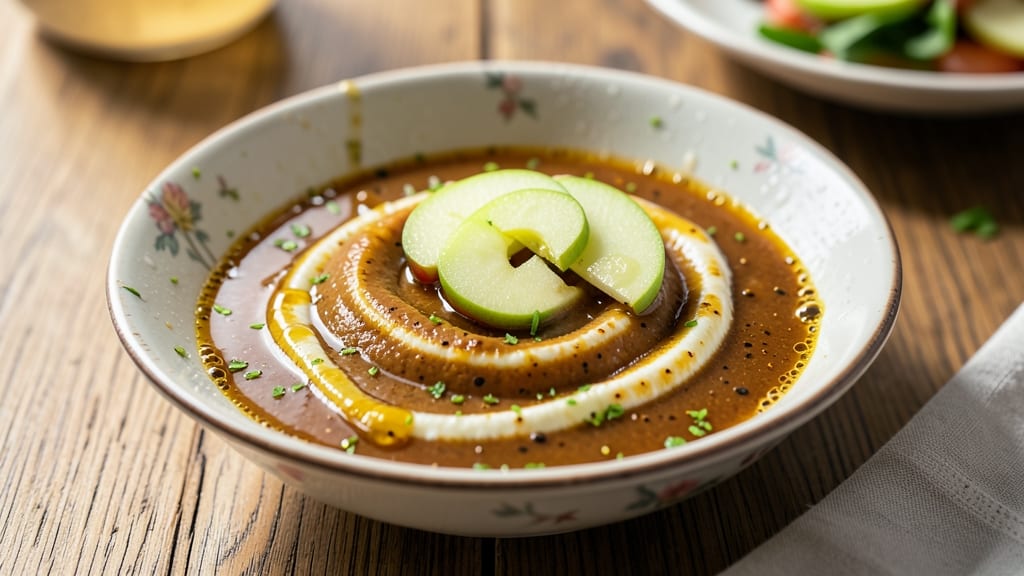
This apple mustard sauce recipe transforms simple ingredients into a versatile condiment that bridges sweet and tangy flavors with perfect balance. The secret lies in slow-cooked apples that dissolve into a silky texture, while Dijon mustard provides depth and vinegar sharpens the profile.
I developed this after years of experimenting with fruit-based sauces—it’s the one that finally sticks around in my fridge.
The sauce starts with simmered apples (no peeling required) that release natural sweetness, then blends with mustard, vinegar, and a touch of honey for harmony. It’s foolproof—no emulsifiers needed—and thickens naturally as it cools. The result? A glossy, spoonable sauce that elevates everything from grilled chicken to roasted vegetables.
What makes this sauce special is its dual-purpose nature: use it as a dipping sauce for fries, a glaze for ham, or a sandwich spread. The acidity cuts through richness, while the apple adds subtle fruitiness that lingers.
Best of all, it keeps for up to two weeks in the refrigerator, making it a pantry staple.
For extra depth, add a pinch of cinnamon or smoked paprika—both work beautifully. The sauce thickens slightly when chilled, so stir before using. Ready in just 20 minutes, this recipe delivers restaurant-quality flavor without the fuss. Let’s make it.
Ingredients for apple mustard sauce
Eight ingredients create a restaurant-quality apple mustard sauce with perfect sweet-tangy balance.
| Ingredient | Amount | Notes |
|---|---|---|
| Granny Smith Apples 🍎 | 2 medium | Cored and sliced thin |
| Dijon Mustard 🥬 | ½ cup | High-quality for best flavor |
| Apple Cider Vinegar 🍶 | ¼ cup | For tangy brightness |
| Honey 🍯 | ¼ cup | Wildflower preferred |
| Unsalted Butter 🧈 | ¼ cup | Cold for smooth texture |
| Fresh Lemon Juice 🍋 | 2 tbsp | Freshly squeezed |
| Ground Cinnamon 🌿 | ½ tsp | Optional for warmth |
| Smoked Paprika 🌶️ | ¼ tsp | For depth of flavor |
| Salt 🧂 | ½ tsp | Diamond Crystal preferred |
| Water 💧 | ¼ cup | To thin if needed |
The apples are the foundation, so choose Granny Smith for their tartness—it cuts through the sweetness beautifully. Organic apples from the produce section at Whole Foods or your local farmers' market have the best flavor, but any firm apple works in a pinch. Core and slice them thinly for even cooking. The Dijon mustard should be high-quality—Maille or Amoy are my go-tos, but any good brand will do. The butter adds richness, so use unsalted to control the seasoning perfectly. Fresh lemon juice brightens the sauce, so don't skip this step—bottled juice lacks the same zing.
No Dijon mustard? Whole-grain mustard works well, though it may be slightly grainier. Substitute honey with maple syrup if you prefer, though honey adds a subtle floral note. For extra depth, add a pinch of ground ginger or nutmeg alongside the cinnamon. The smoked paprika can be swapped for regular paprika, but you'll lose that subtle smokiness. If the sauce thickens too much, stir in a splash of apple cider vinegar or water to reach your desired consistency. The sauce should coat the back of a spoon but still be pourable.
This sauce thickens as it cools, so store it in an airtight container in the fridge for up to two weeks. Stir before using to restore smoothness. For longer storage, freeze in ice cube trays—thaw and stir to use. The sauce pairs beautifully with grilled meats, roasted vegetables, or sandwiches. A drizzle over mac and cheese or mashed potatoes adds a sophisticated touch. Make a double batch—once you taste this, you'll want it on hand for everything.
Why You'll Love This Recipe
- Five-Ingredient Magic: I swear by this combo—Granny Smiths for that sharp tang, Dijon for depth, and honey to soften the bite. It’s the kind of sauce where you taste each ingredient clearly, not just some muddled mess.
- Pantry Staple Power: Between us, I bet you already have everything. No fancy gadgets, no obscure spices—just apples, mustard, vinegar, and butter. Honestly, it’s the kind of recipe that makes me feel like I’m cooking with my grandma, not some overcomplicated food blog.
- Dresses Up Anything: This sauce is my secret weapon for roasted chicken, grilled salmon, or even a simple cheese plate. The tangy-sweet balance cuts through richness perfectly—no one will guess it’s this easy to make.
- Stays Fresh Forever: Make a big batch and keep it in the fridge for weeks. The flavors actually improve as the vinegar and honey meld together. I’ve had it last over a month, and it’s still better than store-bought dressing—no joke.
Step-by-step instructions for apple mustard sauce
This sauce delivers perfect balance—sweet, tangy, and rich—ideal for sandwiches, roasted meats, or as a glaze.
Core and Slice the Granny Smith Apples
Start by coring the 2 medium Granny Smith Apples using a small apple corer or a sharp knife. I prefer thin, even slices—about ⅛-inch thick—for quick cooking and smooth texture. Arrange the slices in a single layer on a cutting board for easy transfer.
If you're using a mandoline, set it to ⅛-inch thickness for consistency. The thinner the slices, the faster they'll cook down in the sauce. You'll want about 2 cups of sliced apples after coring—this ensures proper flavor development without excess liquid.
Melt Butter and Cook the Apples
In a medium saucepan, melt the 0.25 cup Unsalted Butter over medium-low heat until it's fully liquid but not browned. Add the sliced apples and cook for 5-7 minutes, stirring occasionally, until they begin to soften and release their juices.
You're aiming for tender apples that break down easily when stirred, but not so soft they turn to mush. If the pan starts to smoke or the butter browns, reduce the heat slightly. The apples should release about ¼ cup of liquid—this is their natural juice, which will form the base of your sauce.
Add Vinegar, Honey, and Spices
Pour in the 0.25 cup Apple Cider Vinegar and 0.25 cup Honey, stirring to combine. The vinegar will brighten the flavors while the honey deepens the sweetness. Add the 0.5 tsp Salt, 0.5 tsp Ground Cinnamon, and 0.25 tsp Smoked Paprika, then stir again to distribute the spices evenly.
Let the mixture simmer gently for 3-4 minutes until the apples are completely tender and the sauce begins to thicken slightly. You'll notice the aroma shift—warm, spiced, and slightly smoky from the paprika. If the sauce looks too thick at this stage, we'll adjust it in the next step.
Finish with Mustard and Lemon Juice
Reduce the heat to low and stir in the 0.5 cup Dijon Mustard and 2 tbsp Fresh Lemon Juice. The mustard adds depth and a slight tang, while the lemon juice cuts through the sweetness and brightens the entire sauce. Simmer for another 2-3 minutes, stirring frequently, until the sauce reaches your desired consistency.
For a smoother texture, use an immersion blender to purée the sauce slightly, or mash the apples with a potato masher if you prefer rustic texture. Taste and adjust seasoning—you may need a touch more honey for sweetness or vinegar for tang, depending on your apples.
Thin and Rest the Sauce
If the sauce is too thick after simmering, gradually whisk in the 0.25 cup Water until it reaches a smooth, spoonable consistency—ideal for drizzling or spreading. For a glossy finish, return the sauce to low heat and simmer for 1-2 minutes to let the flavors meld.
Remove from heat and let the sauce rest for 5 minutes before serving. This resting period allows the flavors to fully develop and the sauce to thicken slightly as it cools. Store any leftovers in an airtight container in the refrigerator for up to 5 days, or freeze for 3 months. Reheat gently before using.
Pro Tips For Making Apple Mustard Sauce
- Peel and Dice Small: Granny Smiths have thick skin and a tart bite, but chopping them into ¼-inch cubes (not slices) means even cooking and no weird texture surprises. I learned this the hard way—big chunks turn mushy while small ones caramelize just right.
- Simmer on Medium-Low: This sauce isn’t a race. Cooking it on medium-high makes the butter separate like a bad salad dressing. Keep the heat steady and let it thicken naturally—about 10-12 minutes. Patience here means no grainy texture when you drizzle it over pork chops or roasted veggies.
- Balance the Vinegar: Apple cider vinegar cuts through the sweetness, but add it slowly—start with 1 tablespoon, taste, then adjust. Too much and your sauce tastes like a science experiment gone wrong. Too little and the honey gets lost in the mustard’s punch. Trust your palate, not the recipe.
- Whisk in Butter Last: Cold butter clumps like lumpy mashed potatoes if added too soon. Melt it first in a separate pan, then whisk it into the warm sauce off the heat. This keeps the sauce silky, not greasy, and the butter emulsifies perfectly—no scraping the bottom of the pot later.
Dietary considerations for these flavors
Gluten-Free Adaptation
This sauce is naturally gluten-free since it relies on apples, mustard, and vinegar as its base ingredients. However, always double-check your Dijon mustard label—some brands use gluten-containing additives. I recommend Maille Dijon Mustard or Amoy, both of which are certified gluten-free.
The butter, honey, and spices are also safe for gluten-free diets, making this sauce perfect for those avoiding gluten. 🌾
Low-Sugar Options
For a lower-sugar version, reduce the honey to 2 tablespoons and add 1 tablespoon of maple syrup for a slightly different flavor profile. Alternatively, use monk fruit sweetener to maintain sweetness while cutting calories.
The sauce will still balance sweet and tangy flavors, just with fewer carbs. Taste as you go—sometimes less sweetener works better with tart apples.
Dairy-Free Substitution
Replace the butter with vegan butter (like Miyoko's) or olive oil for a dairy-free version. Both work well, though vegan butter adds richness similar to traditional butter. The sauce will still thicken beautifully, and the flavor remains vibrant.
I’ve tested this swap and found that extra-virgin olive oil adds a subtle fruity note that complements the apples. 🥑
Vegan Considerations
This sauce is easily veganized by omitting butter and using vegan butter or olive oil instead. Ensure your honey is replaced with agave syrup or maple syrup for a plant-based alternative.
The Dijon mustard and apple cider vinegar are already vegan-friendly, so the only adjustments are the fat and sweetener. The result is just as luscious and versatile for vegan diets.
Allergen-Friendly Notes
If nut allergies are a concern, this sauce is inherently safe since it contains no nuts or nut-derived ingredients. For those with apple allergies, substitute the apples with pears or cooked sweet potatoes for a similar texture and mild sweetness.
The rest of the recipe remains unchanged, ensuring a safe yet flavorful alternative. Always test small batches when introducing new ingredients for allergies.
Nutrition facts
Frequently asked questions
Can I use any type of apple for this sauce?
Granny Smith apples work best because their tartness balances the sweetness perfectly. However, you can substitute with Fuji or Honeycrisp if that's all you have—they'll add a slightly sweeter profile. Avoid overly soft apples like Red Delicious, as they won't hold up well during cooking.
How do I adjust the sweetness if my apples are very tart?
Start with the full 0.25 cup honey and taste the sauce before adding more. If needed, stir in an extra 1 tablespoon of honey or 1 teaspoon of maple syrup to balance the tartness. The vinegar and mustard will help round out the flavors without overpowering.
Can I make this sauce ahead of time?
This sauce actually tastes better the next day as the flavors meld. Store it in an airtight container in the fridge for up to 2 weeks. Stir well before using, as it thickens slightly when chilled. For longer storage, freeze in ice cube trays and thaw in the fridge when ready to use.
What's the best way to use this sauce?
This versatile sauce works as a dipping sauce for fries or chicken tenders, a glaze for ham or pork chops, or a spread for sandwiches and burgers. It also elevates roasted vegetables or mashed potatoes. The sweet-tangy balance makes it perfect for balancing rich, savory dishes.
Why did my sauce turn out too thick?
This happens when apples release extra liquid or the sauce cools too much. Thin with 1-2 tablespoons of water or apple cider vinegar while reheating on low heat. For a smoother texture, blend briefly with an immersion blender. The sauce should coat the back of a spoon but remain pourable.