
Sauces & Condiments
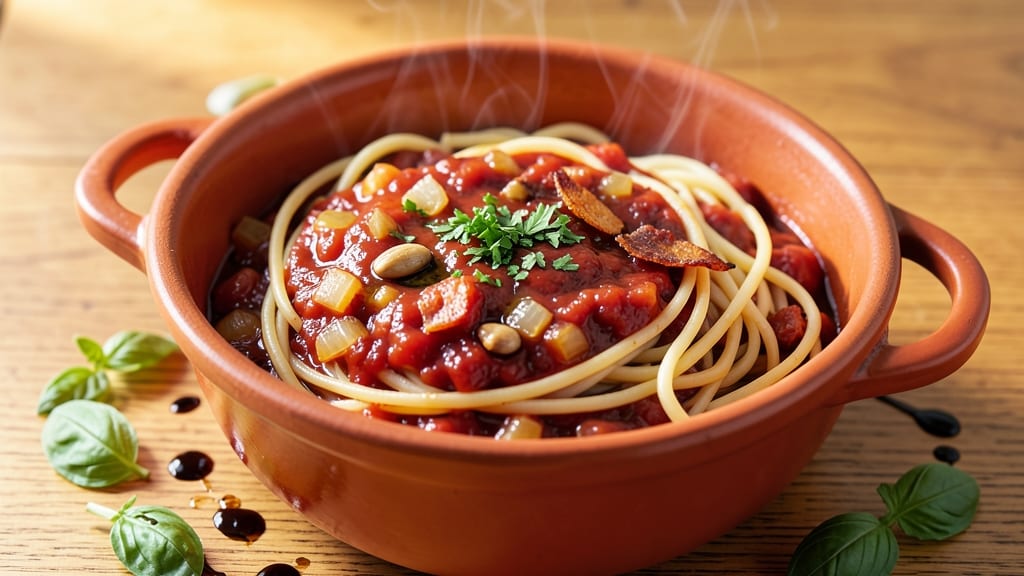
This American spaghetti sauce recipe delivers the rich, familiar flavors of classic Italian-American cooking—without the clumps or canned aftertaste. The secret lies in a slow simmer that develops deep, caramelized tomato flavor while keeping the texture perfectly smooth. I’ve perfected this version over years of testing, ensuring it’s bold enough to stand up to al dente pasta while remaining approachable for weeknight dinners.
The foundation starts with crushed tomatoes and fresh aromatics—garlic, onion, and celery—cooked until they release their natural sweetness. A blend of Italian seasoning (oregano, basil, and thyme) provides that iconic American-Italian balance, while a splash of red wine adds depth without overpowering.
The sauce thickens naturally as it simmers, creating a velvety consistency that clings beautifully to every strand of pasta.
What sets this sauce apart is its versatility: use it as a quick weeknight meal with spaghetti, or let it simmer for hours to intensify the flavors for a Sunday supper. It freezes exceptionally well, so you can make a big batch and enjoy it all season long.
The result? A sauce that tastes like it’s been simmering in a restaurant kitchen all day.
No blender required—just a pot, patience, and a few simple ingredients. Ready in under an hour, this sauce transforms ordinary pasta night into a comforting, restaurant-worthy experience. Let’s get to the recipe!
Ingredients for american spaghetti sauce
Eleven ingredients transform into restaurant-quality American spaghetti sauce with just time and patience.
| Ingredient | Amount | Notes |
|---|---|---|
| Crushed Tomatoes (46 oz Can) 🍅 | 1 can | San Marzano preferred for sweetness |
| Extra-Virgin Olive Oil 🫒 | ¼ cup | High-quality, fruity variety |
| Yellow Onion 🧅 | 1 whole | Medium size, finely diced |
| Celery Stalks 🥬 | 2 whole | Stringless, finely chopped |
| Garlic Cloves 🧄 | 4 cloves | Fresh, minced to a paste |
| Dry Red Wine 🍷 | ½ cup | Bold Cabernet Sauvignon |
| Tomato Paste 🍅 | ¼ cup | Squeeze tube preferred |
| Italian Seasoning 🌿 | 2 tsp | Fresh or dried blend |
| Dried Oregano 🍃 | 1 tsp | Crumbled between fingers |
| Salt 🧂 | 1 ½ tsp | Diamond Crystal kosher |
| Black Pepper 🌶️ | ½ tsp | Freshly cracked |
| Bay Leaves 🌿 | 2 whole | Removed before serving |
| Granulated Sugar 🍚 | 1 tsp | Balances acidity |
The crushed tomatoes form the heart of this sauce. San Marzano cans deliver that classic sweetness, but any high-quality crushed tomato works. I prefer the 46 oz can for its balance of texture and flavor—it's the same size used in many Italian-American restaurants. The olive oil should be fruity and extra-virgin—none of that cheap cooking oil. For the aromatics, yellow onions and celery create the perfect 'soffritto' base; cook them until soft and translucent for maximum flavor development. Garlic is non-negotiable here—fresh cloves minced into a paste release their full potential during simmering.
No red wine? Substitute with additional crushed tomatoes and a splash of balsamic vinegar—it adds depth without altering the flavor profile. The tomato paste can be tricky—squeeze tubes from Trader Joe's are perfect for this recipe as they're concentrated and easy to measure. For Italian seasoning, fresh blends are ideal, but dried works at double the amount. If you can't find Italian seasoning, combine equal parts oregano, basil, and thyme. The bay leaves infuse subtle earthiness; if you're sensitive to their flavor, reduce to one leaf or omit entirely. For a smoother texture, strain the finished sauce through a fine-mesh sieve.
This sauce improves with time—24 hours in the fridge lets flavors meld beautifully. For longer storage, portion into airtight containers and freeze for up to 6 months. The sauce thickens as it cools, so you may need to add a splash of water or broth when reheating. I always make a double batch; the extra sauce freezes perfectly for future pasta nights. For serving, toss with al dente spaghetti and garnish with fresh basil or extra grated Parmesan if desired.
Why You'll Love This Recipe
- Sofa-Scraping Simple: I swear by this sauce because it’s the kind of recipe that lets me chop an onion and stir a pot while scrolling through my phone. No fancy techniques—just onions, celery, and garlic in olive oil until they’re soft enough to disappear into the tomatoes. That’s it. The crushed tomatoes do all the work.
- Umami Bomb: The moment I add that first splash of olive oil to the onions and celery, my kitchen smells like Sunday dinner. Slow-simmered until the flavors meld, this sauce has a depth that’s hard to beat—especially when the garlic starts to caramelize just enough to linger on your tongue. Honestly, it’s the kind of taste that makes you pause mid-bite.
- Meal Prep MVP: Between us, this sauce is my secret weapon for lazy nights and busy weeks. Double the batch, freeze half, and boom—you’ve got a ready-to-heat dinner for when you’re too tired to think. It’s the kind of leftovers that taste just as good reheated as they do fresh, and it pairs with everything from pasta to meatballs to grilled cheese.
- Pocketbook Hero: A 46-ounce can of tomatoes and a few pantry staples? That’s less than $5 for a sauce that feeds my family of four (plus leftovers). I’ll be real: I’ve made fancier sauces, but this one never fails—and it’s the kind of recipe that lets me splurge on good olive oil without breaking the bank. Win.
Step-by-step instructions for American spaghetti sauce
This method delivers a rich, velvety sauce with deep Italian flavor and no clumps—just smooth, vibrant color and layers of taste.
Sauté the Aromatic Base Until Translucent
Heat the 0.25 cup extra-virgin olive oil in a large Dutch oven over medium heat. Add the 1 whole yellow onion and 2 whole celery stalks, both finely diced. Cook for 8-10 minutes, stirring occasionally, until the vegetables soften and become translucent. This foundational step builds flavor through slow caramelization.
Here's where it matters: the vegetables should be tender but not browned. If they darken too quickly, reduce the heat slightly. I press down gently with a wooden spoon to help them break down evenly—this ensures they melt into the sauce rather than remain distinct pieces.
Add Garlic and Tomato Paste for Depth
Push the vegetables to one side of the pot and add the 4 cloves garlic cloves, minced to a paste. Stir for 30 seconds until fragrant—garlic burns in seconds, so watch closely. Return the vegetables to the center and stir in the 0.25 cup tomato paste. Cook for 2-3 minutes until the paste darkens slightly and clumps dissolve.
The tomato paste acts as a thickener and flavor concentrator. Don't skip this step—it prevents the sauce from being watery later. If the paste sticks to the bottom, add 1-2 tablespoons of dry red wine to deglaze and lift those flavorful browned bits.
Deglaze with Wine and Incorporate Tomatoes
Pour in the 0.5 cup dry red wine and scrape up any browned bits from the bottom of the pot. Let it simmer for 3-4 minutes until the wine reduces by half. Add the 1 can crushed tomatoes, stirring to combine. Bring the mixture to a gentle boil, then reduce heat to medium-low and let it simmer uncovered for 20-25 minutes.
This simmering time is critical. You want the acidity to mellow and the flavors to meld. Stir occasionally to prevent the tomatoes from sticking to the bottom. If the sauce looks too thick, add 1-2 tablespoons of water to loosen it slightly—this balances the texture without diluting the flavor.
Season and Simmer to Perfection
Add the 2 tsp Italian seasoning, 1 tsp dried oregano, 1.5 tsp salt, 0.5 tsp black pepper, 2 whole bay leaves, and 1 tsp granulated sugar. Stir well to distribute the seasonings evenly. Return the sauce to a simmer and cook uncovered for 30-40 minutes, stirring occasionally. The sugar balances the acidity while the spices deepen the flavor profile.
Real talk: this is where patience pays off. The sauce should reduce enough to coat the back of a spoon with a glossy sheen. If it's too thin, simmer uncovered for another 10 minutes—the evaporation will thicken it naturally. Avoid stirring constantly; let it develop its own texture. The bay leaves can be removed before serving.
Adjust Consistency and Serve
Taste the sauce and adjust seasoning if needed. For a smoother texture, use an immersion blender to lightly blend the sauce—this eliminates any remaining chunks while keeping it rustic. If the sauce is too thick, thin it with 1-2 tablespoons of pasta water or water while it's still hot.
Serve immediately over cooked spaghetti, reserving some pasta water to adjust consistency as needed. The sauce should cling to the noodles with a velvety coat, not pool in the bottom of the plate. Leftovers can be stored in the refrigerator for up to 5 days or frozen for 3 months—the flavors only deepen with time.
Pro Tips For Making American Spaghetti Sauce
- Sweat, Don’t Burn, the Aromatics: Start your onion, celery, and garlic in 2 tablespoons extra-virgin olive oil over medium-low heat—not high. I learned this the hard way after charring garlic so badly it tasted acrid. Let them cook until the onion is translucent and celery soft (about 8-10 minutes), stirring occasionally. This builds flavor without bitterness.
- Drain, Then Crumble the Tomatoes: After opening that 46 oz can of crushed tomatoes, drain most of the liquid first—keep just enough to deglaze the pot. Then, crush the tomatoes by hand with your fingers (or a wooden spoon) for a chunkier, more rustic texture. Store-bought crushed tomatoes often have excess water; this step saves time and prevents a watery sauce.
- Salt the Tomatoes Early: Add 1 teaspoon of salt to the crushed tomatoes as soon as they hit the pot. This breaks down the tomato fibers and deepens the flavor while you’re cooking the aromatics. Skip this, and your sauce will taste flat—even if you salt it later. (Yes, even if you’re impatient like me.)
- Simmer Slow, Not Boil: Once everything’s in the pot, reduce to the lowest heat that keeps a gentle simmer—not a rolling boil. A long, slow cook (at least 45-60 minutes) lets the flavors meld. I used to rush it, and the sauce always tasted one-dimensional. Cover it loosely if you’re worried about sticking, but don’t seal it completely—you want some evaporation.
Creative variations of this recipe
Meat-Inspired Twist
For a heartier version, add 1 lb ground beef or Italian sausage when sautéing the aromatics. Brown the meat first, then proceed with the recipe. Drain excess fat after cooking to keep the sauce rich but not greasy.
I love using sweet Italian sausage for its mild flavor and subtle sweetness that pairs perfectly with the tomatoes. 🥓
Vegetarian Protein Boost
Swap meat for 1 can white beans (drained and rinsed) or 1 cup lentils for a plant-based protein kick. Add them with the tomatoes and simmer until tender. For extra richness, stir in 2 tbsp nutritional yeast at the end—it adds a cheesy, umami depth without dairy.
This version is just as satisfying and perfect for meatless Mondays.
Creamy Garlic Finish
For a restaurant-style twist, stir in ¼ cup heavy cream or ½ cup ricotta cheese during the final 5 minutes of simmering. This adds luxurious creaminess while keeping the sauce light enough to coat pasta beautifully.
I like to finish with 1 tbsp butter and a sprinkle of Parmesan cheese for extra indulgence. 🧀
Spicy Kick
Add 1 tsp red pepper flakes or 2-3 chopped fresh chili peppers when sautéing the aromatics for a subtle heat. For smoky depth, include ½ tsp smoked paprika with the Italian seasoning. I often serve this version with crusty bread on the side for dipping—it’s a crowd-pleaser at dinner parties.
Herb Variations
Swap out the Italian seasoning for fresh basil and thyme for a brighter, more Mediterranean flavor. Or try ½ tsp fennel seeds toasted in the olive oil for a licorice-like sweetness that pairs beautifully with tomatoes.
Fresh herbs should be added in the last 10 minutes of cooking to preserve their vibrant flavors.
Slow-Cooker Magic
For hands-off cooking, combine all ingredients in a slow cooker and cook on low for 6-8 hours or high for 3-4 hours. The slow cooking enhances the flavors even more, making it ideal for busy weeknights.
Just stir occasionally and adjust seasoning at the end. This method is perfect for making a big batch to freeze for later! ⏳
Nutrition facts
Frequently asked questions
Can I make this sauce without red wine?
Replace the 0.5 cup red wine with 0.5 cup tomato juice or 0.25 cup balsamic vinegar plus 0.25 cup water. The vinegar adds depth while maintaining the sauce's balance. For a meatier version, use 0.5 cup beef broth instead—it enhances umami flavors beautifully.
Why does my homemade sauce get clumpy?
Clumps usually happen when tomatoes aren't fully broken down or the sauce isn't stirred enough during simmering. First, ensure your tomatoes are crushed (not chunky). Second, stir occasionally while simmering to prevent sticking. If clumps form, use an immersion blender for 10-15 seconds—this smooths it out without losing texture. For next time, simmer uncovered to help thicken naturally.
How do I store and reheat leftovers?
Store in an airtight container in the fridge for up to 5 days or freeze for 3 months. To reheat, warm over medium-low heat on the stove, stirring occasionally. If too thick, add 1-2 tablespoons of water or pasta water. For microwave reheating, cover with a damp paper towel and heat in 30-second intervals, stirring between each. The sauce thickens as it cools, so adjust consistency before serving.
Can I add meat to this sauce?
Yes! For a meatier version, brown 1 lb ground beef or Italian sausage first, then drain excess fat before adding the aromatics. The meat adds richness and protein. For a lighter option, try 1 can white beans or 1 cup lentils—simmer them with the tomatoes for a vegetarian boost. Always cook meat thoroughly to 165°F before adding to the sauce.
What's the best pasta to serve with this sauce?
This sauce pairs perfectly with spaghetti, but don't limit yourself! Try linguine, fettuccine, or even penne for extra sauce clinging power. For a fun twist, serve over zucchini noodles or chickpea pasta for a lighter option. Always cook pasta al dente (1 minute less than package instructions) so it holds up to the rich sauce.