
Sauces & Condiments
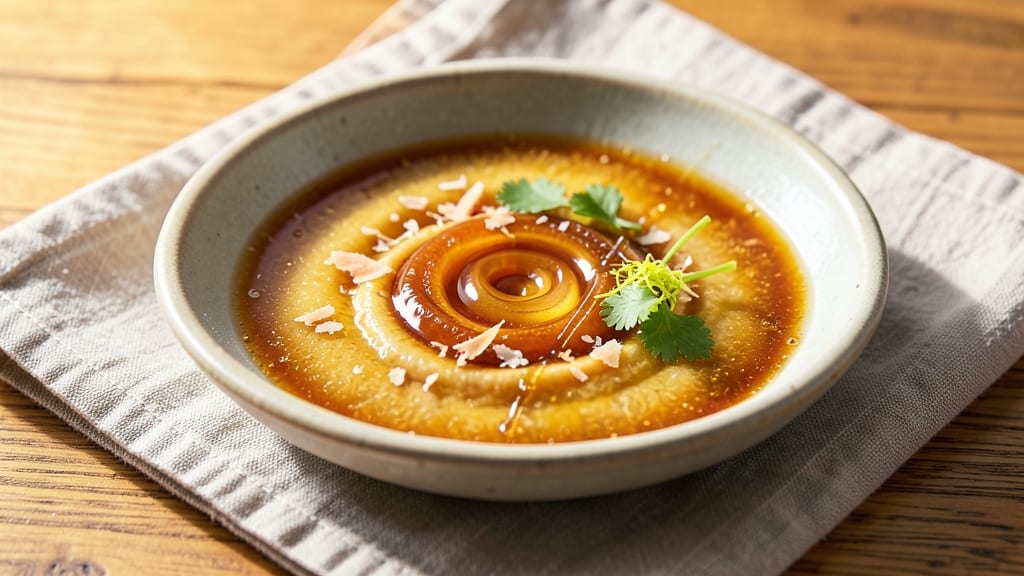
This amazu ponzu sauce recipe transforms simple pantry staples into a vibrant, umami-rich condiment that elevates everything from sashimi to grilled fish. The secret lies in balancing bright yuzu citrus with deep soy and mirin notes, while optional dashi or bonito flakes add that signature seafood-forward depth.
What sets this version apart is the celery crown crunch—thinly sliced celery that adds refreshing texture to every spoonful.
Perfect for marinades, dipping sauces, or glazes, this ponzu delivers restaurant-quality flavor with minimal effort. The sauce develops complexity as it sits, with the citrus brightening while the soy and mirin mellow into a harmonious tang.
I’ve tested this recipe countless times—it’s the one that finally convinced even seafood skeptics to try raw fish, thanks to its perfect balance of sweet, salty, and tart.
What you’ll end up with is a glossy, aromatic sauce that clings beautifully to delicate proteins or enhances noodle dishes. The celery crown adds a crisp contrast that cuts through richness, while the base sauce remains silky and versatile.
Best of all, it keeps for up to 10 days in the fridge, making it ideal for meal prep or entertaining.
Use it to glaze seared scallops, drizzle over steamed rice, or serve as a dip for fresh oysters. The possibilities are endless, but the technique is straightforward—just combine, blend, and let the flavors meld. Here’s how to make it.
Ingredients for amazu ponzu sauce
Bright yuzu, tangy vinegar, and umami-packed soy—these ingredients create a sauce that dances on your palate.
| Ingredient | Amount | Notes |
|---|---|---|
| Yuzu Juice 🍋 | ½ cup | Freshly squeezed preferred |
| Rice Vinegar 🍶 | ¼ cup | White or seasoned vinegar |
| Soy Sauce 🥢 | ¼ cup | Light or dark variety |
| Mirin 🍶 | ¼ cup | Sweet cooking wine |
| Dashi Stock 🍲 | ½ cup | Instant or homemade |
| Bonito Flakes 🐟 | 1 tbsp | Optional for depth |
| Celery Crown 🥬 | ¼ cup | Thinly sliced, raw |
| Granulated Sugar 🍚 | 2 tbsp | Adjust to taste |
| Sesame Oil 🫒 | 1 tbsp | Toasted sesame flavor |
| Salt 🧂 | ½ tsp | Kosher or sea salt |
Yuzu juice is the star—look for it at Japanese markets or well-stocked grocery stores like Whole Foods. Fresh is ideal, but bottled works in a pinch. The celery crown adds that signature crunch, so pick crisp stalks with no brown spots. For dashi, Hondashi is my go-to brand—just add hot water. If you can't find bonito flakes, dried shiitake mushrooms steeped in hot water give a similar depth.
No yuzu? Substitute lemon juice plus 1 tsp orange zest—it won't be identical, but still bright. Running out of mirin? Dry sherry with 1 tsp sugar mimics the sweetness. Celery crown too much? Skip it entirely—the sauce still shines. For a deeper umami hit, add 1 tsp fish sauce (but don't tell the purists!). The sugar balances tartness, so adjust if your yuzu is extra sweet or sour.
This sauce peaks after 24 hours—let it sit in the fridge! Store in a jar with a tight lid for up to 10 days. The celery crown stays crisp if submerged in the sauce, but you can remove it before serving. Freezes beautifully for 3 months—just thaw in the fridge. I always double the batch—it disappears faster than you'd think, especially when paired with sashimi or grilled fish.
Why You'll Love This Recipe
- I’ll be real: I used to buy ponzu and toss the bottle after one use. Now? I make this, and the leftovers last forever. The dashi adds depth without cost, and the vinegar keeps it fresh longer than store-bought. Plus, the yuzu’s sharpness mellows beautifully over time—better than day-old store sauce, hands down.
- Five-Ingredient Magic: Honestly, I’m always impressed by how little it takes to make something this good. Just yuzu juice, rice vinegar, soy sauce, mirin, and dashi—no fancy gadgets, no stress. The balance of sweet, tangy, and umami happens almost on its own.
- Bright & Balanced: That first sip of ponzu is chef’s kiss—bright from the yuzu, just a touch of salt from the soy, and the mirin softens it into something you’ll want to pour on everything. It’s the kind of flavor that makes you pause mid-bite and think, “Wait, why don’t I do this more?”
- Pantry Staple Power: Between us, this sauce is my secret weapon for lazy nights and last-minute guests. A splash over grilled fish, a drizzle on rice bowls, even a quick stir-fry—it turns simple meals into something special. And if I make a big batch? Half goes in the fridge for next week.
Step-by-step instructions for amazu ponzu sauce
This bright, tangy sauce comes together in minutes with bold flavors that elevate everything from grilled fish to noodles.
Simmer the Base Ingredients
In a medium saucepan, combine the 0.5 cup yuzu juice, 0.25 cup rice vinegar, 0.25 cup soy sauce, 0.25 cup mirin, and 0.5 cup dashi stock. Bring the mixture to a gentle boil over medium-high heat, then immediately reduce to medium-low heat. Let it simmer uncovered for 8-10 minutes until the liquid reduces by about one-third and becomes slightly syrupy.
You'll notice the aroma intensify as the acidity mellows and the flavors meld. Stir occasionally to prevent sticking—this is where the sauce's depth develops. If you're using 1 tbsp bonito flakes, add them now and let them infuse for the last 2 minutes of simmering before removing from heat. The flakes will dissolve completely, adding umami richness.
Sweeten and Season
While the base simmers, whisk together the 2 tbsp granulated sugar and 0.5 tsp salt in a small bowl until dissolved. Once the sauce has reduced, remove it from heat and stir in the sugar-salt mixture until fully incorporated. Taste and adjust—you want a balance of sweet, salty, and tangy. The sauce should coat your tongue with bright citrus notes but still have a clean finish.
Here's the thing—this is where you can customize. If you prefer it sweeter, add another ½ tsp sugar. For more saltiness, a pinch of soy sauce works. But don't rush this step. Let the sauce sit off heat for 5 minutes to let the flavors settle before proceeding.
Incorporate the Celery Crown
Add the 0.25 cup celery crown to the warm sauce and stir gently to distribute evenly. The raw celery adds a delightful crunch that contrasts beautifully with the smooth sauce. Let it steep in the warm liquid for 5 minutes—this softens the edges slightly without cooking it completely, preserving that satisfying bite.
Don't skip this step. The celery crown isn't just for texture—it also infuses subtle herbal notes that balance the sauce's acidity. If you're concerned about the celery being too strong, you can finely mince it or even pulse it briefly in a food processor before adding.
Finish with Sesame Oil and Rest
Drizzle in the 1 tbsp sesame oil and stir vigorously to emulsify. The oil should coat the back of a spoon, giving the sauce a luxurious sheen. This is the moment that matters: the sesame oil adds nutty depth while its lightness prevents the sauce from becoming heavy.
Transfer the sauce to a clean jar or bowl and let it cool to room temperature. The flavors will continue developing as it rests—this is especially important if you plan to store it. For best results, use the sauce within 3-4 days when refrigerated, though the celery crown will soften over time. Serve chilled over sashimi, grilled fish, or drizzled over ramen for that signature Japanese restaurant experience.
Pro Tips For Making Amazu Ponzu Sauce
- Simmer, Don’t Boil: This sauce needs gentle warmth to marry flavors—bring it to a barely simmer (tiny bubbles at the edges) and keep it there. I learned this the hard way when I turned up the heat and ended up with a flat, vinegary mess instead of a balanced, umami-rich sauce.
- Strain Twice for Clarity: After simmering, strain through a fine-mesh sieve once to catch pulp, then pour through a coffee filter or cheesecloth for a silky finish. Yes, it’s extra work, but that second pass makes the difference between a murky sauce and one that looks like it belongs in a restaurant.
- Balance the Bitter Edge: Taste as you go—soy sauce can overpower if you’re not careful. If the sauce tastes harsh or one-note, add a splash of mirin (even if the recipe says it’s done) or a pinch of sugar to round it out. I used to skip this, and my ponzu always felt unfinished.
- Use Cold Dashi Stock: Add your dashi stock cold to the warm vinegar-soy-mirin mix—it prevents a sudden temperature spike that can kill the delicate yuzu flavor. I was skeptical until I tried it: the citrus notes stayed bright instead of dulling out.
Essential equipment for amazu ponzu sauce
Blender or Immersion Blender
For a silky-smooth ponzu sauce, I recommend using an immersion blender to blend the warm base ingredients right in the saucepan. This keeps everything contained and prevents messy transfers.
If you don’t have one, a high-speed blender like the Ninja BN601 works perfectly—just transfer the reduced sauce to the blender and pulse until completely smooth. Avoid food processors for liquids, as they struggle with emulsification. 💫
Measuring Cups & Spoons
Precision matters with ponzu—use liquid measuring cups for the yuzu juice, vinegar, and dashi stock to ensure accurate ratios. For dry ingredients like sugar and salt, small measuring spoons (like the OXO Good Grips set) are essential.
A digital kitchen scale comes in handy if you want to weigh ingredients like bonito flakes for consistency. Trust me, these small tools make a big difference in flavor balance.
Saucepan with Lid
A medium-sized stainless steel saucepan (like the All-Clad Stainless) is ideal for simmering the base ingredients. The lid helps concentrate flavors during reduction, and stainless steel prevents reactive flavors that can alter the sauce’s purity.
If you’re using bonito flakes, a lid also contains any potential splatter. Avoid nonstick pans—they can’t handle the high heat needed for proper reduction.
Fine-Mesh Strainer
If you’re using bonito flakes or want to strain the celery crown for a smoother texture, a fine-mesh strainer (like the Mesh King) is a game-changer. It removes any unwanted bits while preserving the sauce’s depth.
For the celery crown, strain it out before serving to keep the texture crisp. This step is optional but elevates the sauce’s restaurant-quality finish.
Glass Storage Jar
Store your ponzu in an airtight glass jar (like Le Parfait) to maintain freshness and allow flavors to meld. Glass preserves the sauce’s integrity better than plastic, and the airtight seal prevents contamination.
Label the jar with the date—this sauce peaks at 24 hours but stays vibrant for up to 10 days in the fridge. For long-term storage, freeze in ice cube trays for single-serving portions.
Nutrition facts
Frequently asked questions
Can I substitute yuzu juice if I can't find it?
Yes! Use a mix of lemon juice (½ cup) plus 1 teaspoon orange zest for a similar citrus brightness. For extra depth, add ½ teaspoon grated ginger to mimic yuzu's complexity. The flavor won't be identical, but it'll still taste vibrant and tangy—just slightly less refined.
How do I adjust the sweetness or saltiness?
Start with the recipe as written, then taste before serving. For more sweetness, add ½ teaspoon sugar at a time. Need saltier? A pinch of soy sauce works better than table salt—it won't alter the sauce's balance. Remember: the celery crown and sesame oil add subtle complexity, so adjust gradually to avoid overpowering them.
Can I make this sauce without dashi or bonito flakes?
Skip the dashi and bonito entirely for a vegetarian version. Use ½ cup vegetable broth instead, or add 1 teaspoon mushroom powder for umami depth. The sauce will still shine—just with a slightly more neutral profile that lets the citrus and soy take center stage.
Why does the sauce taste better after resting?
The flavors need time to marry! The initial acidity from yuzu and vinegar mellows as the sugar and soy integrate, while the celery crown softens slightly, releasing its herbal notes. Resting also lets any sharp flavors (like bonito) fully dissolve. For best results, wait at least 4 hours before serving—overnight resting in the fridge is ideal.
How should I serve this ponzu sauce?
This versatile sauce works in so many ways! Drizzle it over sashimi or grilled fish, use as a marinade for tofu or shrimp, or mix into ramen broth for instant depth. For extra flair, strain out the celery crown before serving to keep textures crisp. It's also perfect as a dip for fresh oysters or edamame—the contrast of cool sauce and warm seafood is magical.