
Sauces & Condiments
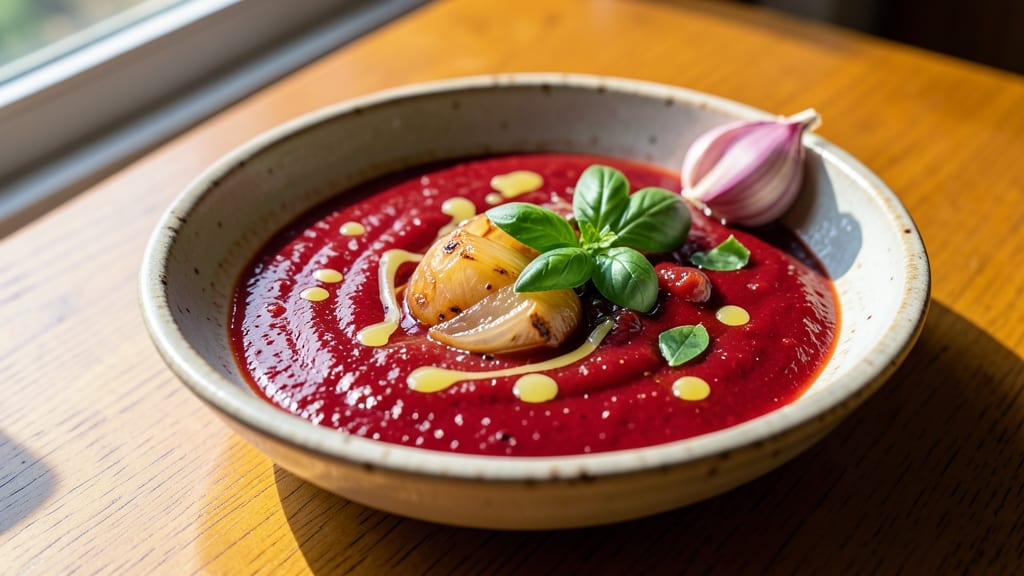
Alberto's red sauce delivers restaurant-quality umami depth without the clumps or aftertaste that ruin homemade versions. This sauce starts with a slow-cooked tomato base that develops complex flavors—caramelized edges, deep tomato sweetness, and a touch of smokiness—before blending into a velvety, clump-free sauce.
The secret lies in simmering the tomatoes until they break down naturally, then finishing with a splash of vinegar and a pinch of sugar to balance acidity and sweetness. It’s the kind of sauce that transforms simple pasta into something extraordinary, with layers of flavor that build with every bite.
The recipe relies on simple pantry staples—canned tomatoes, garlic, olive oil, and herbs—but the technique is what makes it exceptional. By cooking the tomatoes uncovered at a steady simmer, you concentrate their natural sugars and intensify their flavor without adding excess liquid.
The sauce then blends smoothly, creating a texture that’s silky yet substantial, perfect for drizzling over pizza, tossing with pasta, or using as a marinade. No blender? No problem—a fork works just as well, though blending ensures that velvety finish.
What sets this sauce apart is its versatility and longevity. Use it immediately for vibrant, fresh flavor or store it in the fridge for up to a week, where the taste only deepens.
For extra richness, stir in a pat of butter or a splash of cream at the end, or keep it bright with a squeeze of lemon. The sauce also freezes beautifully, making it ideal for meal prep or gifting.
Whether you’re cooking for a crowd or treating yourself to a homemade meal, this red sauce elevates everything it touches with effortless professionalism.
For those who love to experiment, variations are endless: add a pinch of red pepper flakes for heat, swap half the tomatoes for roasted red peppers for a smoky twist, or blend in a handful of fresh basil for a brighter finish.
The base recipe is foolproof, but these tweaks allow you to customize it to your taste—bold, tangy, or subtly sweet, it’s always delicious. Let’s get started on creating a sauce that’ll have everyone asking for seconds.
Ingredients for alberto's red sauce
Pantry staples meet restaurant-quality flavor—just 10 ingredients for velvety, clump-free red sauce.
| Ingredient | Amount | Notes |
|---|---|---|
| San Marzano Crushed Tomatoes 🍅 | 28 oz | High-quality, no salt added |
| Extra-Virgin Olive Oil 🫒 | ½ cup | Fruity, peppery variety preferred |
| Yellow Onion 🧅 | 1 whole | Medium size, finely chopped |
| Garlic Cloves 🧄 | 6 cloves | Fresh, peeled, minced |
| Fresh Basil Leaves 🌿 | ½ cup | Packed, stems removed |
| White Wine Vinegar 🍷 | 2 tbsp | Balsamic works too |
| Granulated Sugar 🍬 | 1 tsp | Balances acidity |
| Sea Salt 🧂 | 1 ½ tsp | Diamond Crystal preferred |
| Black Pepper 🌶️ | ½ tsp | Freshly ground |
| Dried Oregano 🍃 | 1 tsp | Italian or Mediterranean blend |
San Marzano tomatoes are non-negotiable here—their sweetness and texture make all the difference. Whole Foods or Trader Joe's carry the best cans, but any high-quality no-salt-added works. The fresh basil? Farmers markets have the best, but grocery store containers are fine if the leaves are bright green. For the olive oil, skip the cheap stuff—California avocado or Italian varieties add the most flavor. The garlic should be fresh; pre-minced jars often have a bitter aftertaste. Pro tip: Toast your garlic in the olive oil for 30 seconds before adding to deepen its flavor—trust me on this.
No San Marzano? Crushed tomatoes in a 28-oz can work in a pinch, but drain them well to avoid wateriness. Short on basil? Dried oregano at half the amount keeps the Italian vibe. The white wine vinegar can be swapped for red wine vinegar or even lemon juice if you're out. Want more depth? Add 1 tsp tomato paste to the simmering tomatoes. For heat, a pinch of red pepper flakes works wonders. And if you're feeling fancy, swap half the tomatoes for roasted red peppers for a smoky twist—just blend them smooth first.
This sauce gets better with time—let it sit for at least 30 minutes before using to let flavors meld. Keeps 1 week in the fridge, sealed under olive oil. Freezes beautifully for up to 6 months—portion into ice cube trays for perfect single-use servings. For extra richness, stir in a pat of butter or cream at the end, or keep it bright with a squeeze of lemon juice. The sauce thickens as it cools, so thin with a splash of water or pasta water if needed.
Why You'll Love This Recipe
- No-Chop Necessary: I swear by this sauce because the prep is ridiculously simple—just dice one onion and crush a few garlic cloves. The San Marzano tomatoes do all the heavy lifting, so you’re basically simmering while you scroll through your phone.
- Garlic-Basil Magic: That first taste of slow-cooked garlic and fresh basil in olive oil? It’s like a hug for your taste buds. The onions caramelize just enough to balance the bright, sweet tomatoes—no bitterness, just pure, rich flavor.
- Weeknight to Dinner Party: Between us, this sauce works for spaghetti on a Tuesday or as a showstopper under roasted chicken for company. The depth of flavor means it never feels like a shortcut, even when it’s your go-to weeknight fix.
- Fridge Goldmine: Make a double batch—it keeps for weeks in the fridge and freezes like a dream. I’ve pulled this from the freezer on lazy Sundays, and it reheats like it was just simmered, saving me time and money every time.
Step-by-step instructions for alberto's red sauce
Here's how to build rich, velvety sauce with balanced acidity and no clumps.
Sauté Aromatics Until Fragrant
Heat the 0.5 cup extra-virgin olive oil in a heavy-bottomed saucepan over medium heat. Add the 1 whole yellow onion, chopped into small dice, and cook for 5-6 minutes until translucent and just beginning to soften. Here's the thing—don't rush this step. You want the onions to become sweet and fragrant before moving on.
Add the 6 cloves minced garlic and cook for another 30 seconds until the raw garlic scent disappears. Watch closely—garlic burns quickly. If it starts to darken, reduce heat immediately. The onions and garlic form the flavor foundation, so take your time here. You'll know it's ready when the mixture smells sweet and aromatic.
Build the Sauce Base
Pour in the 28 oz San Marzano crushed tomatoes and stir to combine with the aromatics. Add the 2 tbsp white wine vinegar and 1 tsp granulated sugar. The vinegar brightens the tomatoes while the sugar balances their natural acidity. Bring the mixture to a gentle simmer over medium-low heat, then reduce heat to low.
Let it cook uncovered for 20-25 minutes, stirring occasionally, until the sauce thickens slightly. You're looking for a consistency where the sauce coats the back of a spoon but isn't gluey. This slow cooking allows the flavors to meld and develop depth. If you see any foam forming on top, skim it off—it contains bitterness we don't want in our finished sauce.
Season and Simmer
Add the 1.5 tsp sea salt, 0.5 tsp black pepper, and 1 tsp dried oregano. Stir well to distribute the seasoning evenly. Let the sauce simmer gently for another 15 minutes, stirring occasionally. This final simmering time ensures all the flavors come together perfectly.
Taste the sauce and adjust seasoning if needed. You might need a bit more salt or sugar to balance the acidity—this is where you fine-tune the flavor. The sauce should be rich, slightly tangy, and well-seasoned. If it's too thick, add a splash of water or pasta water to reach your desired consistency.
Finish with Fresh Basil
Remove the saucepan from heat and stir in the 0.5 cup fresh basil leaves, stems removed. Let the basil steep in the warm sauce for 5 minutes to infuse its bright flavor. Then, using a slotted spoon, remove the basil leaves—you want the flavor, not the texture.
Give the sauce one final taste and adjust seasoning if needed. The fresh basil adds a bright, aromatic finish that elevates all the other flavors. This sauce is now ready to use immediately or store for later. The flavors will continue to develop as it sits, making it even more delicious over time.
Pro Tips For Making Alberto'S Red Sauce
- Sweat the Onion Low: I used to rush this step, but a slow simmer over medium heat—about 8-10 minutes—until the onion is translucent and just starting to caramelize (not brown) builds deeper flavor. Skip the high heat; you’re not searing steak here.
- Crush Garlic Like a Pro: Smash those cloves with the flat of your knife before mincing—this releases more aroma without burning. If you’re lazy (like me), a quick pulse in the food processor works, but don’t skip the olive oil bath afterward to prevent bitterness.
- Salt the Tomatoes Early: Add a pinch of salt to the crushed San Marzano tomatoes right when they hit the pot. It softens their acidity and lets the natural sweetness shine by the time the sauce finishes. Trust me, your taste buds will notice the difference.
- Stir in Basil at the End: Tossing in fresh basil leaves too soon turns them to mush and muddies the sauce. Wait until the last 5 minutes of cooking, then stir gently—just enough to wilt them slightly. For extra vibrancy, reserve a few leaves to garnish after plating.
Wine and beer pairings for alberto's red sauce
Classic Italian Reds
This sauce pairs beautifully with Chianti Classico or Sangiovese from Tuscany. Their bright acidity and cherry notes mirror the sauce's tangy-sweet profile. I love a glass of Castello di Volpaia Chianti Classico—it's rich enough to stand up to the sauce while keeping the palate fresh.
For a lighter option, try Vernaccia di San Gimignano, an Italian white that cuts through the richness with citrusy brightness. 🍷
Bold Red Blends
If you prefer red blends, go for a Zinfandel or Syrah with at least 12-14% ABV. Their dark fruit flavors and peppery finish complement the sauce's umami depth. I recommend Ravenswood Zinfandel—its jammy notes enhance the tomato sweetness while adding a spicy kick.
For something smoother, Penfolds Bin 389 Syrah offers complexity that pairs wonderfully with the sauce's herbal notes.
Craft Beer Pairings
For beer lovers, a Belgian-style witbier like Hoegaarden or Blue Moon works surprisingly well. The citrus and coriander notes in these beers balance the sauce's acidity and sweetness. If you prefer darker beers, try a Belgian Dubbel like Westmalle Dubbel—its caramel and raisin flavors create a delicious contrast.
For a hoppier option, a California Common like Fat Tire adds a refreshing bitterness that cleanses the palate.
Unexpected Wine Twists
Don't overlook Lambrusco, an Italian sparkling red wine that adds effervescence to your meal. Its berry flavors and slight fizz make it a fun alternative to still reds. I also love pairing this sauce with Valpolicella Ripasso—its velvety texture and dried cherry notes create a luxurious match.
For something truly unique, try a Grenache from Spain, like Bodegas Sierra Cantabria, which brings a rustic charm that complements the sauce's rustic roots.
Non-Alcoholic Options
For those avoiding alcohol, a sparkling blood orange soda like San Pellegrino Aranciata Rossa provides a refreshing contrast. The citrus notes brighten the sauce's richness. Another great option is ginger beer—its spicy kick enhances the sauce's depth.
For a more traditional choice, try a non-alcoholic red wine like Freixenet 0.0%, which offers the same pairing benefits without the alcohol.
Nutrition facts
Frequently asked questions
Can I make this sauce without fresh basil?
If you're short on fresh basil, use 1 teaspoon dried basil instead—it won't have the same bright aroma, but it'll still provide that classic Italian flavor. For extra depth, add ½ teaspoon dried oregano too. The sauce will taste different but still delicious—just less vibrant.
Why does my sauce turn out too thick or too thin?
Sauce consistency depends on simmering time and liquid reduction. For thicker sauce, simmer uncovered for 5-10 extra minutes to evaporate more liquid. If it's too thick, thin with 1-2 tablespoons water or pasta water while warm. The key is patience—rushing the simmering often leads to uneven texture.
How do I store leftovers to keep them fresh?
Store in an airtight container in the fridge for up to 1 week, covered with a thin layer of olive oil to preserve flavor. For longer storage, freeze in ice cube trays or small jars—thaw overnight in the fridge. Reheat gently on low heat, stirring often to prevent clumping. Never reheat directly from frozen.
Can I use this sauce for dishes other than pasta?
This versatile sauce works beautifully on pizza, grilled meats, or as a marinade. For pizza, thin with a splash of water or cream. For meats, reduce the sauce slightly to intensify flavors. It also makes a great dip for garlic bread or mozzarella sticks. The balanced acidity and umami make it perfect for almost any savory application.
What's the secret to preventing clumps in the sauce?
Simmer uncovered on low heat and stir occasionally to prevent skin formation. After cooking, blend briefly with an immersion blender for silky texture. If clumps appear, strain through a fine-mesh sieve. The key is patience—don't rush the cooking process, and always use a heavy-bottomed pot for even heat distribution.