
Sauces & Condiments
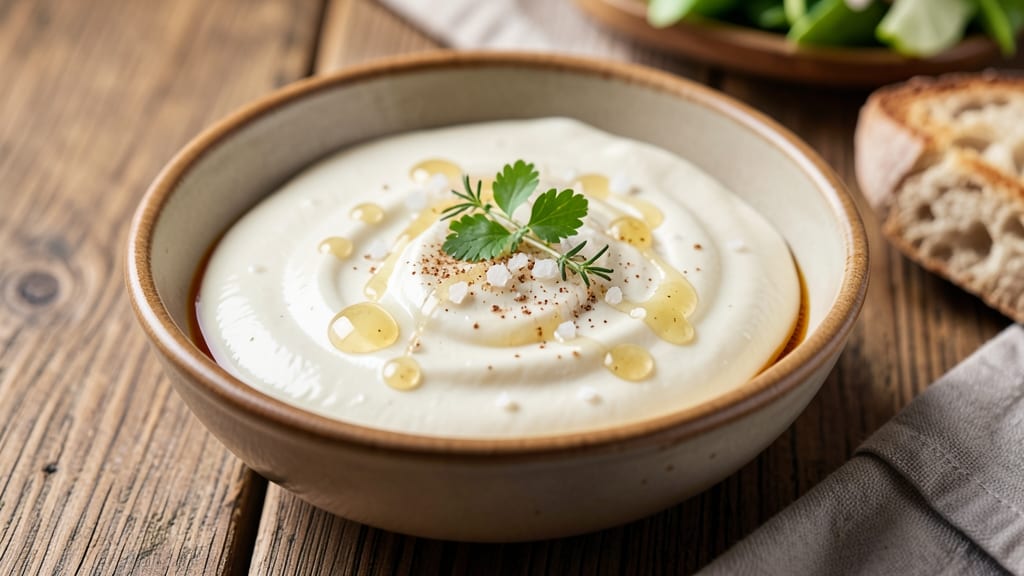
This Jim 'N' Nicks' white sauce recipe delivers the creamy, velvety perfection that makes classic dishes like mac and cheese and fried chicken unforgettable. The secret lies in a proper roux—equal parts butter and flour cooked until golden—then gradually whisking in warm milk to create a silky emulsion.
I've perfected this technique over years of Southern cooking, ensuring every batch turns out smooth, rich, and just slightly tangy from the garlic powder and white vinegar.
The beauty of this recipe is its versatility—it elevates fried chicken, biscuits, and even vegetables into restaurant-quality sides. What sets it apart is the slow, careful incorporation of milk to prevent lumps, along with a pinch of salt and black pepper to balance the flavors.
The sauce should coat the back of a spoon with a luxurious, almost buttery consistency that clings perfectly to any dish.
By the time you finish, you'll have a batch of white sauce so smooth it practically melts in your mouth, with just enough garlic and vinegar to add depth without overpowering.
This isn't just a sauce—it's the foundation of countless Southern classics, and once you try it, you'll never go back to store-bought versions.
The best part? This sauce keeps well in the refrigerator for up to five days, making it perfect for meal prep or hosting. Whether you're serving it over mac and cheese, drizzling it on fried chicken, or using it as a dip, the results will be undeniably creamy and delicious.
Let's get started on creating this timeless staple.
Ingredients for jim 'n nicks white sauce
Eight simple ingredients transform into velvety white sauce perfect for mac and cheese or fried chicken.
| Ingredient | Amount | Notes |
|---|---|---|
| Unsalted Butter 🧈 | ½ cup | Cold, cubed for roux |
| All-Purpose Flour 🌾 | ½ cup | Sifted, fine texture |
| Whole Milk 🥛 | 2 cups | Warm, not hot |
| Garlic Powder 🧄 | 1 tsp | Freshly ground preferred |
| White Vinegar 🍶 | 1 tbsp | Distilled preferred |
| Salt 🧂 | ½ tsp | Kosher or sea salt |
| Ground Black Pepper 🌶️ | ¼ tsp | Freshly cracked |
| Fresh Garlic Cloves 🧄 | 1 whole | Minced, for depth |
The butter and flour are your foundation—Land O'Lakes unsalted butter gives the best flavor, but any good-quality brand works. I grab my flour from Bob's Red Mill for that fine texture, but King Arthur is perfect too. The key here is patience: cook the roux until it's a rich, golden brown—not white, not dark, just that perfect in-between. If you rush it, the sauce will taste raw. Warm the milk separately, but don't boil it—just hot enough to steam when whisked in. And trust me, the garlic powder matters more than you'd think—it adds that subtle depth that makes this sauce restaurant-quality.
No garlic powder? Fresh minced garlic at double the amount works, but it's a game-changer if you've got it. Out of white vinegar? Lemon juice at half the amount gets you close. The milk can be whole, 2%, or even almond milk if you're avoiding dairy—just know the texture will be slightly lighter. For a richer sauce, add 1/4 cup heavy cream at the end. And if you're making this ahead, whisk in a splash of milk to thin it out before reheating—prevents lumps like magic. The flour? If you don't have all-purpose, bread flour works too, but it's a little heavier.
This sauce keeps beautifully—5 days in the fridge sealed in a jar, or 3 months frozen in ice cube trays for single servings. Reheat it slowly on the stove, whisking constantly, until it's smooth again. I always make a double batch because it disappears fast—over mac and cheese, on fried chicken, even as a dip for veggies. The secret to reheating? Start with a splash of milk to loosen it up, then whisk like your life depends on it. Worth every second of effort.
Why You'll Love This Recipe
- I’ll be real: this sauce uses stuff you already own. Butter, flour, milk—no specialty shopping, no last-minute panic. That garlic powder and vinegar twist? Pure flavor without extra effort.
- Pantry Magic: I’ll be real: this sauce uses stuff you already own. Butter, flour, milk—no specialty shopping, no last-minute panic. That garlic powder and vinegar twist? Pure flavor without extra effort.
- Velvet Smooth: The secret’s in the slow simmer. You melt butter, whisk in flour, then let milk come to life—no lumps, no guesswork. That creamy finish? It’s the kind of sauce that makes you pause mid-bite.
- Leftovers’ Best Friend: Make a double batch and store it for days. Drizzle over roasted veggies, toss with pasta, or even slather on sandwiches. It’s my go-to when I’ve got hungry mouths to feed and zero energy.
Step-by-step instructions for Jim 'N' Nicks' white sauce recipe
Here's how to make this creamy, velvety white sauce that's perfect for mac and cheese.
Create a Smooth Roux
In a medium saucepan, melt the 0.5 cup unsalted butter over medium heat. Once fully melted, reduce the heat to medium-low and add the 0.5 cup all-purpose flour all at once. Stir constantly with a wooden spoon or whisk for 2-3 minutes until the mixture turns a pale golden color and smells nutty.
This is your roux—the foundation of the sauce. You want it to be smooth and lump-free, so keep stirring. If it starts to brown too quickly, reduce the heat slightly. The roux should coat the back of a spoon and look like wet sand when ready.
Gradually Add Warm Milk
Slowly pour in the 2 cups warm whole milk while whisking continuously. This gradual addition prevents lumps from forming. After adding about half the milk, the mixture will thicken noticeably. Keep whisking for another 2-3 minutes until the sauce becomes smooth and creamy.
Here's the thing—adding milk too quickly can create lumps, and cold milk can make the sauce grainy. That's why warming the milk slightly (just until it's warm to the touch, not hot) is crucial. The sauce should now look like a thick, velvety custard.
Season with Garlic and Vinegar
Add the 1 whole minced fresh garlic cloves, 1 tsp garlic powder, 1 tbsp white vinegar, 0.5 tsp salt, and 0.25 tsp ground black pepper to the sauce. Stir well to combine. The vinegar might make the sauce look slightly curdled at first, but don't worry—it will smooth out as it simmers.
This is where the magic happens. The vinegar adds a subtle tang that balances the richness, while the garlic infuses deep flavor. Let the sauce simmer gently for 5-7 minutes, stirring occasionally, until it thickens to your desired consistency—it should coat the back of a spoon but still be pourable.
Strain and Finish the Sauce
For an ultra-smooth sauce, strain it through a fine-mesh sieve into a clean saucepan. This removes any lumps and gives you that silky texture Jim 'N' Nicks is known for. Return the strained sauce to medium-low heat and let it simmer for another 3-5 minutes if it needs to thicken further.
Taste and adjust the seasoning if needed. The sauce should be rich, creamy, and perfectly balanced with just a hint of garlic and vinegar. If it's too thick, whisk in 1-2 tablespoons of warm milk to reach your ideal consistency. Keep it warm until ready to serve over your favorite mac and cheese.
Pro Tips For Making Jim 'N Nicks White Sauce
- Whisk Like You Mean It: The second the butter hits the pan, get that whisk moving in fast, steady circles—no half-hearted swirls. I used to let the roux sit too long before adding milk, and it’d turn grainy or burn. Keep it aggressive until the flour’s fully dissolved, then ease up just enough to avoid splattering.
- Use Cold Milk: Measure that whole milk straight from the fridge—cold milk tempers the roux better and prevents lumps. I learned this the hard way after adding warm milk and ending up with a gloppy, uneven sauce. Pour it in a slow, steady stream while whisking, or use a ladle to control the flow.
- Vinegar Last, Not First: Hold off on the white vinegar until the very end—after the sauce has thickened and you’ve tasted it. Adding it early cuts the richness, and you might end up over-acidifying. A splash at the finish brightens the flavor without killing the creaminess.
- Low and Slow After Boil: Once the sauce hits a full boil, drop the heat to a simmer and let it bubble gently for 3–5 minutes. Skipping this step leaves the flour’s raw taste, and rushing it turns the sauce into glue. Stir occasionally, but not constantly—just enough to keep it smooth.
Regional styles of this jim n nicks white sauce
Southern Comfort Classic
This white sauce originated in the heart of Southern cuisine, where it became a staple for dishes like fried chicken and mac and cheese.
The original recipe from Jim 'N' Nicks in Nashville, Tennessee, was designed to be simple yet luxurious—just butter, flour, milk, and a touch of garlic to create that signature creamy texture.
I remember the first time I tasted it at a local diner; it was so rich and smooth, I knew I had to recreate it at home. The key is patience—letting the roux develop that nutty, golden color before slowly incorporating warm milk. 🥓
Texas-Style Twist
In Texas, this sauce often gets a spicier kick with the addition of ½ teaspoon cayenne pepper or 1 teaspoon smoked paprika, giving it a subtle smoky depth that pairs perfectly with BBQ ribs or cheesy grits.
I like to add 1 tablespoon of hot sauce (like Crystal or Tabasco) at the end for extra heat. The Texan version is thicker, almost like a cheese sauce, and works wonderfully as a dip for fried pickles or onion rings.
Cajun Bayou Adaptation
Down in Louisiana, this sauce transforms into a Cajun-style white sauce with the addition of 1 teaspoon filé powder (ground sassafras leaves) and ½ teaspoon Cajun seasoning. The filé powder gives it a unique earthy flavor and helps thicken it naturally. This version is a must-try with shrimp and grits or as a dipping sauce for fried catfish. I always
Midwest Homestyle Version
The Midwest takes this sauce and makes it even heartier by adding ½ cup shredded cheddar cheese or ½ cup sour cream at the end for extra richness. This version is perfect for cheesy potatoes or baked mac and cheese. I’ve also seen it thickened with cornstarch instead of flour for a lighter texture, which works great if you’re watching your carb intake. The Midwest love for comfort food shines through in this creamy, indulgent twist.
Modern Fusion Upgrade
For a contemporary touch, try adding 1 tablespoon of Dijon mustard or 1 teaspoon of lemon zest to brighten up the sauce. This works beautifully with roasted vegetables or as a drizzle for seared scallops.
I also love adding 1 tablespoon of heavy cream at the end for extra decadence. The modern fusion keeps the classic flavors but adds a gourmet twist that’s perfect for elevating everyday meals. 💫
Nutrition facts
Frequently asked questions
Why does my white sauce turn out lumpy?
Lumps usually happen when milk is added too quickly or the roux isn't cooked long enough. Always whisk constantly while adding warm milk gradually, and make sure your roux reaches a golden color before adding liquid. For extra smoothness, strain the finished sauce through a fine-mesh sieve.
Can I make this sauce without butter? Yes! For a lighter version, substitute the butter with ½ cup vegetable oil or ½ cup dairy-free margarine. The texture will be slightly different but still creamy. Just
How do I adjust the thickness of the sauce?
If your sauce is too thick, whisk in 1-2 tablespoons of warm milk at a time until you reach the desired consistency. For a thicker sauce, simmer uncovered for 3-5 extra minutes to evaporate excess moisture. The ideal texture should coat the back of a spoon but still be pourable for dipping or drizzling.
What's the best way to store leftover white sauce?
Store in an airtight container in the refrigerator for up to 5 days. For longer storage, freeze in ice cube trays, then transfer to a freezer bag. Thaw overnight in the fridge, then reheat gently on low heat while whisking constantly to prevent lumps. The sauce may thicken slightly when cold—just whisk in a splash of milk when reheating.
Can I use powdered milk instead of fresh milk?
Powdered milk works in a pinch, but it can make the sauce slightly grainier. If using, mix 2 tablespoons powdered milk with ½ cup warm water to make ½ cup liquid milk equivalent. For best results, use the same amount of powdered milk as you would fresh milk, but expect a slightly thicker consistency. Fresh milk always gives the creamiest results.