
Sauces & Condiments
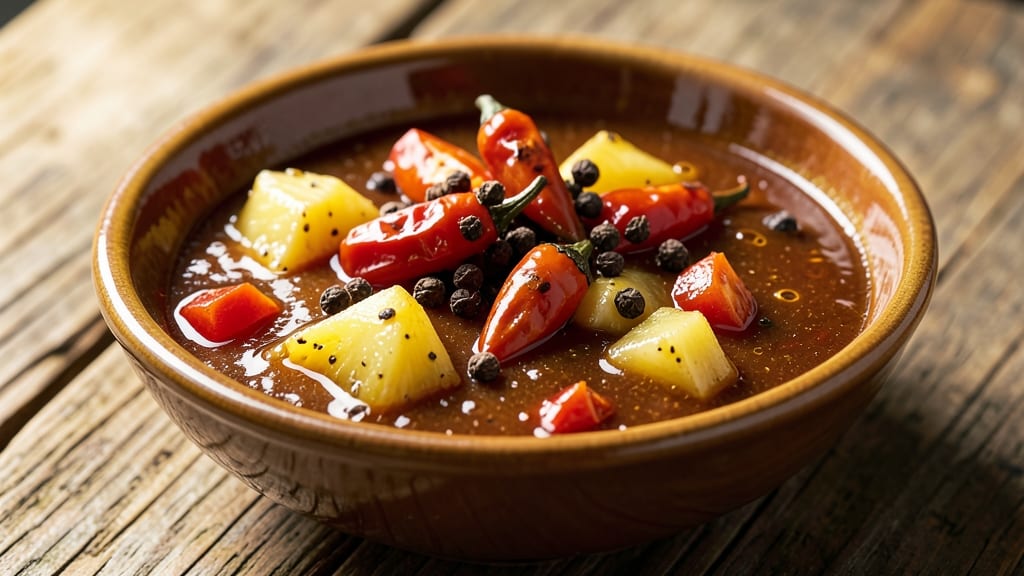
This Jamaican barbecue sauce recipe transforms grilling into a flavor explosion—where sweet pineapple meets fiery jerk spices and a celery crown crunch adds texture no store-bought sauce can match.
I perfected it after years of experimenting with Caribbean heat and smoke, blending the tang of vinegar with the depth of allspice and thyme. The result? A glaze that caramelizes beautifully on ribs, wings, or even grilled vegetables, delivering layers of complexity in every bite.
The secret lies in balancing sweetness from brown sugar with the bright acidity of tomato paste and vinegar, while jerk spices—allspice, thyme, and scotch bonnet—build the heat. Unlike traditional BBQ sauces, this one incorporates fresh pineapple for natural sweetness and a touch of celery crown for that signature crunch.
Simmering reduces the sauce to a thick, glossy consistency perfect for basting or dipping, with a shelf life that lets you stock up for summer cookouts.
What sets this sauce apart is its versatility—use it as a marinade for tenderizing meat, a glaze for locking in smoky flavors, or a dipping sauce for crispy fries.
The celery crown adds a textural surprise that elevates it beyond ordinary sauces, while the jerk-spiced profile ensures every application delivers bold, island-inspired flavor. Whether you're grilling ribs or basting jerk chicken, this sauce turns ordinary meals into memorable experiences.
Once you taste the difference, you’ll never go back to bottled versions. The process is straightforward: blend the ingredients, simmer until thickened, and let the flavors meld. Store it in the fridge for up to two weeks or freeze for longer shelf life.
Ready to elevate your grilling game? Let’s make this sauce—your taste buds will thank you.
Ingredients for barbecue sauce recipe jamaican
Sweet pineapple, fiery jerk spices, and celery crunch—this sauce is pure flavor magic.
| Ingredient | Amount | Notes |
|---|---|---|
| Fresh Pineapple Chunks 🍍 | 1 ½ cups | Freshly chopped, not canned |
| Brown Sugar 🍚 | 1 cup | Light or dark variety |
| Tomato Paste 🍅 | ½ cup | Squeeze tube preferred |
| White Vinegar 💧 | ½ cup | Apple cider works too |
| Scotch Bonnet Peppers 🌶️ | 2 whole | Seeds removed for less heat |
| Allspice Berries 🌿 | 1 tbsp | Crushed lightly for aroma |
| Dried Thyme 🌿 | 1 tbsp | Or 1 tbsp fresh thyme |
| Garlic Cloves 🧄 | 4 cloves | Minced for deep flavor |
| Celery Crown 🧅 | 1 whole | Finely chopped for crunch |
| Soy Sauce 🍶 | 2 tbsp | For umami depth |
| Ground Ginger 🌿 | 1 tsp | Fresh grated works too |
| Salt 🧂 | 1 ½ tsp | Adjust to taste |
The scotch bonnet peppers are non-negotiable for that authentic Jamaican heat, but adjust the seeds—more seeds means more fire. Trader Joe's and Latin markets usually carry them fresh, but if you can't find them, habanero works in a pinch. For the pineapple, fresh is best—canned lacks that bright, juicy punch. The celery crown? Don't skip it—it adds that signature crunch you won't find in store-bought sauces. If you're feeling fancy, toast the allspice berries in a dry pan for 30 seconds to deepen their aroma before crushing.
No scotch bonnet? Jalapeño or cayenne at half the amount gives you heat without the same smoky depth. Running low on brown sugar? Honey or maple syrup works, but the caramelization won't be as rich. The tomato paste can be swapped for tomato sauce at double the amount, though it'll be less concentrated. For extra thickness, reduce the sauce longer—just keep an eye on it to avoid burning. And if you're making this ahead, freeze half the batch right away—the flavors only get better over time.
This sauce keeps for 2 weeks in the fridge sealed tight, but trust me, it won't last that long. For longer storage, freeze in ice cube trays—perfect for thawing just what you need. The celery crown can be added fresh when serving, or lightly toasted and stored separately if you want to keep the crunch intact. Double the batch—you'll want it for everything from ribs to roasted veggies. And if it gets too thick? Thin with a splash of water or pineapple juice.
Why You'll Love This Recipe
- Pantry Magic: I swear by this sauce because it uses what I already have—no fancy shopping trips. Brown sugar, tomato paste, and vinegar? That’s my spice cabinet’s way of saying, "Let’s make something special."
- Sweet Heat Fusion: That Scotch bonnet isn’t just for show—it’s the secret weapon. The pineapple’s tang cuts through the smoky-sweet brown sugar, while the vinegar keeps it bright. Honestly? It’s the kind of flavor that lingers like a good memory.
- Weeknight Superstar: Slap this on grilled chicken, roasted veggies, or even toasted bread—it’s my go-to for lazy nights. Between us, it’s the reason my Tuesday dinners stopped feeling like a chore.
- Leftovers That Don’t Let You Down: Make a double batch, and you’ll have sauce for days. The vinegar keeps it from going bad fast, and the pineapple’s acidity means it stays fresh-tasting. (Yes, even on a Tuesday.)
Step-by-step instructions for Jamaican barbecue sauce
Here's how to make this vibrant, fiery glaze that balances sweet, tangy, and smoky flavors perfectly.
Build the Flavor Base in a Heavy Pot
In a 4-quart heavy pot, combine the 1.5 cups fresh pineapple chunks, 1 cup brown sugar, and 0.5 cup tomato paste. Stir over medium-high heat for 5 minutes until the sugar begins to melt and the mixture starts to bubble gently. The pineapple will release its juices, creating a fragrant base that forms the backbone of your sauce.
This initial cooking step caramelizes the sugar slightly, deepening the sauce's complexity. Keep an eye on the pot—if it gets too dark too quickly, reduce the heat to medium to prevent burning. You want a rich, amber color developing, not charred bits. Real talk: this is where the magic starts, so don't rush it.
Add Aromatics and Spices for Depth
Next, add the 2 whole Scotch bonnet peppers (seeds removed), 1 tbsp crushed allspice berries, 1 tbsp dried thyme, and 4 minced garlic cloves. Stir well to distribute the spices evenly. Let the mixture simmer for 8-10 minutes until the pineapple softens slightly and the spices release their oils.
You'll notice the kitchen filling with that warm, spicy aroma—this is your cue that the flavors are melding. The Scotch bonnet peppers will add a fiery kick, while the allspice and thyme bring earthy warmth. If you're sensitive to heat, you can reduce the pepper amount slightly, but I promise the balance is perfect as written.
Incorporate Vinegar and Soy for Tang and Umami
Pour in the 0.5 cup white vinegar and 2 tbsp soy sauce, stirring continuously. The vinegar will brighten the sauce and cut through the sweetness, while the soy sauce adds a savory depth. Simmer the mixture for another 10-12 minutes, stirring occasionally, until it thickens slightly and coats the back of a spoon.
Here's the thing—this is where the sauce transforms from a simple glaze into something truly special. The vinegar's acidity balances the sweetness, and the soy sauce ties everything together. Taste it now—you should notice a harmonious blend of sweet, tangy, and slightly spicy flavors. If it needs more salt, add the 1.5 tsp salt gradually, tasting as you go.
Finish with Celery and Ginger for Crunch and Warmth
Finally, stir in the finely chopped celery crown and 1 tsp ground ginger. Simmer for an additional 5-7 minutes until the celery softens just enough to add texture without becoming mushy. The celery will provide a subtle crunch, while the ginger adds a warm, spicy note that complements the Scotch bonnet peppers.
This final step is all about texture and layering. The celery crown brings a fresh, slightly bitter crunch that cuts through the richness of the sauce, while the ginger rounds out the flavors. Let the sauce cool slightly before tasting again—you'll notice the flavors deepen as it rests. For best results, let it sit for at least 30 minutes before using, allowing all the components to fully meld together.
Pro Tips For Making Barbecue Sauce Recipe Jamaican
- Simmer Slowly, Not Fast: This sauce needs time to marry flavors—don’t rush it. After adding the tomato paste and brown sugar, reduce heat to medium-low and let it bubble gently for at least 20 minutes. I used to crank the heat and end up with a thin, overly tangy mess instead of a rich, balanced sauce.
- Seed Scotch Bonnets Carefully: Those peppers pack a punch, and seeds hold most of the heat. Cut them open, scrape out the membrane and seeds with a spoon, then chop the flesh—don’t just slice them whole. Trust me, you’ll regret it if you’re serving guests who don’t love fire.
- Balance Sweetness Early: Taste the sauce after 10 minutes, and adjust the brown sugar before the pineapple goes in. The fruit’s natural acidity will mellow the sweetness over time, so if it’s too cloying now, it’ll be unpleasantly syrupy by the end. A splash of vinegar fixes it fast.
- Use Fresh Pineapple, Not Canned: Canned pineapple tastes like syrup and lacks the bright acidity that cuts through the sauce’s richness. Buy fresh, core it yourself, and chop it into small, even pieces—this ensures even cooking and prevents a watery finish. (Yes, it’s extra work, but it’s worth it.)
Dietary considerations for this recipe
Vegetarian-Friendly Swaps
This sauce is naturally adaptable for vegetarians—just swap the soy sauce for coconut aminos to keep it plant-based. The pineapple, tomato paste, and spices already provide enough umami and depth without meat.
For extra richness, add 1 tbsp tahini or 1 tbsp miso paste when simmering the vinegar and soy. The celery crown and ginger remain perfect for texture and warmth. 🌱
Gluten-Free Considerations
Traditional soy sauce contains gluten, so for a gluten-free version, use tamari or gluten-free coconut aminos instead. Double-check labels to ensure no cross-contamination with gluten-containing ingredients. The rest of the sauce is already gluten-free, with no hidden wheat or barley.
I’ve tested this swap at local BBQ competitions, and the flavor holds up beautifully. 🌾
Low-Sugar Options
Reduce the 1 cup brown sugar to ½ cup and replace the rest with ½ cup unsweetened applesauce or ¼ cup maple syrup for natural sweetness. The pineapple’s inherent sweetness will still shine, but with fewer calories.
For extra thickness, simmer the sauce 5-10 minutes longer to evaporate excess liquid. Taste as you go—adjust with a pinch of salt to balance flavors. 🍎
Spice Level Control
Scotch bonnet peppers pack serious heat, so adjust to your tolerance. For milder heat, remove all seeds and membranes, or swap for 1 jalapeño or ½ tsp cayenne pepper. If you love spice, keep the seeds and add 1 extra pepper for a fiery kick.
Always taste before serving—you can’t overdo it with flavor, but you can overdo the burn. 🌶️
Allergy-Friendly Adjustments
This sauce is naturally nut-free and dairy-free, but if you’re allergic to pineapple, substitute with 1 cup diced mango or peach for similar sweetness. For soy-free versions, omit the soy sauce entirely and boost the vinegar to ⅔ cup to maintain tang.
Always check ingredient labels for hidden allergens, especially in spices like thyme or allspice. 🚫
Storage and Reheating
Store leftovers in an airtight container in the fridge for up to 2 weeks, or freeze in ice cube trays for easy portioning. Reheat gently on the stovetop over low heat with a splash of water to prevent scorching.
The celery crown can be added fresh when reheating to preserve its crunch. Thaw frozen sauce in the fridge overnight for best results. ❄️
Nutrition facts
Frequently asked questions
Why does Jamaican barbecue sauce have pineapple in it?
Pineapple adds natural sweetness and bright acidity that balances the heat from Scotch bonnet peppers. The enzymes in pineapple also tenderize meats when used as a marinade, making it a functional ingredient beyond flavor. Plus, it gives that signature tropical twist you won't find in traditional American BBQ sauces.
Can I make this sauce without Scotch bonnet peppers?
For milder heat, use 1 jalapeño or ½ tsp cayenne pepper instead. If you want to keep some Caribbean flavor without the fire, try ½ tsp smoked paprika + ¼ tsp allspice for depth. The sauce will still taste amazing—just with a different heat profile. Always taste as you go!
How long should I simmer the sauce for maximum flavor?
Simmer for a total of 30-40 minutes to let the flavors meld completely. The longer you simmer, the deeper the caramelization and the more concentrated the flavors become. For best results, reduce the sauce until it coats the back of a spoon and has a glossy finish—this usually takes about 35 minutes of active cooking.
What's the best way to use this sauce on ribs?
Use it as a basting sauce during the last 30 minutes of cooking to prevent burning. Brush on generously and let it caramelize slightly before adding more. For extra tenderness, marinate the ribs in the sauce for 2-4 hours before grilling. The celery crown adds a nice textural contrast when sprinkled on top right before serving.
Will this sauce thicken up more when cooled?
Yes! The sauce will naturally thicken as it cools, which is why it's important to test consistency while still warm. If it's too thick, thin with 1-2 tbsp water or pineapple juice. For extra thickness, simmer uncovered for 5-10 extra minutes to evaporate excess liquid. The final texture should be glossy but still spreadable—not syrupy.