
Sauces & Condiments
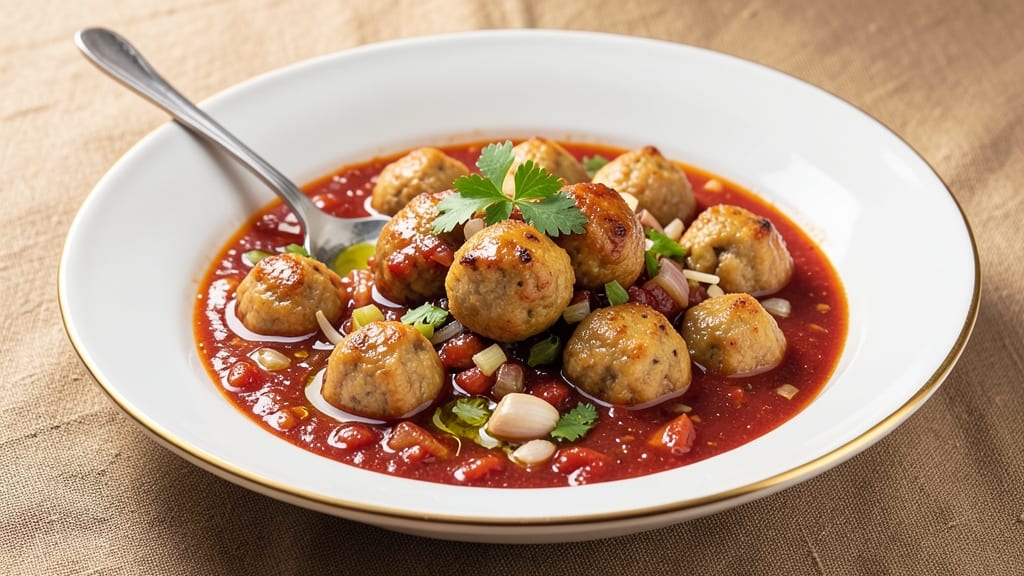
This albondigas sauce recipe transforms simple ingredients into a velvety, aromatic tomato-cream sauce that clings perfectly to meatballs.
The key lies in slow-simmering garlic, onions, and celery until they dissolve into a fragrant base, then building depth with cumin, oregano, and bay leaf—each spice working in harmony to create layers of flavor.
What sets this apart is the celery crown crunch, where crispy fried celery leaves add textural contrast that elevates every bite.
The sauce begins with a classic Spanish sofrito—onions, garlic, and celery cooked until translucent—then deepens with crushed tomatoes and a splash of white wine to deglaze the pot. A touch of cream and a sprinkle of flour thicken it into a luscious, cling-worthy consistency that balances richness with acidity.
The secret? Patience—simmering for 20 minutes allows flavors to meld without overpowering the delicate spice notes.
What you’ll end up with is a sauce that’s smooth yet complex, with a subtle crunch from the fried celery crown that cuts through the creaminess. It’s the kind of sauce that makes ordinary meatballs feel like a restaurant special—deeply savory, slightly sweet, and impossible to resist.
Perfect for serving with albondigas or any protein that needs a luxurious coating.
This recipe delivers restaurant-quality results without shortcuts, making it ideal for weeknight dinners or holiday gatherings. The ingredients are simple, but the technique ensures a sauce that’s anything but basic. Let’s get cooking.
Ingredients for albondigas sauce
Twelve ingredients crafting a sauce that transforms ordinary meatballs into restaurant-worthy bites.
| Ingredient | Amount | Notes |
|---|---|---|
| Extra-Virgin Olive Oil 🫒 | ½ cup | High-quality, fruity variety |
| Yellow Onion 🧅 | 1 whole | Diced into small pieces |
| Celery Stalks 🧄 | 3 whole | Diced, plus extra for crown |
| Garlic Cloves 🧄 | 4 cloves | Minced finely |
| Crushed Tomatoes 🍅 | 28 oz | High-quality canned San Marzano |
| Dry White Wine 🍷 | ½ cup | Sauvignon Blanc preferred |
| Heavy Cream 🥛 | ½ cup | Full-fat for richness |
| All-Purpose Flour 🌾 | 1 tbsp | For thickening slurry |
| Ground Cumin 🌿 | ½ tsp | Toasted for depth |
| Dried Oregano 🍃 | 1 tsp | Mexican oregano preferred |
| Bay Leaves 🌿 | 2 whole | Fresh preferred |
| Salt 🧂 | 1 tsp | Diamond Crystal kosher |
| Black Pepper 🌶️ | ½ tsp | Freshly ground |
The foundation begins with a proper Spanish sofrito—yellow onion, celery, and garlic cooked until translucent. For the best results, use fresh celery with vibrant green tops for the crown crunch. San Marzano crushed tomatoes deliver superior flavor and texture compared to standard brands. The white wine should be dry and crisp—Sauvignon Blanc works perfectly. If you're using dried bay leaves, toast them lightly in the olive oil first to release their aromatic oils. The extra-virgin olive oil should be fruity and peppery, not overly mild.
No San Marzano tomatoes? High-quality Italian-style crushed tomatoes are your next best option. Running short on white wine? Dry vermouth or even chicken broth will work in a pinch, though the flavor will be slightly different. Fresh bay leaves are ideal, but if you must use dried, reduce the amount to one-third of what's called for. The flour slurry is crucial for thickening—use all-purpose flour for neutral flavor. For an extra layer of complexity, toast the cumin seeds before grinding them for a deeper, nuttier taste. The celery crown requires extra stalks—reserve the green tops before dicing the rest.
This sauce develops best when made ahead—flavors meld beautifully after 24 hours. Store in an airtight container in the refrigerator for up to 5 days. For longer storage, freeze in portions for up to 3 months. The celery crown should be fried just before serving to maintain its crisp texture. When reheating, add a splash of water or broth to restore the sauce's velvety consistency. The sauce pairs exceptionally well with homemade albondigas or any protein that benefits from a rich, cling-worthy coating.
Why You'll Love This Recipe
- Pantry Staples Only: I swear by this sauce because it only asks for what’s already in my fridge. Sauté onion, celery, and garlic in olive oil until soft—no fancy prep, no special tools. The crushed tomatoes tie it all together with that deep, rustic flavor I can’t resist.
- Sofrito Magic: That slow simmer of onion, celery, and garlic in olive oil? Chef’s kiss. It builds layers of flavor without any effort, and the tomatoes just melt into a velvety base. Honestly, the first time I made it, I nearly licked the pan clean.
- Weeknight to Dinner Party: This sauce is my secret weapon for everything from quick weeknight dinners to impressing guests. Serve it with albondigas (obviously), but it’s also perfect over pasta, with grilled fish, or even as a dip. Between us, it’s the only sauce I ever need.
- Makes Leftovers Taste Better: The flavor actually deepens the longer it sits—yes, really. I make a double batch on Sundays, and by Wednesday, it’s even richer. Plus, it freezes like a dream, so I always have a backup for lazy days. (And trust me, you’ll want to use it.)
Step-by-step instructions for albondigas sauce
This rich tomato-cream sauce builds depth through slow simmering and aromatic layers.
Develop the Flavor Base
Heat the 0.5 cup extra-virgin olive oil in a heavy-bottomed pot over medium heat. Add the diced yellow onion and diced celery stalks (including the extra crown pieces for texture). Cook for 8-10 minutes until the vegetables soften and the onion becomes translucent. This foundational step ensures your sauce carries complex flavor.
Add the 4 minced garlic cloves and cook for 30 seconds until fragrant. Be careful not to let the garlic brown—it should perfume the oil without turning bitter. Stir in the 0.5 tsp ground cumin and 1 tsp dried oregano, toasting for 30 seconds to release their essential oils. This aromatic blend forms the backbone of the sauce's depth.
Build the Tomato Foundation
Pour in the 28 oz crushed tomatoes and stir to combine with the vegetables. Add the 2 whole bay leaves, 1 tsp salt, and 0.5 tsp black pepper. Bring to a gentle simmer over medium-low heat, then reduce to low heat to maintain a steady simmer. Let it cook uncovered for 20-25 minutes, stirring occasionally. This slow reduction concentrates the tomato flavor and develops a velvety texture.
After 20 minutes, taste the sauce. It should be rich and slightly tangy, with the vegetables completely tender. If the sauce is too thick, add 2-3 tablespoons of water to reach your desired consistency. The goal is a smooth, unctuous base that will later incorporate the cream.
Deglaze and Refine
Remove the pot from heat and let it cool slightly for 2 minutes. Add the 0.5 cup dry white wine and stir vigorously to deglaze the pot, scraping up any browned bits from the bottom. Return to medium heat and simmer for 5 minutes to allow the alcohol to cook off completely. This step adds brightness and complexity to the sauce.
In a small bowl, whisk together the 1 tbsp all-purpose flour and 0.5 cup heavy cream until smooth. Slowly ladle this mixture into the simmering sauce while whisking continuously. This prevents lumps and creates a silky, velvety texture. Return to a gentle simmer for 5 minutes to thicken the sauce to a coating consistency.
Finish and Serve
Remove the 2 bay leaves and discard them. Taste the sauce and adjust seasoning if needed—you may need a pinch more salt or pepper to balance the flavors. The sauce should be rich, slightly sweet, and well-seasoned. For serving, ladle the warm sauce over albondigas (meatballs) or use it as a base for pasta dishes.
This sauce is best served immediately, but it can be reheated gently on the stovetop if needed. The celery crown pieces will add a delightful crunch when served over the meatballs, creating a textural contrast that elevates the dish. The slow simmering process ensures every spoonful is packed with flavor and depth.
Pro Tips For Making Albondigas Sauce
- Sweat, Don’t Burn: The onion and celery need to soften, not char—aim for a slow simmer over medium-low heat. I used to rush this and end up with bitter, burnt bits that ruin the whole sauce. Let them cook until they’re translucent and just starting to stick, then add a splash of water to deglaze. That’s when the real flavor builds.
- Mince That Garlic: Whole cloves? Nope. For albondigas sauce, finely minced garlic blends in smoothly and releases flavor evenly. I learned this the hard way—whole cloves can turn to mush and leave you with uneven texture. Use a knife or pulse in a food processor for a paste-like consistency. Trust me, your sauce will thank you.
- Deglaze Like a Pro: After browning the onion and celery, resist the urge to add tomatoes right away. Splash in ½ cup of white wine or broth first—this lifts all the stuck-on bits (fond) that hold so much flavor. Let it simmer for 2 minutes before adding the tomatoes. It’s the difference between a basic sauce and one that’s rich and layered.
- Skip the Salt Rush: Tomatoes are already salty, so hold off on adding extra until the very end. Taste the crushed tomatoes first—if they’re canned, they’re likely packed with salt. Season the sauce lightly while cooking, then adjust at the finish. Over-salting early is a one-way ticket to blandness, and you can’t fix it.
Perfect pairings for this recipe
Celery Crown Crunch
Save the vibrant green tops from your 3 celery stalks for the signature celery crown. Heat 1 tablespoon olive oil in a small skillet over medium-high heat until shimmering.
Add the celery crown pieces in a single layer and fry for 1-2 minutes until crispy and golden. Drain on a paper towel-lined plate to remove excess oil. 🌿
Just before serving, scatter these crispy crowns over the sauce and meatballs. The contrast between the creamy sauce and celery's crunch is what makes this sauce extraordinary. I like to add a pinch of flaky sea salt to enhance their flavor.
Trust me, this simple step transforms an already delicious sauce into something truly special.
Bread & Cheese Pairings
Serve this sauce with a warm, crusty baguette for dipping—its crispy exterior contrasts beautifully with the sauce's velvety texture. I recommend a classic French baguette from your local bakery or a ciabatta roll for extra heartiness. 🥖
For a cheesy accompaniment, try Parmigiano-Reggiano shavings or Pecorino Romano sprinkled over the top. The nutty, salty notes of these cheeses complement the sauce's richness perfectly. A small bowl of grated cheese on the table lets everyone customize their portion.
Wine & Beer Pairings
A crisp Spanish Albariño or Verdejo white wine pairs wonderfully with this sauce. Their citrusy, mineral notes cut through the creaminess while enhancing the tomato's natural acidity. I always reach for a bottle of Marta López Albariño when making this dish. 🍷
For beer lovers, a Belgian witbier like Stella Artois or Hoegaarden offers a refreshing contrast. The coriander and orange peel notes in these beers complement the sauce's aromatic spices beautifully. Avoid heavy stouts or dark ales that could overpower the delicate flavors.
Herb Garnishes
Finish your dish with fresh Italian parsley or cilantro for a bright, herbaceous note. I like to finely chop 1 tablespoon parsley and sprinkle it over the sauce just before serving. The fresh herbs add a pop of color and a subtle freshness that balances the richness. 🌿
For an extra touch of sophistication, add a few leaves of basil or thyme** just before serving. These herbs release their aromatic oils when warm, adding another layer of complexity to each bite. The key is to add them right before serving so they stay vibrant and fragrant.
Extra Protein Options
While this sauce was designed for albondigas, it works beautifully with other proteins too. Try serving it over grilled chicken thighs or pan-seared pork chops. The sauce's richness complements the natural sweetness of these meats perfectly. 🍗
For a vegetarian option, pair it with mushroom ragout or crispy tofu. The sauce's depth and acidity balance the earthy flavors of mushrooms and tofu beautifully. I've even used it as a pasta sauce with great success—just toss it with fettuccine or penne for a quick weeknight meal.
Nutrition facts
Frequently asked questions
Can I make this sauce without wine?
Replace the 0.5 cup dry white wine with an equal amount of dry vermouth or chicken broth for depth. If you prefer no alcohol at all, use apple juice or white grape juice—it’ll add sweetness that balances the acidity beautifully. The key is to deglaze the pot to capture those flavorful browned bits from the onions and garlic.
Why does the sauce need to simmer for so long?
The 20-25 minute simmer is crucial for developing deep, layered flavors. This slow cooking allows the vegetables to dissolve into the tomatoes, creating a smooth, unctuous base. It also lets the spices—like cumin and oregano—infuse fully without overpowering. Skipping this step can leave your sauce flat and one-dimensional.
Can I thicken the sauce without flour?
Yes! For a gluten-free option, whisk 1 tbsp cornstarch with 2 tbsp cold water to make a slurry, then stir it into the simmering sauce. Alternatively, mash 1-2 ripe bananas (sounds odd, but it works!) or blend 1/4 cup cooked white rice into the sauce for natural thickening. The flour slurry in the recipe ensures a silky texture, but these alternatives work in a pinch.
How do I store leftovers?
Transfer the sauce to an airtight container and refrigerate for up to 5 days. For longer storage, freeze in portions for 3 months. When reheating, warm over low heat and add a splash of water or broth to restore its velvety consistency. The celery crown should be fried fresh before serving to maintain its crispness.
What if my sauce tastes too acidic?
Balance the acidity by adding a pinch of sugar (about 1/2 tsp) or a splash of heavy cream (another 1-2 tbsp). The cream also helps round out the flavors. If the sauce is still too tart, a small piece of butter stirred in can add richness and smooth out the sharpness. Taste as you go—small adjustments make all the difference!