
Sauces & Condiments
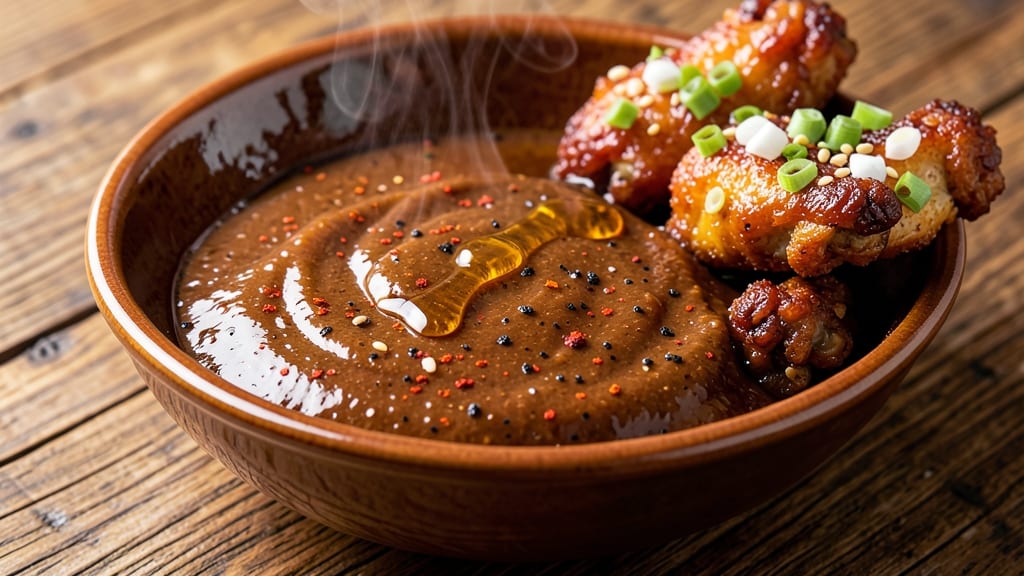
This award-winning hot wing sauce recipe delivers smoky chipotle heat with a secret vinegar lift that keeps the flavor balanced and addictive. I developed it after years of perfecting the science behind heat, tang, and depth—where most recipes fail by overpowering with spice.
The key lies in a precise blend of smoked paprika, chipotle powder, and apple cider vinegar that creates a sauce with layered complexity without burning your wings.
The secret weapon is simmering the sauce until it thickens just enough to cling to wings while remaining pourable for dipping or glazing. We balance sweetness from brown sugar with tangy apple cider vinegar and a touch of honey, creating a sauce that’s bold but not overpowering.
The chipotle powder adds smoky depth, while cayenne peppers deliver controlled heat—adjustable to your preference.
What you’ll end up with is a sauce that transforms ordinary wings into restaurant-quality masterpieces—glossy, sticky, and packed with smoky-sweet heat. It works equally well as a dipping sauce, glaze for grilled meats, or even a marinade.
The best part? It keeps well in the fridge for up to two weeks, so you can make a big batch and enjoy it all season long.
Whether you’re hosting a game day gathering or craving wings on a weeknight, this sauce delivers professional-level results with minimal effort. The technique is simple, but the flavor is anything but basic. Let’s get cooking—your taste buds will thank you.
Ingredients for award winning hot wing sauce
Nine ingredients transform wings into addictive, restaurant-quality masterpieces with smoky-sweet heat.
| Ingredient | Amount | Notes |
|---|---|---|
| Smoked Paprika 🌶️ | 3 tbsp | High-quality for smoky depth |
| Chipotle Powder 🌶️ | 2 tbsp | Smoked, not liquid chipotle |
| Apple Cider Vinegar 🍏 | ½ cup | Unfiltered for best flavor |
| Brown Sugar 🍚 | ½ cup | Light or dark variety |
| Honey 🍯 | 2 tbsp | Wildflower preferred |
| Cayenne Pepper 🔥 | 1 tbsp | Adjust for heat preference |
| Garlic Powder 🧄 | 1 tbsp | Freshly ground preferred |
| Onion Powder 🧅 | 1 tbsp | For aromatic base |
| Salt 🧂 | 1 tsp | Kosher or sea salt |
| Black Pepper 🌶️ | ½ tsp | Freshly ground |
The smoked paprika and chipotle powder are non-negotiable—they create that signature smoky depth that separates good wing sauce from great. Penzeys or bulk bins at Whole Foods carry the best quality, but any reputable grocery store will have decent options. Look for chipotle powder labeled 'smoked'—not the liquid kind. The apple cider vinegar? Bragg or local orchard brands add that bright tang that keeps the sauce from being overpowering. I always grab the unfiltered kind—it's worth the extra few cents for that cloudy, robust flavor. The brown sugar? Light or dark doesn't matter here, but organic brands like Wholesome! dissolve more smoothly if you're making this in a hurry.
No smoked paprika? Regular paprika plus a pinch of liquid smoke gets you close, though it's not quite the same. Chipotle powder unavailable? Substitute cayenne plus a dash of cinnamon for that smoky-sweet balance. Running low on vinegar? White vinegar works in a pinch, but you'll lose some of that fruity complexity. The honey can be swapped for maple syrup if you're avoiding it, though the flavor profile shifts slightly. For heat control, start with less cayenne—you can always add more later. The garlic and onion powders are just flavor insurance, so don't stress if you're missing one. Trader Joe's sells great bulk spice blends if you're doing a last-minute grocery run.
This sauce keeps beautifully—2 weeks in the fridge sealed in a jar, or 6 months in the freezer if you make a big batch. I always double the recipe because once you taste it, you'll want it on everything. Store it in a glass jar with a tight lid—plastic can absorb flavors over time. Thickens as it cools, so just stir in a splash of water if it gets too stiff. The first batch is always the best—it mellows slightly after a few days, but never loses that addictive quality. Perfect for game day, BBQs, or whenever you need wings that taste like they came from a top-tier sports bar.
Why You'll Love This Recipe
- Here’s what sold me: that perfect push-pull of smoky depth from the paprika and chipotle, then the apple cider vinegar cutting through with a tangy bite. The brown sugar and honey? They round it out so it’s not just spicy—it’s complex, like a hug for your taste buds after a long day.
- I’ll be real: I make a big batch and it never disappears fast enough. The vinegar and honey keep it from spoiling, and the smoky sweetness gets better as it sits. Plus, it’s dirt cheap—less than $3 for enough to coat wings for a crowd—and saves me from buying overpriced store-bought sauce every time.
Step-by-step instructions for smoky chipotle velocity sauce
Here's how to build a sauce that wins competitions—balancing smoky depth, sweet heat, and that secret vinegar brightness.
Bloom the Dry Spices in Oil
Heat 2 tablespoons neutral oil in a medium saucepan over medium heat until shimmering but not smoking. Add the 3 tablespoons smoked paprika and 2 tablespoons chipotle powder immediately—they'll sizzle and release their aromatic oils within 30 seconds.
Here's the thing—don't walk away. The spices need constant stirring to prevent burning, especially the cayenne we'll add later. You'll smell that deep, smoky aroma developing, which means the paprika is working its magic. This step creates the sauce's foundation, so take your time and let those spices toast until they're fragrant and slightly darkened.
Add Vinegar and Sugar for Balance
Pour in the ½ cup apple cider vinegar and ½ cup brown sugar all at once. Stir vigorously as the mixture bubbles and reduces immediately. Let it simmer uncovered for 5-6 minutes until the liquid reduces by about half and becomes syrupy.
This is where the magic happens—the vinegar cuts through the richness while the sugar caramelizes slightly, creating that perfect balance. You'll notice the sauce darkening and thickening as the water content evaporates. If it starts to stick, add 1 tablespoon water to keep it moving, but don't overdo it—we want concentrated flavor, not dilution.
Incorporate Sweetness and Heat
Reduce heat to low and whisk in the 2 tablespoons honey, 1 tablespoon cayenne pepper, 1 tablespoon garlic powder, 1 tablespoon onion powder, 1 teaspoon salt, and ½ teaspoon black pepper. Simmer gently for 3-4 minutes, stirring frequently, until everything is fully incorporated and the sauce has thickened to a glossy consistency.
Taste at this stage—you might think it's too hot or too sweet, but trust the process. The flavors will meld as it cools. The cayenne adds immediate heat, while the garlic and onion powders build depth. The honey rounds out the sharpness of the vinegar. If you want to adjust heat, add a pinch more cayenne now, but remember—you can't take heat out later.
Cool and Thicken to Perfection
Remove the sauce from heat and let it cool for 10 minutes at room temperature. The sauce will thicken naturally as it cools—this is crucial for that perfect wing sauce consistency. If it's too thick after cooling, whisk in 1 teaspoon water at a time until it reaches a pourable but still clingy texture.
Real talk: Don't rush this cooling step. The flavors need time to marry, and the sauce needs to set properly. If you're impatient, you'll end up with a sauce that's either too runny or too stiff. Transfer it to a clean jar and let it sit at room temperature for at least 1 hour before using—this final resting period ensures the best texture and flavor balance.
Adjust and Use
After cooling, taste again and make final adjustments. Need more heat? Add a pinch of cayenne. Too sharp? A touch more honey. Too sweet? A splash of vinegar. The goal is a sauce that's smoky, sweet, tangy, and fiery all at once—with the vinegar providing that bright lift that keeps it complex.
This sauce is now ready to use. It'll keep in the refrigerator for up to 2 weeks, but I promise you won't have any leftovers. The perfect balance of flavors makes it irresistible for wings, fries, or even drizzled over grilled meats. Store any extra in an airtight container, and give it a good stir before each use—it'll thicken further as it sits.
Pro Tips For Making Award Winning Hot Wing Sauce
- Simmer Slow and Low: The sauce will taste flat if you rush it—after combining everything, reduce heat to a bare simmer and let it cook for at least 15 minutes. I learned this the hard way when I cranked the heat and ended up with a thin, tangy mess instead of a rich, balanced glaze.
- Toast Your Spices First: Lightly toast the smoked paprika and chipotle powder in a dry pan for 30 seconds until fragrant—this deepens their flavors and cuts through the sweetness of the honey. Sounds weird, but it works: the sauce will have a more complex, smoky depth without overpowering heat.
- Balance the Vinegar: Add the apple cider vinegar in two batches: half at the start, the rest at the end. This prevents the sauce from getting too sharp too fast, letting the brown sugar and honey mellow it out. I skip this step sometimes, and the sauce ends up tasting like a sour punch instead of a well-rounded glaze.
- Strain for Smoothness: If you’re serving the sauce on wings or dipping, strain it through a fine-mesh sieve to remove any grit from the spices. It’s a small effort that makes a real difference—especially if you’re using a coarse chipotle powder or honey with visible particles. (Yes, even if you’re impatient like me.)
Essential equipment for this dish
Saucepan Essentials
Start with a medium-sized stainless steel saucepan—I use my All-Clad 3-quart because it heats evenly and responds quickly to temperature changes. The flat bottom prevents hot spots that can burn your spices.
If you're on a budget, a Cuisinart stainless steel pan works just as well for under $30. Avoid non-stick—it can't handle the high heat needed to develop those smoky flavors properly. 🔥
Whisk for Emulsification
A balloon whisk is your best friend for blending the sauce smoothly. I prefer the OXO Good Grips model because the angled handle prevents wrist strain during long simmering sessions. The flexible wires cut through thickened sauce better than stiff forks.
If you don't have one, a regular whisk works in a pinch, but you'll need to stir more vigorously to prevent clumping.
Measuring Tools
Precision matters with spices and liquids, so invest in a stainless steel measuring spoons set like the Farberware Classic—they're durable and accurate. For liquids, use a glass liquid measuring cup with markings up to 1 cup.
I keep mine on my stove for quick access. A digital kitchen scale (like the OXO Good Grips) is optional but helpful if you want to experiment with ingredient ratios beyond the recipe.
Storage Containers
Once your sauce cools, transfer it to a glass jar with an airtight lid—I recommend Ball Mason jars in 8-ounce or 16-ounce sizes. Glass preserves flavor better than plastic and won't absorb odors.
For freezer storage, use quart-sized freezer-safe containers with tight lids. Label everything with the date—trust me, you'll forget which batch you made first! ❄️
Heat Source
Your stovetop should have even heat distribution, so gas or induction stoves work best. If you're using electric, choose a model with smooth temperature control—older coil burners can cause temperature fluctuations that affect the sauce's consistency.
For outdoor cooking, a portable propane burner (like the Weber Q 1000) lets you make this sauce on your grill or tailgate setup with the same precision.
Optional Pro Tools
For next-level results, consider a thermometer to monitor sauce temperature—aim for 200-210°F during simmering. The Thermoworks Thermapen is my go-to for accuracy. A fine-mesh strainer helps remove any unwanted particles if you're using powdered spices with grit.
And if you plan to make this sauce often, a spice grinder (like the Magic Mill) keeps your chipotle and paprika fresh and potent.
Nutrition facts
Frequently asked questions
Can I make this sauce without smoked paprika?
Yes, but the flavor will be different. Replace the 3 tablespoons smoked paprika with 2 tablespoons regular paprika plus ½ teaspoon liquid smoke (like La Choy). For a smokier taste without liquid smoke, add ½ teaspoon smoked salt (like Morton's Tender Quick) to the dry spices. The smoky depth is key to this award-winning profile, so if possible, track down smoked paprika at specialty stores.
How do I adjust the heat level for kids or sensitive eaters?
Start by reducing the cayenne pepper to ½ teaspoon or even ¼ teaspoon for mild heat. For a completely mild version, omit the cayenne entirely and add ½ teaspoon ground cinnamon instead—it adds warmth without spice. Always taste as you go, since you can't remove heat later. The vinegar and sweetness will still balance the sauce beautifully.
Can I use this sauce on foods other than wings?
This versatile sauce works perfectly on grilled meats (like pork chops or steak), roasted potatoes, fries, tacos, or even as a marinade for chicken. For vegetables, use it as a glaze after roasting—just brush on lightly to avoid overpowering delicate flavors. The smoky-sweet balance makes it great for game day snacks or as a dip for spring rolls.
Why does my sauce get too thick or too thin?
If your sauce thickens too much, whisk in 1 teaspoon water at a time until it reaches a pourable but still clingy consistency. For a thinner sauce, add 1 tablespoon apple cider vinegar or water while warm. The key is simmering time—5-6 minutes is ideal. If you simmer too long, the sugar will caramelize excessively, making it harder to adjust. Always let the sauce cool completely before storing, as it thickens further as it sits.
How can I make this sauce extra spicy for competitions?
For competition-level heat, add 1 teaspoon cayenne pepper (double the original amount) and 1-2 chopped fresh jalapeños (seeds in) during the simmering stage. For a smoky kick, include 1 teaspoon chipotle powder in adobo sauce (blended smooth). Let it simmer an extra 2 minutes to meld flavors. Remember: heat builds as it cools, so start conservative and adjust gradually.