
Sauces & Condiments
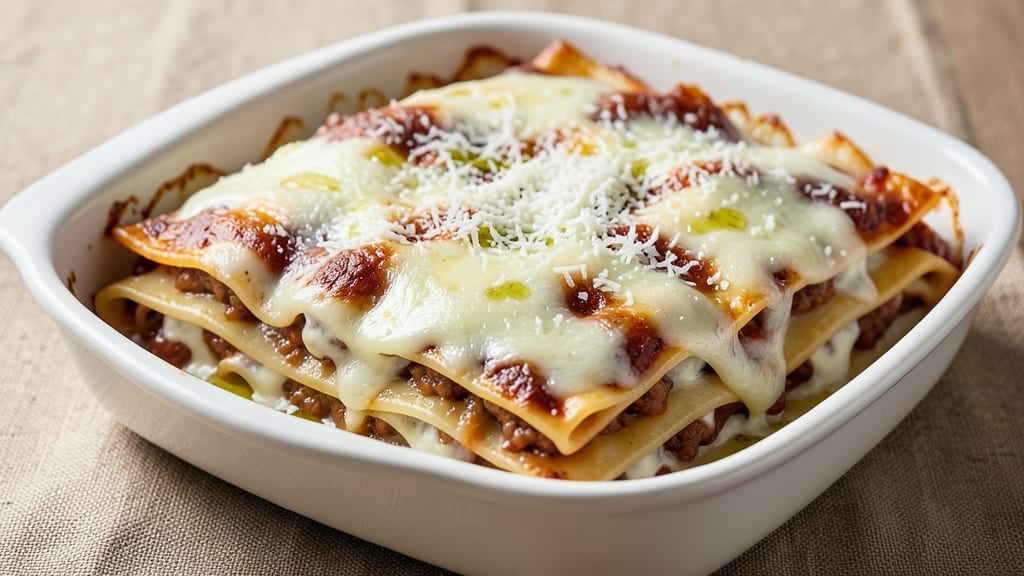
This authentic Italian lasagna delivers the triple-layered comfort of Rome’s most beloved dish—rich béchamel, creamy white sauce, and tender pasta bound by Italian cheeses. The secret lies in proper layering and a perfectly balanced sauce ratio, ensuring each bite reveals the harmony of textures and flavors that define traditional lasagna.
Unlike shortcut versions, this recipe demands patience: a velvety béchamel sauce thickened just right, fresh ricotta blended with eggs for structure, and mozzarella that melts into golden perfection.
The key to avoiding soggy layers is pre-baking the noodles and letting each sauce layer set before adding the next—technique that separates homemade from store-bought.
What you’ll achieve is lasagna that’s restaurant-quality—crispy top crust, creamy béchamel pockets, and a final sprinkle of Parmigiano-Reggiano that adds nutty depth. The aroma alone will have your kitchen smelling like a Tuscan trattoria, while the first forkful delivers the authentic comfort of Italy’s most iconic dish.
Ready to master this classic? We’ll cover every step—from making the béchamel to perfecting the final bake—so your lasagna shines as the centerpiece of any meal. Let’s begin with the foundations that make this recipe truly unforgettable.
Ingredients for authentic italian lasagna recipe with bechamel sauce and white sauce
Triple-layered comfort starts with these 14 essential ingredients—no shortcuts, just authentic Italian flavors.
| Ingredient | Amount | Notes |
|---|---|---|
| Lasagna Noodles 🍝 | 12 pieces | Dried, no-boil preferred |
| Parmesan Cheese 🧀 | 2 cups | Freshly grated from block |
| Mozzarella Cheese 🧀 | 32 oz | Fresh, low-moisture preferred |
| Ricotta Cheese 🧀 | 2 cups | Whole milk, drained |
| Large Eggs 🥚 | 2 whole | Room temperature |
| Unsalted Butter 🧈 | ½ cup | Cold, cubed for béchamel |
| All-Purpose Flour 🌾 | ½ cup | Sifted for smooth béchamel |
| Whole Milk 🥛 | 2 cups | Warm for béchamel |
| Yellow Onion 🧅 | 1 whole | Medium size, finely chopped |
| Garlic Cloves 🧄 | 4 cloves | Fresh, minced |
| Fresh Basil Leaves 🌿 | ½ cup | Chopped for white sauce |
| Ground Nutmeg 🌶️ | ½ tsp | Freshly grated preferred |
| Salt 🧂 | 1 ½ tsp | Diamond Crystal preferred |
| Black Pepper 🌶️ | ½ tsp | Freshly cracked |
The cheeses make or break this lasagna. Parmigiano-Reggiano is non-negotiable for that nutty depth—skip the pre-grated stuff, it's full of anti-caking agents. Fresh mozzarella melts like a dream, but if you're using low-moisture, pat it dry first to avoid soggy layers. For the ricotta, whole milk gives the best texture—part-skim gets rubbery. I always grab mine from Whole Foods or a specialty Italian market where they keep it cold and fresh. The butter? European-style if you can find it—higher fat content means richer béchamel.
No fresh basil? Dried works at half the amount, but honestly, it's worth tracking down fresh for the white sauce. Running low on Parmesan? Pecorino Romano is a great substitute—more pungent, but still authentic. The onions and garlic can be swapped for asparagus or zucchini> if you're doing a veggie version, but traditionalists will insist on the classic combo. For the béchamel, if you're in a rush, store-bought roux> works (just add milk and nutmeg), but making it from scratch gives that velvety texture that separates homemade from store-bought.
Cheese gets stale fast, so store your Parmesan wedge wrapped in parchment paper in the fridge for up to 2 weeks. Mozzarella keeps 5 days> in the fridge, but if you're prepping ahead, freeze it in slices between parchment paper for up to 3 months>. The ricotta mixture can be made a day ahead—just cover it tightly and refrigerate. Lasagna reheats beautifully—cover with foil and bake at 375°F for 20 minutes> to revive that crispy top crust.
Why You'll Love This Recipe
- No Boil, No Stress: I swear by the no-boil noodles here—just layer them dry, pour the béchamel and ricotta mix, and bake. The edges get that perfect golden crisp while the center stays tender, and honestly? I’ve burned lasagna before. This method forgives me every time.
- Creamy Without Being Heavy: That béchamel—made with just butter, flour, and milk—cuts through the richness of the mozzarella and ricotta like a dream. The egg in the white sauce adds silkiness, but it’s the nutmeg and Parmesan that make it sing. Not too light, not too dense—just right.
- Sunday Leftovers Rule: Between us, this lasagna tastes even better the next day. I make a double batch on Sundays, and by Wednesday, it’s the star of my lunchbox. The ricotta keeps it creamy cold, and the cheeses melt back into gooey perfection when reheated. Zero sad, dry lasagna here.
- Budget Feast for Crowds: A big pan feeds eight for under $15 if I stretch the ricotta and use store-brand mozzarella. The Parmesan is the splurge, but a little goes a long way—plus, it’s the secret to that umami depth. My college friends still ask for the recipe; now it’s my go-to for potlucks or when in-laws drop by.
Step-by-step instructions for authentic Italian lasagna
Here's the classic Italian method that delivers rich, layered flavors and perfect texture.
Prepare the White Sauce
In a medium saucepan, melt the 0.5 cup unsalted butter over medium-low heat until foamy but not browned. Add the finely chopped yellow onion and cook for 5 minutes until translucent. Stir in the 4 minced garlic cloves and cook for 30 seconds until fragrant.
Reduce heat to low and gradually whisk in the 0.5 cup all-purpose flour, cooking for 2 minutes to remove the raw flour taste. Slowly pour in the 2 cups warm whole milk while whisking constantly to prevent lumps. Bring to a gentle simmer and cook for 5-7 minutes until thickened enough to coat the back of a spoon.
Remove from heat and stir in the 0.5 cup chopped fresh basil leaves, 0.5 teaspoon ground nutmeg, 1 teaspoon salt, and 0.25 teaspoon black pepper. Cover and set aside to keep warm.
Make the Béchamel Sauce
In a separate saucepan, melt the remaining 0.5 cup unsalted butter over medium heat. Whisk in the 2 cups ricotta cheese and cook for 2 minutes until smooth. In a bowl, beat the 2 whole large eggs until frothy, then whisk them into the ricotta mixture.
Gradually whisk in 1 cup of the white sauce from Step 1 to create a creamy base. Season with the remaining 0.5 teaspoon salt and 0.25 teaspoon black pepper. This mixture should be thick but spreadable - if too stiff, add a splash of milk.
Assemble the Lasagna Layers
Preheat oven to 375°F. In a 9x13-inch baking dish, spread 1 cup of the white sauce on the bottom. Arrange 4 lasagna noodles slightly overlapping, then sprinkle with 1 cup mozzarella cheese and ½ cup parmesan cheese. Spread ⅓ of the béchamel mixture evenly.
Repeat the layers: noodles, remaining 1 cup mozzarella and ½ cup parmesan, then another ⅓ béchamel. Finish with final noodle layer, remaining 1 cup mozzarella, ½ cup parmesan, and remaining 1 cup white sauce. Press gently to ensure layers adhere.
Bake to Golden Perfection
Cover tightly with aluminum foil and bake for 30 minutes. Remove foil and bake 15-20 minutes more until bubbly and edges are golden. Let rest 15 minutes before slicing - this prevents layers from sliding apart.
The lasagna should be tender yet firm with a golden crust. Serve with a sprinkle of fresh basil and extra grated parmesan. The flavors develop even more after resting, making each forkful rich with creamy béchamel, tangy ricotta, and melted mozzarella.
Pro Tips For Making Authentic Italian Lasagna Recipe With Bechamel Sauce And White Sauce
- Boil Noodles Al Dente: Cook your lasagna noodles one minute less than the package says—you’ll finish them in the oven, and overcooked noodles turn to mush. I learned this the hard way after slopping together a lasagna where the layers fell apart like wet cardboard.
- Whisk Ricotta Like Mad: Before mixing ricotta into your white sauce, beat it with a fork until it’s smooth—no lumps. I used to skip this, and the texture ended up grainy, like someone dumped sand into the ricotta. Five minutes of elbow grease now saves you from a sad, uneven lasagna.
- Layer Thin, Layer Even: Spread each sauce layer thinly—about ¼-inch thick—so the bechamel and ricotta don’t pool in the bottom like a sad, cheesy lake. My first lasagna looked gorgeous but tasted like a cheese volcano exploded in the middle.
- Press Cheese Hard: After your final layer, sprinkle mozzarella and Parmesan, then press down firmly with a spatula—this locks in the sauce and keeps the top from collapsing. I used to just sprinkle and hope for the best; now I treat it like a science experiment.
Storing and reheating your leftovers
Refrigerator Storage
Let your lasagna cool completely before storing—this prevents condensation that makes layers soggy. Transfer to an airtight container (I love CamelBak Food Containers for their snug lids) and refrigerate for up to 4 days.
The flavors actually deepen overnight as the cheeses meld together. Always press plastic wrap directly on the surface before sealing to maintain moisture. ❄️
Freezer Prep Tips
For long-term storage, assemble your lasagna in a freezer-safe baking dish (like USA Pan) and cover tightly with heavy-duty aluminum foil followed by plastic wrap. Freeze for up to 3 months—the béchamel and ricotta layers stay creamy when thawed properly. Label with the date to track freshness.
Thawing Methods
For best results, thaw overnight in the fridge. If short on time, place the sealed container in cold water (change every 30 minutes) until thawed.
Never microwave from frozen—this creates uneven heating and rubbery noodles. Once thawed, bake as directed (add 5-10 extra minutes covered with foil to revive moisture).
Reheating Perfection
Preheat oven to 375°F and cover the lasagna with two layers of foil to prevent drying. Bake for 30 minutes, then uncover and bake 10-15 minutes more until bubbly and golden. The foil trap keeps the béchamel creamy while the top crust crisps.
For microwave reheating, cover with a damp paper towel and heat in 1-minute intervals on 50% power until 165°F internally. 🔥
Crispy Top Revival
If your reheated lasagna loses its golden crust, broil for 2-3 minutes on high with foil removed. Watch closely—broilers can burn quickly. For extra crispiness, sprinkle with breadcrumbs before the final bake.
The key is balancing heat and moisture: too much steam makes layers soggy, but proper coverage keeps everything tender.
Portion Control
Slice lasagna before reheating for even heating. Individual portions reheat faster and more evenly. Store leftovers in quart-sized containers for easy single-serving reheats. I keep a stack of Glasslock containers in my fridge for this exact purpose—they're perfect for meal prep and reheating without drying out the layers. 💡
Nutrition facts
Frequently asked questions
Why does this lasagna use both béchamel and white sauce?
Traditional Italian lasagna from Emilia-Romagna features this double sauce technique to create unmatched texture contrast. The béchamel adds velvety creaminess to the ricotta layer, while the white sauce (bagna càuda-inspired) provides a subtle tang from basil and nutmeg that brightens the rich cheeses. This combo prevents the dish from becoming too heavy.
Can I make this lasagna ahead of time?
Assemble it completely up to 24 hours ahead and refrigerate uncovered for 1 hour before baking. For freezer prep, assemble in a baking dish, cover tightly, and freeze for up to 3 months. Thaw overnight in the fridge before baking as directed. The flavors actually improve after resting!
What's the secret to avoiding soggy noodles?
Three key steps: 1) Use no-boil lasagna noodles, 2) Pre-bake them for 2 minutes before assembling, and 3) Let each sauce layer set for 5 minutes before adding the next. The béchamel's egg mixture acts like a glue between layers, locking in moisture. Never skip the rest time after baking!
How do I know when the lasagna is fully cooked?
Look for three signs: 1) The edges should be golden brown, 2) The center should reach 165°F when checked with a thermometer, and 3) The sauce should be bubbling vigorously. The top crust should be crisp but not burnt. If unsure, bake 5-10 more minutes covered with foil.
Can I substitute ricotta with cottage cheese?
While cottage cheese works in a pinch, ricotta's smoother texture and higher fat content create the authentic Italian mouthfeel. For a close substitute, drain cottage cheese thoroughly and blend it with 1 tablespoon cornstarch to mimic ricotta's creaminess. The flavor won't be identical, but the layers will hold together better.