
Sauces & Condiments
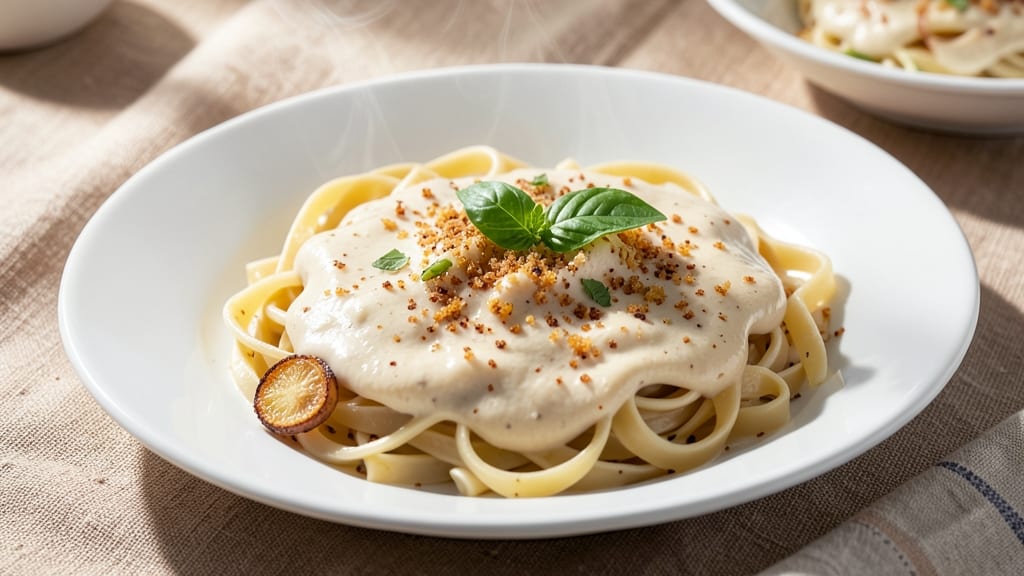
This alfredo sauce recipe with romano cheese delivers the perfect balance of creamy richness and peppery depth without a single clump. The secret lies in using a blend of Romano and Parmesan cheeses, combined with a simple roux technique that creates a velvety texture.
I developed this version after years of testing—it’s the one that finally stays smooth, never grainy, and packs serious flavor in every spoonful.
The foundation starts with a light butter-and-flour roux cooked just until golden, which prevents lumps while building depth. Romano cheese brings its signature sharpness and umami, while Parmesan adds that classic nutty sweetness.
A splash of heavy cream at the end ensures the sauce is luxuriously smooth, with just enough body to cling to pasta or coat grilled meats.
What makes this sauce truly special is its versatility—it works equally well over fettuccine, chicken, or even roasted vegetables. The key is patience: letting the cheese melt slowly into the warm roux ensures a silky finish.
No need for heavy cream substitutes or cornstarch thickeners—this version relies on proper technique for that restaurant-quality texture.
For extra depth, stir in a clove of garlic or a splash of white wine while the sauce simmers. Garnish with fresh parsley or cracked black pepper for a touch of brightness. Once you try this, store-bought Alfredo will never compare again.
Ingredients for alfredo sauce recipe with romano cheese
Nine ingredients, restaurant-quality Alfredo—no clumps, no shortcuts, just creamy perfection.
| Ingredient | Amount | Notes |
|---|---|---|
| Unsalted Butter 🧈 | ½ cup | Cold, cut into small cubes |
| All-Purpose Flour 🌾 | ½ cup | Diamond Crystal preferred |
| Heavy Cream 🥛 | 1 cup | Full-fat for creaminess |
| Romano Cheese 🧀 | 1 ½ cups | Freshly grated, block preferred |
| Parmesan Cheese 🧀 | ½ cup | Freshly grated, block preferred |
| Garlic Cloves 🧄 | 1 whole | Minced for depth |
| White Wine 🍷 | ¼ cup | Dry variety preferred |
| Fresh Parsley 🌿 | ¼ cup | Chopped for garnish |
| Ground Black Pepper 🌶️ | ½ tsp | Freshly cracked |
| Sea Salt 🧂 | ½ tsp | Kosher or fine grain |
The cheeses make or break this sauce. Romano delivers that signature sharpness, while Parmesan adds nutty sweetness. Grab a wedge of each from the deli counter—pre-grated is a non-starter, it gets clumpy. Costco or Whole Foods have the best quality blocks. For the butter, use unsalted—salted can make the sauce too salty. If you're in a pinch, European-style butter has more fat content, which helps with creaminess. The flour matters too—Diamond Crystal absorbs less liquid than other brands, so you might need a pinch more if you're using regular all-purpose.
No heavy cream? Full-fat coconut milk works in a pinch, though it changes the flavor slightly. Short on Romano? Pecorino Romano is a great substitute—just use half the amount. The wine can be swapped for chicken or vegetable broth, but you'll lose some of that bright acidity. Fresh garlic is ideal, but garlic powder at one-third the amount gets you close. If you're sensitive to gluten, cornstarch or arrowroot powder can replace the flour for thickening—just mix it with a little cold water first to avoid lumps. The parsley is purely for garnish, but if you're out, basil works just as well.
This sauce keeps beautifully—3-4 days in the fridge, 3 months frozen. For freezing, cool it completely first, then portion into airtight containers. The texture stays perfect when reheated gently on low heat. I like to make a double batch—one for immediate use, one to freeze for lazy weeknights. If the sauce thickens too much when reheating, just stir in a splash of warm milk or water. The flavor actually improves after a day or two as everything melds together—trust the process.
Why You'll Love This Recipe
- Five-Ingredient Magic: This sauce comes together with just butter, flour, cream, and two cheeses—no fancy prep, no stress. I swear, the only measuring I do is eyeballing the Romano and Parmesan at the end, and it still hits every time.
- Umami Bomb: That sharp, salty punch from Romano cheese? It’s what makes this sauce dangerously good. The Parmesan smooths it out, but honestly, the Romano steals the show—like a bold, cheesy whisper in every bite.
- Weeknight to Party: Slap this on fettuccine for a Tuesday night, or drizzle it over grilled chicken for a dinner party. Between us, it’s the one sauce I never skip—whether I’m feeding my kid’s soccer team or impressing my in-laws.
- Leftovers That Lie: Make a double batch and freeze half. When you reheat it, the cream stays silky, not grainy, and the cheeses melt into that perfect, stretchy consistency. My lazy Sundays just got a whole lot easier.
Step-by-step instructions for creamy Romano Alfredo sauce
Master this velvety sauce with perfect texture and bold Romano flavor every time.
Create a Smooth Roux Foundation
Melt the 0.5 cup unsalted butter in a medium saucepan over medium heat. Once fully melted and foaming subsides, immediately whisk in the 0.5 cup all-purpose flour. This creates a roux that will thicken your sauce beautifully.
Cook the roux for 2-3 minutes, stirring constantly with a wooden spoon, until it turns a light golden color. You'll notice it loses its raw flour taste and develops a nutty aroma. This step is crucial—if you let it brown, it'll taste bitter. The moment it reaches that golden hue, you're ready for the next ingredient.
Deglaze and Build Flavor
Slowly pour in the 0.25 cup white wine, whisking continuously to incorporate it into the roux. The wine will bubble vigorously as it evaporates, carrying away any remaining raw flour taste. Let it simmer for 1-2 minutes until the alcohol smell dissipates completely.
Next, add the 1 whole minced garlic cloves and cook for 30 seconds until fragrant. Be careful not to let it brown—you want garlic flavor, not bitterness. Immediately add the 1 cup heavy cream and bring to a gentle simmer over medium-low heat. This gradual heating prevents curdling and ensures a silky texture.
Incorporate Cheeses for Richness
Reduce heat to low and begin adding the cheeses in stages. First, whisk in 1 cup of the 1.5 cups romano cheese until fully melted and smooth. Then add the 0.5 cup parmesan cheese, whisking constantly to prevent clumping. The sauce should begin to thicken noticeably as the cheeses melt.
Continue whisking for 3-4 minutes until the sauce reaches your desired consistency—it should coat the back of a spoon but still move smoothly. If it thickens too much, thin with 1 tablespoon hot water at a time. The key is patience here; rushing causes lumps that are nearly impossible to fix later.
Finish with Seasoning and Rest
Remove the sauce from heat and stir in the 0.5 tsp sea salt and 0.5 tsp ground black pepper. Let it rest for 5 minutes—this allows the flavors to meld perfectly and the sauce to reach its ideal texture. The resting period also prevents the sauce from breaking when combined with pasta.
Before serving, give it a final stir and taste. Adjust seasoning if needed—sometimes Romano cheese needs a touch more salt to balance its sharpness. Garnish with 0.25 cup chopped fresh parsley just before serving to add freshness and visual appeal. This sauce pairs beautifully with fettuccine or any pasta of choice.
Pro Tips For Making Alfredo Sauce Recipe With Romano Cheese
- Melt Butter Slowly: Start with cold butter—cut it into small cubes and let it melt gradually over medium-low heat. I used to dump in a big pat at once, and half the time it’d brown before the flour could toast properly. This way, you get a smooth roux without burning, and the Romano’s sharpness shines through.
- Grind Your Own Cheese: Skip the pre-shredded Romano—it’s coated with anti-caking agents that make the sauce grainy. Use a microplane or food processor to freshly grate your cheese right before mixing it in. The texture is creamier, and the flavor hits harder. (Yes, it’s a little extra work, but your sauce will taste like it came from a restaurant.)
- Temper the Cream: Warm the heavy cream to room temperature before adding it to the roux. Cold cream shocks the sauce and can cause it to seize or split. Just let it sit for 10 minutes while you cook the butter and flour—it’s a small step that keeps the sauce velvety instead of lumpy.
- Balance the Cheeses: Use Romano as the base for tang, but finish with Parmesan for depth. A 3:1 ratio (Romano to Parmesan) works well—start with ½ cup Romano and ¼ cup Parmesan. Too much Romano makes the sauce taste like it’s fighting with itself, while too little Parmesan flattens the flavor. Taste as you go.
Dietary considerations for this recipe
Gluten-Free Adaptation
For a gluten-free version, replace the 0.5 cup all-purpose flour in the roux with 0.5 cup cornstarch or arrowroot powder. Whisk it into the melted butter first to avoid lumps, then proceed with the recipe as written.
The texture remains creamy, though slightly lighter—perfect for those with gluten sensitivities. 🌾
Dairy-Free Options
Swap the heavy cream for 1 cup full-fat coconut milk (unsweetened) and use dairy-free butter (like Earth Balance). For the cheeses, opt for nutritional yeast (2 tbsp) mixed with 1 tbsp lemon juice to mimic Romano's tang. The sauce will be lighter but still rich—great for vegan diets.
Lower-Calorie Version
Reduce the butter to 0.25 cup and use 0.5 cup low-fat milk instead of heavy cream. Cut the Romano cheese to 1 cup (keeping Parmesan at 0.5 cup).
This cuts calories by ~30% while keeping the sauce flavorful. A splash of 1 tbsp white wine adds depth without extra fat.
Lactose-Free Tips
Use lactose-free butter and lactose-free heavy cream (like Organic Valley). The cheese blend works fine—Romano and Parmesan are naturally low in lactose. For extra creaminess, stir in 2 tbsp lactose-free cream cheese at the end. The texture stays smooth without clumping. ✨
Nut-Free Considerations
This recipe is naturally nut-free, but always check cheese labels—some brands process Romano in nut-free facilities, while others don’t. For extra safety, use store-brand cheeses with clear allergen labels. The sauce’s richness comes from dairy, not nuts, so no substitutions are needed.
Nutrition facts
Frequently asked questions
Why does Romano cheese make Alfredo sauce taste different?
Romano cheese adds a distinctive peppery sharpness and mineral depth that regular Parmesan can't match. The combination of Romano and Parmesan creates a more complex flavor profile—think of it as the difference between a simple cheese sauce and a gourmet version. Romano's saltiness also helps balance the richness of the cream.
Can I make this sauce without heavy cream?
Yes! For a lighter version, substitute the heavy cream with 1 cup whole milk or ½ cup milk + ½ cup half-and-half. The sauce will be slightly less rich but still delicious. For extra creaminess without dairy, try 1 cup full-fat coconut milk—just know the flavor will shift slightly toward tropical notes.
How do I fix lumpy Alfredo sauce?
If you get lumps, immediately remove the pan from heat and use an immersion blender to smooth it out. If you don't have one, place a few ice cubes in a ziplock bag and gently press against the sauce through the bag to break up clumps. For prevention, always whisk constantly when adding cheese and keep heat low.
What's the best way to store leftover sauce?
Let the sauce cool completely, then transfer to an airtight container. It keeps in the fridge for 3-4 days or freezes beautifully for 3 months. For reheating, warm gently on low heat, stirring frequently. Add a splash of warm water or milk if it thickens too much when reheated.
Can I use pre-grated cheese?
Pre-grated cheese is not recommended—it contains anti-caking agents that make the sauce grainy. For the best results, grate your own Romano and Parmesan using a fine grater or food processor. If you must use pre-grated, strain it through a fine-mesh sieve first to remove any additives.