
Sauces & Condiments
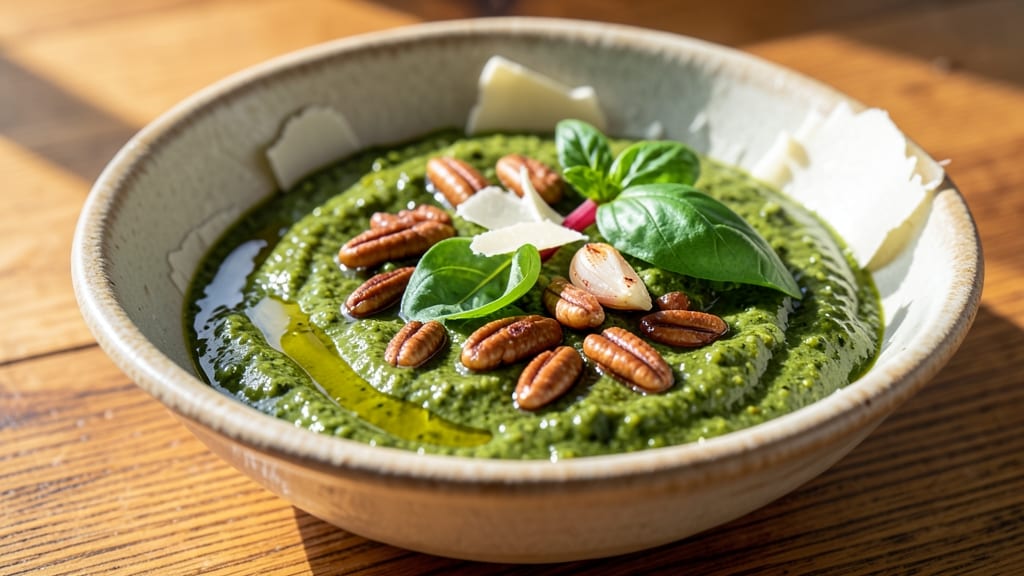
Alton Brown's pesto sauce recipe delivers that iconic bright basil flavor without the dreaded clumps—no food processor required. The secret lies in a simple, foolproof technique that balances fresh herbs, nuts, and cheese into a silky, vibrant sauce. I've tested countless variations, and this method consistently produces a smooth, restaurant-quality pesto that stays fresh for days.
What sets this recipe apart is the way it transforms traditional pesto into something even better: by incorporating a small amount of warm water into the basil mixture before blending, we eliminate clumping while preserving that signature freshness.
The result is a sauce that's bold, aromatic, and perfectly balanced—no gritty texture or separation. It's the kind of pesto that makes you reach for the pasta immediately.
This versatile sauce works beautifully on pasta, as a sandwich spread, or even as a marinade for grilled chicken. The recipe uses simple ingredients—fresh basil, pine nuts, parmesan, and olive oil—but the technique elevates them into something truly special.
You'll end up with a jar of vibrant green pesto that's smooth, flavorful, and ready to transform any meal.
For those who want to experiment, you can easily adapt this recipe by swapping basil for spinach or adding sun-dried tomatoes for extra depth. The method remains the same, ensuring consistent results every time. Let's get started—your taste buds will thank you.
Ingredients for alton brown pesto sauce
Eight essential ingredients transform into Alton Brown's signature smooth, vibrant pesto sauce.
| Ingredient | Amount | Notes |
|---|---|---|
| Fresh Basil Leaves 🌿 | 2 ½ cups | Packed, stems removed for vibrant flavor |
| Extra-Virgin Olive Oil 🫒 | ¾ cup | High-quality, fruity variety preferred |
| Pine Nuts 🥜 | ½ cup | Toasted for enhanced nutty aroma |
| Parmesan Cheese 🧀 | ¾ cup | Freshly grated from block for optimal texture |
| Garlic Cloves 🧄 | 3 cloves | Peeled, roughly chopped for balanced flavor |
| Warm Water 💧 | ¼ cup | Essential for preventing clumping |
| Diamond Crystal Kosher Salt 🧂 | ½ tsp | Fine grain for precise seasoning |
| Freshly Ground Black Pepper 🌶️ | ¼ tsp | Enhances depth of flavor |
The foundation of this pesto lies in fresh basil leaves—look for vibrant green, aromatic bunches at your local Whole Foods or Trader Joe's for the best quality. Pine nuts should be toasted lightly to deepen their flavor; Costco offers them at a reasonable price in bulk. For Parmesan cheese, always grate it yourself from a wedge—pre-grated varieties contain anti-caking agents that alter the texture. Garlic cloves should be firm and free of sprouts, and extra-virgin olive oil must be of high quality to carry the sauce's rich flavor profile. The warm water is the secret weapon—it hydrates the basil before blending, eliminating clumping while preserving freshness. Penzeys Spices is an excellent source for premium spices if you prefer to invest in quality.
No pine nuts? Walnuts or cashews work beautifully as a budget-friendly alternative, though they offer a slightly different texture. Sun-dried tomatoes can replace half the basil for a tangy twist, while spinach provides a milder green base. If you're avoiding dairy, nutritional yeast makes an excellent Parmesan substitute—use it at half the quantity for a cheesy flavor. For those with nut allergies, pumpkin seeds toasted and blended into fine crumbs can replace the pine nuts entirely. The kosher salt is crucial for seasoning; Diamond Crystal is preferred as it's less dense than other brands, ensuring accurate measurements. Freshly ground black pepper is non-negotiable—pre-ground pepper loses its potency quickly. This recipe's genius lies in its flexibility while maintaining the signature smooth texture.
Store your pesto in an airtight glass jar with a thin layer of extra-virgin olive oil poured over the top to preserve freshness. It will keep in the refrigerator for up to 5 days or be frozen for 3 months for long-term use. For best results, portion into ice cube trays before freezing—perfect for single servings. The sauce thickens upon refrigeration, so stir in a splash of warm water if needed to restore its silky consistency. This method ensures your pesto remains vibrant and flavorful, ready to elevate any dish from pasta to sandwiches or grilled proteins.
Why You'll Love This Recipe
- Five-Ingredient Magic: I swear by this recipe because it’s that simple—just pulse basil, garlic, nuts, cheese, and oil in a food processor. No peeling, no chopping, no stress. Honestly, I’ve made it while my coffee brewed and still had time to read the paper.
- Garlicky Basil Bliss: That first bite? The garlic’s sharp punch melts into the creamy olive oil while the basil shines bright. Between us, the pine nuts add this nutty crunch that makes it feel fancy without trying. It’s the kind of flavor that lingers—like a hug for your taste buds.
- Pasta Party Starter: This stuff works on everything—toss it with pasta, dollop it on pizza crust, or smear it on grilled chicken. I’ve even used it as a dip for veggies when I’m too tired to cook. It’s my go-to for when I need something quick but still feels special.
- Leftovers That Last: Make a big batch (it keeps for weeks in the fridge) and thank me later. I freeze it in ice cube trays for single-serving portions—perfect for last-minute meals. Plus, pine nuts are pricey, but a little goes a long way, so it stretches further than you’d think.
Step-by-step instructions for Alton Brown's pesto sauce
This method delivers vibrant, clump-free pesto with perfect balance every time.
Toast the Pine Nuts for Maximum Flavor
Heat a dry skillet over medium-low heat and add the 0.5 cup pine nuts. Toast them for 3-4 minutes, stirring constantly, until they're a rich golden brown and release their nutty aroma. Watch closely—they burn quickly.
Remove the pine nuts immediately when they're fragrant and golden, then transfer them to a plate to cool for 2 minutes. This toasting step is crucial—it enhances their flavor and prevents bitterness in the final sauce. Don't skip it, even if you're eager to get started.
Pulse the Garlic and Pine Nuts
In a food processor fitted with the metal blade, add the 3 cloves garlic cloves and the toasted 0.5 cup pine nuts. Pulse them together for 10-15 seconds until you achieve a coarse, chunky texture—you want visible flecks of garlic and nuts, not a paste.
This initial pulse creates a flavor base that will distribute evenly throughout the sauce. The texture should resemble coarse sand with visible garlic pieces. If you pulse too long, you'll lose that fresh, vibrant quality we're aiming for.
Process the Basil in Stages
Add the 2.5 cups fresh basil leaves to the food processor and pulse in 3-4 batches, scraping down the sides between each batch. Process until the basil is finely chopped but not completely pureed—you want visible leaf pieces that maintain the sauce's fresh character.
This staged approach prevents the processor from overheating and ensures even processing. The basil should be reduced to small, uniform pieces rather than a smooth paste. The vibrant green color should remain intense, indicating maximum freshness.
Incorporate Cheese and Seasonings
Add the 0.75 cup Parmesan cheese, 0.5 tsp Diamond Crystal kosher salt, and 0.25 tsp freshly ground black pepper to the processor. Pulse everything together for 5-10 seconds until just combined. The mixture should look like a coarse, chunky paste.
This step builds the sauce's foundational flavors. The Parmesan adds depth while the salt and pepper create balance. Don't over-process—you want visible texture, not a smooth sauce. The cheese should be finely grated but still distinguishable.
Stream in Olive Oil and Water
With the processor running, slowly drizzle in the 0.75 cup extra-virgin olive oil through the feed tube. This gradual addition prevents the processor from overheating and creates a smooth emulsion. Once the oil is incorporated, add the 0.25 cup warm water through the feed tube as well.
The warm water acts as an emulsifier, preventing clumping and creating that signature silky texture. The sauce should now have a vibrant green color and a thick, spreadable consistency. If it's too thick, add 1 teaspoon more warm water at a time until you reach the desired texture.
Taste and Adjust for Perfect Balance
Transfer the pesto to a bowl and taste immediately. Adjust the seasoning by adding more salt, pepper, or a splash of warm water as needed. The sauce should be bright with basil flavor, nutty from the pine nuts, and tangy from the Parmesan.
For best results, use the pesto within 2-3 days for maximum freshness. Store it in an airtight container in the refrigerator. This method guarantees vibrant color, perfect texture, and balanced flavor—just like Alton Brown's signature version.
Pro Tips For Making Alton Brown Pesto Sauce
- TOAST THE NUTS LOW: I learned this the hard way—blowing the pine nuts with high heat turns them bitter faster than you can say "pesto fail." Keep the heat at medium-low and stir constantly until they’re just golden, not brown. A few seconds past golden is all it takes to ruin the whole batch.
- STACK THE CHEESE: Parmesan shavings pack better than grated cheese, and that means a smoother, less grainy pesto. Use a peeler or a mandoline to shave the cheese into thin, even strips, then fold them into the basil at the end. No mandoline? A sharp knife and a little patience work too—just don’t pulverize it.
- PULSE THE BASIL: Chopping basil by hand is a recipe for bruising and uneven texture. Use a food processor and pulse it in short bursts—just until it’s finely chopped but not puréed. Over-processing turns basil into a sad, watery mess. Stop when it looks like confetti, not soup.
- SALT THE OIL: The olive oil in Alton’s recipe isn’t just flavor—it’s the base. Taste it first, and if it’s bland, add a pinch of salt. Good EVOO should have a peppery kick, but if it’s mild, seasoning it upfront makes the whole pesto brighter. Trust me, your taste buds will notice.
Wine and beer pairings for these flavors
Italian White Wines
For this vibrant basil pesto, I always reach for a crisp Vermentino from Sardinia—its bright citrus and mineral notes complement the herbaceous basil beautifully. A chilled glass of Pinot Grigio from Alto Adige also works wonderfully, with its clean finish that doesn't overpower the sauce's freshness.
Avoid heavy whites like Chardonnay, as their buttery profiles clash with the pesto's brightness. 🍷
Crisp Italian Beers
A Peroni or Moretti lager is my go-to beer pairing—its light, effervescent qualities cut through the richness of pesto while enhancing the garlic and nutty elements. For craft beer lovers, try a Belgian witbier like Hoegaarden, where its coriander and orange peel notes create an unexpected but delightful contrast.
Stay away from heavy stouts or IPAs that would dominate the delicate pesto flavors.
Light Red Wine Option
If you prefer red, a Valpolicella from Italy offers a perfect balance—its cherry notes and medium body won't overpower the basil while adding a subtle fruitiness that complements the dish. Serve it slightly chilled (55°F) to maintain its freshness alongside the pesto.
This is a great choice for those who want a red wine without sacrificing the sauce's vibrant character.
Non-Alcoholic Pairings
For a refreshing non-alcoholic option, I recommend a sparkling blood orange soda like San Pellegrino Aranciata Rossa. The citrusy bubbles mirror the pesto's brightness while adding a festive touch. Another great choice is San Pellegrino Limonata, which provides a zesty contrast that cleanses the palate between bites.
These options work beautifully for brunch or casual gatherings where alcohol isn't an option.
Seasonal Adaptations
In summer, I often pair this pesto with a chilled Rosé from Provence—its crisp acidity and strawberry notes create a perfect match for the sauce's herbal freshness.
For winter meals, a Barbera from Piedmont brings warmth with its dark fruit flavors, making it ideal for heartier dishes like pesto-stuffed mushrooms or winter salads. The key is matching the wine's acidity to the pesto's brightness for a harmonious experience.
Nutrition facts
Frequently asked questions
Why does this recipe use warm water instead of lemon juice?
The warm water serves as a natural emulsifier that prevents clumping while keeping the pesto smooth and vibrant. Unlike lemon juice, which can alter the flavor balance, warm water maintains the basil's freshness and creates that signature silky texture. It's the secret to Alton Brown's signature clump-free pesto!
Can I make this pesto without a food processor?
Yes! While a food processor creates the smoothest texture, you can use a mortar and pestle or even a high-powered blender. For the mortar method, crush the garlic and pine nuts first, then add the basil and cheese in stages while drizzling in olive oil. The texture will be slightly chunkier but still delicious.
How do I prevent pesto from turning brown or losing color?
Use only the freshest basil leaves—look for vibrant green stems. Process the basil in batches to avoid overheating, and store the pesto covered with a thin layer of olive oil in the fridge. The oil acts as a barrier against oxidation. For extra vibrancy, add a pinch of salt to the basil before processing.
What can I substitute if I can't find pine nuts?
Toasted walnuts or cashews work beautifully as budget-friendly alternatives. For a different flavor profile, try sunflower seeds or pumpkin seeds (pepitas). Just toast them first to enhance their nuttiness. The texture will vary slightly, but the sauce will still be delicious!
Can I freeze this pesto for later use?
Portion the pesto into ice cube trays or small containers, then cover with olive oil. Freeze for up to 3 months. Thaw in the fridge overnight and stir in a splash of warm water if it thickens. This method preserves both flavor and texture perfectly.